
Commercial Lighting Incentives in Ontario
Commercial lighting incentives should be considered alongside the facility plan, before purchasing decisions become settled. An Oakville business may be exploring replacement equipment, revised controls or a broader improvement, and those requests can follow different program routes. Start with the existing installation, the intended operation and the people authorised to make the project decision. Then verify the applicable official requirements and the sequence needed for that route. An incentive enquiry does not establish eligibility, funding or savings. Keep the operating purpose and the defined scope clear, with any program decision confirmed separately for the actual facility and proposed work.

Describe the proposed improvement before relying on an incentive
Share the property location, facility use, affected areas and the existing equipment information available. Explain the intended improvement and whether the request concerns lighting, controls or both. Include the scope approver, the contact who holds equipment records and any related property changes.
State clearly whether equipment has been quoted, ordered or purchased, or whether a service contract has been signed. Include proposed access periods and any firm project milestone. These facts help frame the incentive question without implying that a program route has already been selected or approved. The official program team or participating distributor needs to confirm the requirements that apply to the actual request.
Information reviewed: October 1, 2026
Information reviewed: October 1, 2026. Program requirements and eligible products can change. Follow the official links below and reconfirm the relevant route before a purchase or binding commitment. Use this information to prepare program questions, then confirm eligibility, the required sequence and any funding decision with the relevant program contact.
Start with the exact product and the existing facility
Save on Energy’s Instant Discounts supports eligible lighting purchases through participating distributors for existing Ontario facilities. It excludes new-construction projects; confirm the building and proposed work with the program route before treating a purchase as eligible.
The Instant Discounts requirements distinguish distributor incentives from the discount passed to the customer. Confirm the exact eligible product, facility, distributor, required customer contribution and installation timing. Ask the distributor to clarify the applicable discount and invoice treatment; do not assume a listed distributor incentive is the customer’s discount.
Keep the proposed equipment connected to the facility purpose. A product that appears suitable for an incentive category still needs to serve the intended task, route or display and fit the defined installation. Show retained areas and planned layout changes so the equipment conversation addresses the future use, rather than simply replacing a count of existing units.
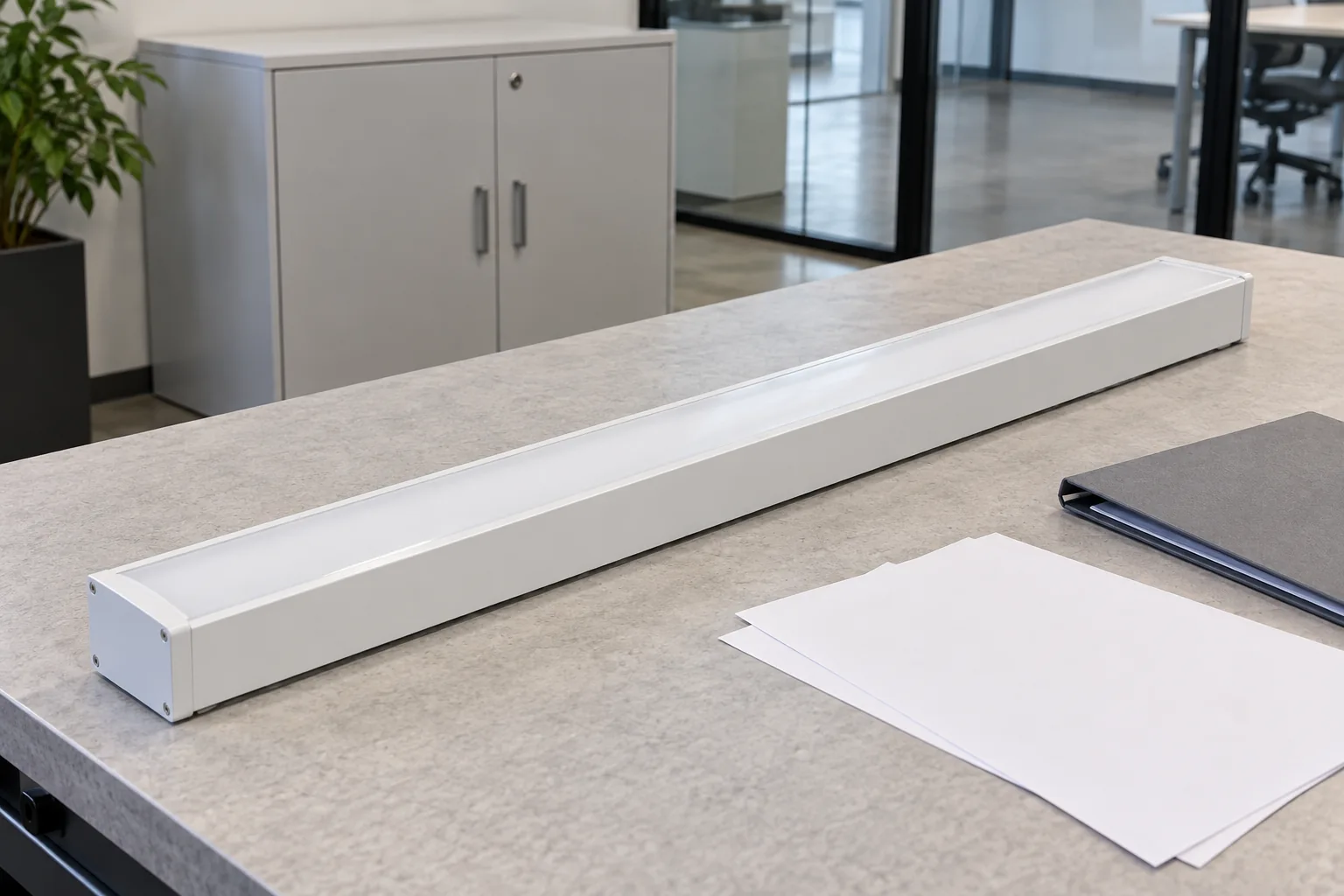
Gather available product information through the project or purchasing contact. Keep the model under discussion, the quoted quantity and the areas it is intended to serve together. If options change during planning, make the change visible before a commitment is treated as final. Ask which information remains provisional and who will confirm it. A photograph of a generic luminaire illustrates context; it cannot establish the eligibility of a particular purchase.
Keep the program question tied to a clear project brief
The program route is one part of the decision. Organise the facility information so that equipment, authority, timing and the intended outcome can be reviewed together.
| Planning question | What to keep clear | Useful information |
|---|---|---|
| Which facility and areas? | Identify the actual building and the areas included in the improvement. Separate a tenant suite from common property and distinguish existing use from a proposed conversion. A portfolio plan should still retain a clear description for each site. | Location, facility use, area boundaries, ownership or occupancy contact and the intended operating layout. |
| What equipment is proposed? | Connect each proposed product or control group with the task or route it will serve. Show the equipment intended to remain and the changes already under discussion. A category label does not explain the whole installation. | Available existing records, proposed model information, quantities and the project contact responsible for equipment decisions. |
| Who can make the commitment? | Identify the person authorised to approve scope and the team coordinating purchasing. Tenant, property and operating responsibilities may overlap. Keep them visible so a discussion or quotation is not mistaken for authority to proceed. | Scope approver, property contact, purchasing contact and any related approval still to be resolved. |
| What has already happened? | Keep quotations, orders, purchases and signed commitments distinct. Explain dates and the current status accurately, especially when the incentive route is still being explored. The project team needs a clear sequence rather than an assumed future starting point. | Purchase status, signed documents, planned access periods, project milestone and questions for the relevant program contact. |
Separate local controls from a networked project
Standard lighting controls appear under Instant Discounts; networked lighting controls follow the Retrofit route instead. Check the current product category before choosing a purchasing path.
The current Retrofit prescriptive table includes networked lighting controls and refrigerated display-case LED fixtures. Review the current measure list and relevant worksheet for the proposed equipment.
Describe what the controls should do for the people using the space. Areas may have different occupied periods, local choice needs, cleaning routines or delivery activity. A useful brief shows which groups operate together and which need separate consideration. Keep those operating expectations clear before a device or program category is treated as the answer.
Existing equipment relationships matter to the project discussion. Provide available fixture and controls records and identify proposed retained groups. Ask the project team to review the defined system scope and compatibility. Program classification and practical suitability are separate decisions: a route worth investigating does not establish that every proposed component will work with the retained installation.

Understand the Retrofit application sequence
Retrofit requires an application and acceptance of the participant agreement before a binding commitment, such as a purchase order, signed service contract or equipment order. Starting after submission but before pre-approval carries a risk of a reduced incentive or rejection; it is not a blanket prohibition on starting. Confirm the sequence with the program representative before committing.
Put that discussion into the purchasing conversation early. The scope approver, purchasing contact and project team should understand the current status before an order or contract is treated as routine administration. Tell the program representative what has happened and what is still proposed. Ask which documents and decisions need to be reviewed for the actual measure and participant.
Keep the program decision separate from general project enthusiasm. A quotation, a promising product option or a facility need does not settle the incentive outcome. If the equipment, quantity, site or sequence changes, raise the change through the relevant contact before relying on the earlier discussion. A clear record of the decision helps the facility team understand what remains conditional.
An incentive route should support a suitable facility plan
The operating improvement
Explain what needs to improve for staff, customers or property use. Show the relevant task, route or schedule and any planned layout change. This purpose should remain understandable even if a possible incentive is unavailable or the program route changes during planning.
The defined work
Identify the proposed areas, retained equipment, controls relationships and access constraints. Ask for the project boundary and assumptions to be clear before approving work. Equipment suitability and the electrical scope require project-specific review rather than approval inferred from a program category.
The program decision
Confirm the applicable current requirements with the program team or participating distributor. Keep unresolved questions, purchase status and the person responsible for follow-up visible. A potential program route belongs in the planning discussion; it should not be presented as guaranteed funding in the project budget.
Discuss the facility with the program team
Small Business uses its own qualified Save on Energy contractors for eligible installations. Participants review proposed measures and sign the program agreement and work order before proceeding.
The Small Business employee criterion concerns people on site at the facility under full operating capacity, rather than total company headcount. Prior participation affects measure and cost-cap review; provide the program team with the facility’s history.
Past participation needs review by the Small Business program team; it does not establish a universal exclusion from every further measure.
Prepare a facility description rather than relying on the informal meaning of a small business. Show the areas occupied, the existing equipment and the team authorised to discuss the request. If older program work is known, gather the records available through the property or business contact and explain gaps. Let the program team review the actual history and conditions.
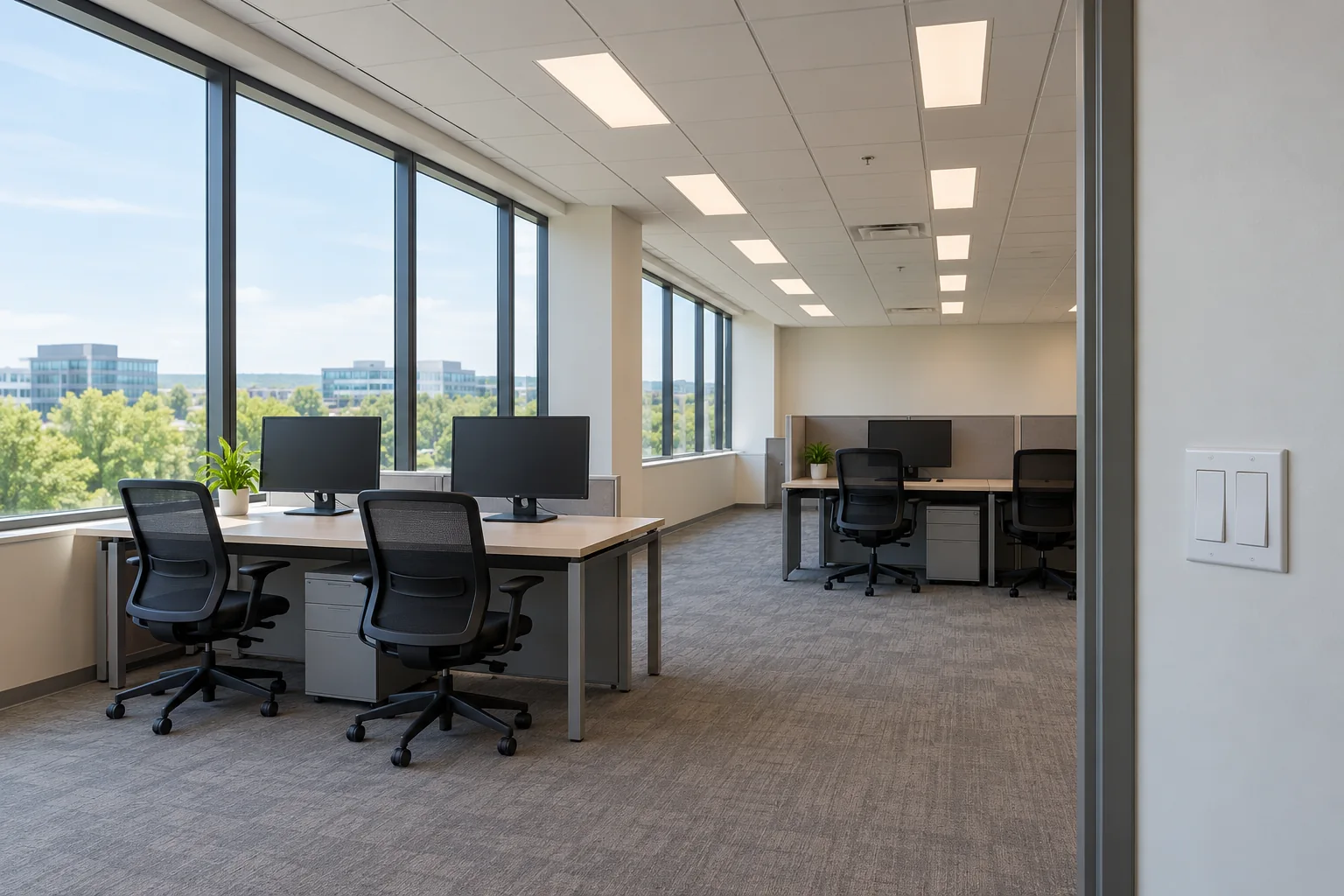
An office with window-side desks, interior workstations and shared rooms still needs an operating brief. Explain how these areas are used and what the improvement is meant to achieve. The photograph shows a practical office arrangement; it does not demonstrate an approved participant, a completed program installation or hidden control behaviour.
Prepare the incentive discussion in four steps
-
Define the intended use
Describe the existing facility, the affected areas and the desired improvement. Identify future layout or operating changes and the equipment intended to remain. Keep the practical purpose clear enough that the facility team can assess the proposed work independently of a possible incentive.
-
Gather available information
Collect existing records, proposed product information, purchase status and the contact responsible for approval. Mark uncertainties instead of presenting incomplete information as confirmed. If the project involves several sites or tenants, preserve each site’s boundaries and the relevant local decision-makers.
-
Check the relevant official route
Use the current program links and speak with the appropriate program team or distributor. Ask how the actual facility, proposed equipment and present commitment status should be reviewed. Keep answers with the project contact and identify any decision that still needs confirmation before proceeding.
-
Align scope and sequence
Discuss access, occupied periods and purchasing decisions with the scope approver and project team. Make changes visible as the plan develops. Confirm which program and project questions have been resolved, which remain conditional and what information the facility team will need as the defined work progresses.
Questions to bring to the next discussion
Ask who is confirming the program route, who is approving the project scope and who controls purchasing. These may be different people. A clear enquiry should show the current status and the exact decision needed from each contact, so a general discussion is not mistaken for permission to order equipment.
If several alternatives are being compared, keep each option’s facility purpose, retained equipment and access implications visible. Ask which assumptions need review before the option can be adopted. The possibility of an incentive should not hide a mismatch between the proposed work and the intended operation.
- What is still uncertain about the existing installation or the proposed product?
- Who can confirm the current program route for this facility and commitment status?
- Which property, tenant or operational decision is needed before the scope progresses?
- What changes in the equipment, areas or timing would need another discussion?