
Commercial Lighting Maintenance in Oakville
Commercial lighting maintenance starts with what is happening between service visits. A corridor that repeatedly loses the same light, a warehouse fixture that requires lift access and an entrance with several mismatched replacements raise different planning questions. Recording those differences makes it easier to discuss the work without treating every failure as an isolated event.
For an Oakville office, industrial unit, commercial property or shared building area, planned maintenance can bring together known faults, access restrictions and future replacement decisions. The aim is a clear service scope for the actual facility, with current problems identified separately from work that can sensibly be grouped.
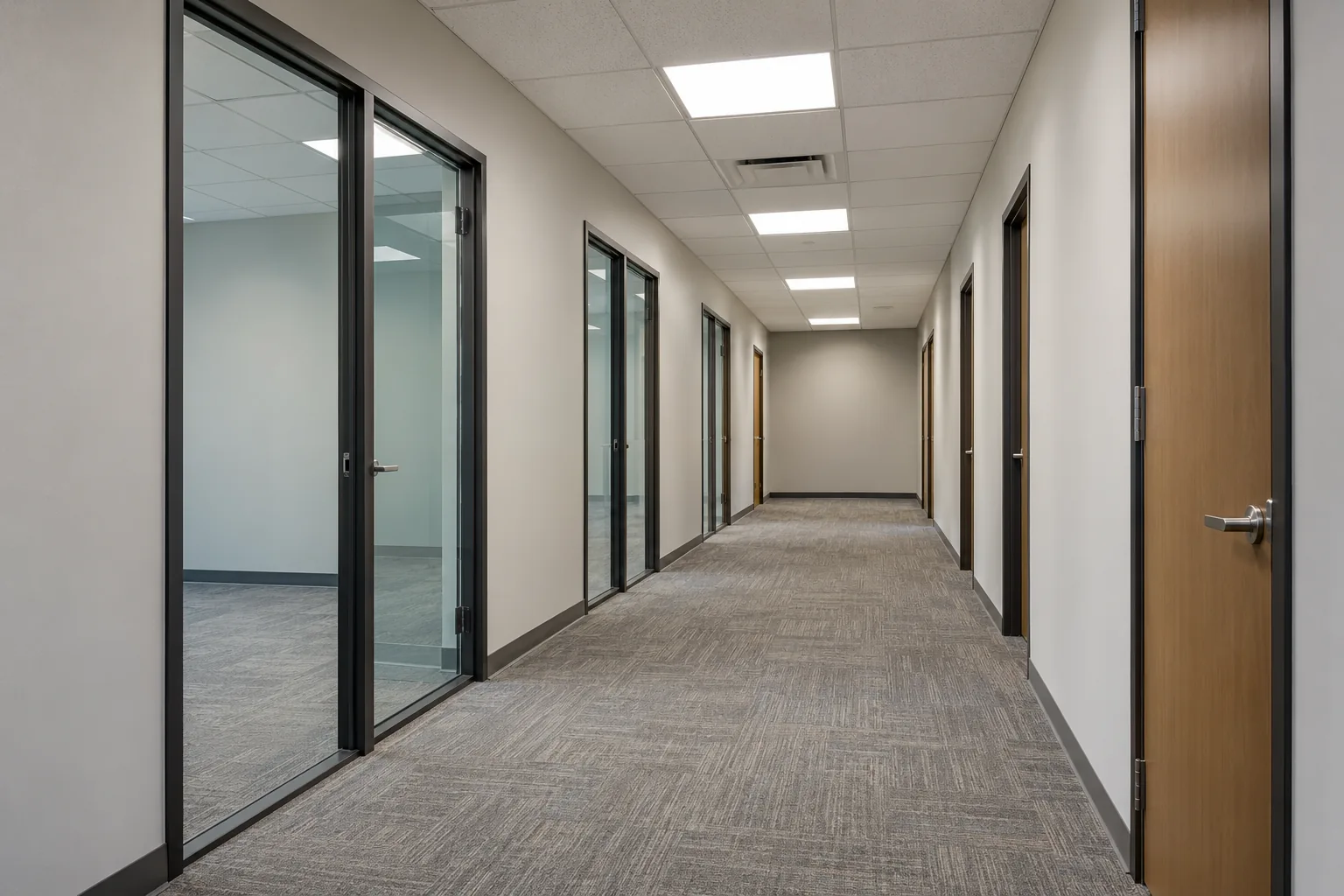
Discuss your lighting maintenance needs
Describe the areas involved, approximately how many lights need attention and whether previous repairs have addressed the same locations. Include the property address, the person who can authorize work and any restrictions on entering tenant or shared spaces. An existing fixture list or a few ordinary photographs can be useful, but a complete inventory is not required to begin.
Mention operating hours, access height and dates when the affected areas could be made available. Keep a present outage or a concern affecting normal building use visible in your request, even if the wider goal is a maintenance plan.
- Which faults are current, and which recur over time?
- Which areas share an access window or similar fixtures?
- Who coordinates building access and approvals?
Not every maintenance item has the same priority
A service list is more useful when it explains the consequence of each issue. A single dim fixture over an unused storage shelf is different from a line of failed lights along a regularly used route. Priorities should reflect how the area functions, the remaining lighting and the practical effect on occupants.
| Observed pattern | Service consideration | Useful record |
|---|---|---|
| The same fixture fails repeatedly | Keep the location tied to previous service dates and the parts or complete fixture replaced, if known. A recurring location deserves attention beyond a count of failed lamps. | Record how long the apparent improvement lasted and whether the surrounding fixtures behaved differently. |
| Several similar fixtures need attention | Identify the group and its access requirements. A common fixture family may allow the repair and replacement options to be considered together. | Separate known outages from fixtures that are only being considered for future work. |
| The building has mixed replacements | Different appearances or output across a corridor may have accumulated through individual repairs. Document where consistency matters to the property. | Note tenant boundaries and areas where a matched appearance is a particular priority. |
| Access creates most of the disruption | High mounting positions, busy loading areas or occupied rooms can make coordination central to the service plan. | Provide the usable access period and any building rules that affect equipment movement. |
Build a record that someone else can understand
The most helpful maintenance record connects a fixture to a recognisable location. Use room names, aisle references, entrance names or an annotated existing floor plan. If two similar lights are in the same room, distinguish them clearly enough that the person attending the site can locate the affected one. A photograph taken from an ordinary occupied position can add context without requiring anyone to open a fixture.
Keep observed symptoms separate from conclusions. “North corridor light out on Monday morning” is a useful observation; “the driver failed again” is a diagnosis unless it was confirmed during previous service. Record the work that was actually completed when that information is available. Missing details can remain unknown rather than being filled with an assumed component or specification.
A simple history can also reveal a purchasing problem. If replacements have gradually introduced several fixture styles or colour appearances, mark that variation alongside the faults. It may be reasonable to retain serviceable equipment in one area while considering a more consistent replacement approach in another. The record supports that conversation; it does not require every working light to be replaced.
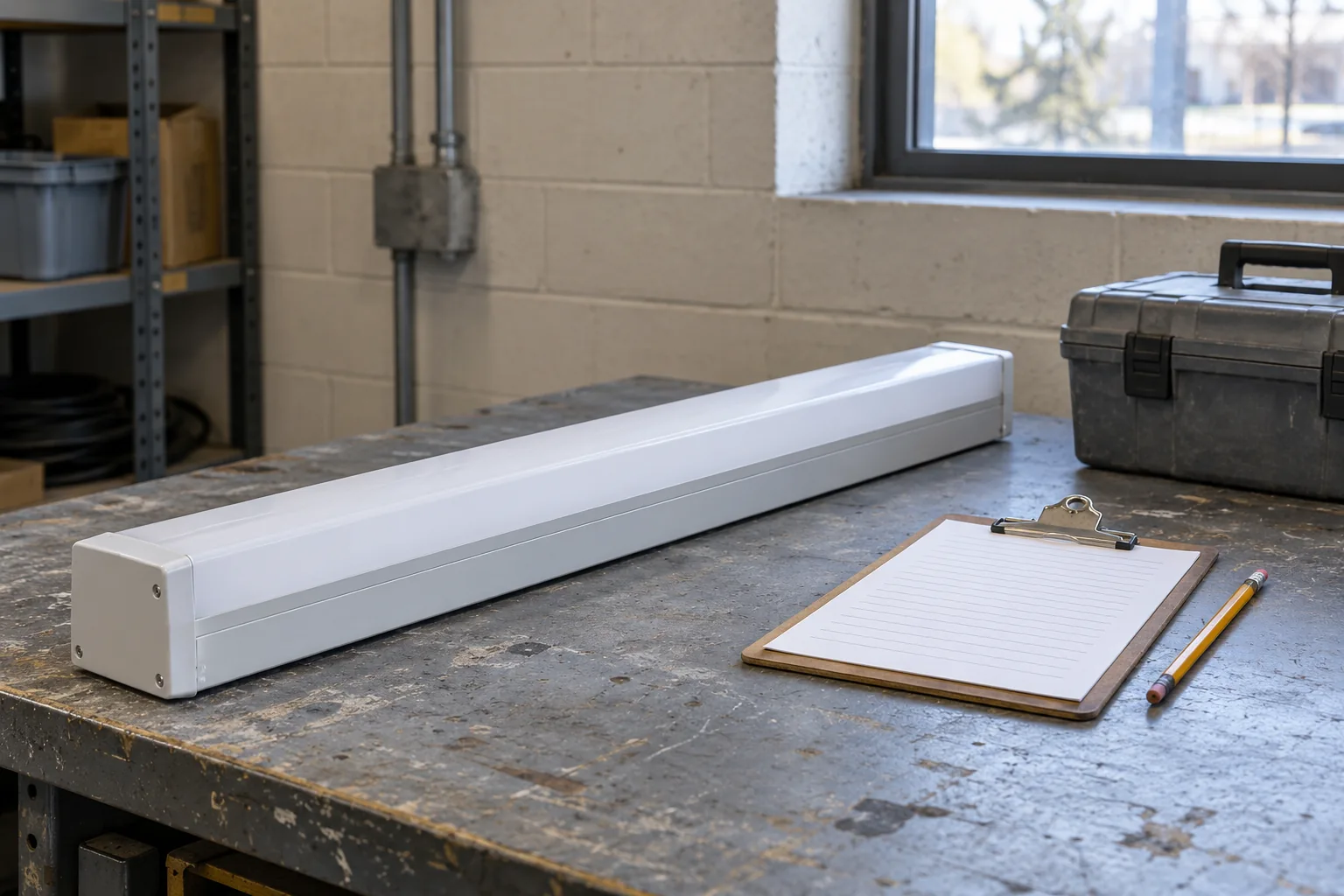
Maintain, repair or plan a wider replacement
Planned maintenance
Bring known service items together around practical access and building use. This route is useful when the objective is to organize recurring work, keep reliable fixture records and agree priorities across several areas. The proposed visit and included work still need to be defined.
A current repair
Treat a present fault as a service issue with its own symptom, location and effect on operations. A wider maintenance discussion should not obscure an outage that needs attention now. The cause and available repair options depend on the existing system.
A replacement project
Consider a broader change when repeated failures, incompatible replacements or unsuitable light distribution make individual repairs a poor long-term fit. Replacing equipment becomes a project decision involving compatibility, access, operating requirements and an agreed scope.
Group work around the building, not just the fixture count
The same number of maintenance items can represent very different site visits. Four lights in an accessible office ceiling are not equivalent to four high fixtures over stock, equipment or a busy vehicle route. Describe the mounting conditions and what normally occupies the floor below. The access plan should account for the actual space available rather than assume that a lift can reach every fixture directly.
Grouping work can be considered where the locations share a usable access window. A warehouse operator might make one aisle available at a time; an office manager may need meeting rooms returned to use before the next working day. Tenant access can require separate coordination even when fixtures are close together. State those constraints before service dates are discussed.
Electrical work should be assigned to an appropriately licensed Ontario electrical contractor, with applicable requirements confirmed. Building staff can contribute location information, existing records and access arrangements. They should not be asked to expose wiring, remove covers or perform tests to prepare a maintenance list. A complete symptom record does not depend on electrical intervention.

Turn recurring work into a defined service discussion
-
Identify the areas
List interior and exterior locations using the names people actually use on site. Note which faults are present today, which are intermittent and which items are future consistency or replacement concerns.
-
Bring the available history
Collect previous service information and fixture details where they already exist. Dates, locations and confirmed work are more useful than an unsupported diagnosis. Include recurring patterns even if the earlier paperwork is incomplete.
-
Coordinate access and authority
Identify who approves the work, who provides entry and what operations constrain attendance. Agree any tenant notices, equipment access and area availability relevant to the proposed visit before assuming the work can be grouped.
-
Clarify the proposed scope
Discuss what is included, what remains uncertain and whether some locations need separate investigation or a replacement proposal. Keep the current repair list and longer-term planning items distinguishable when decisions are recorded.
Keep common areas and entrances on the service map
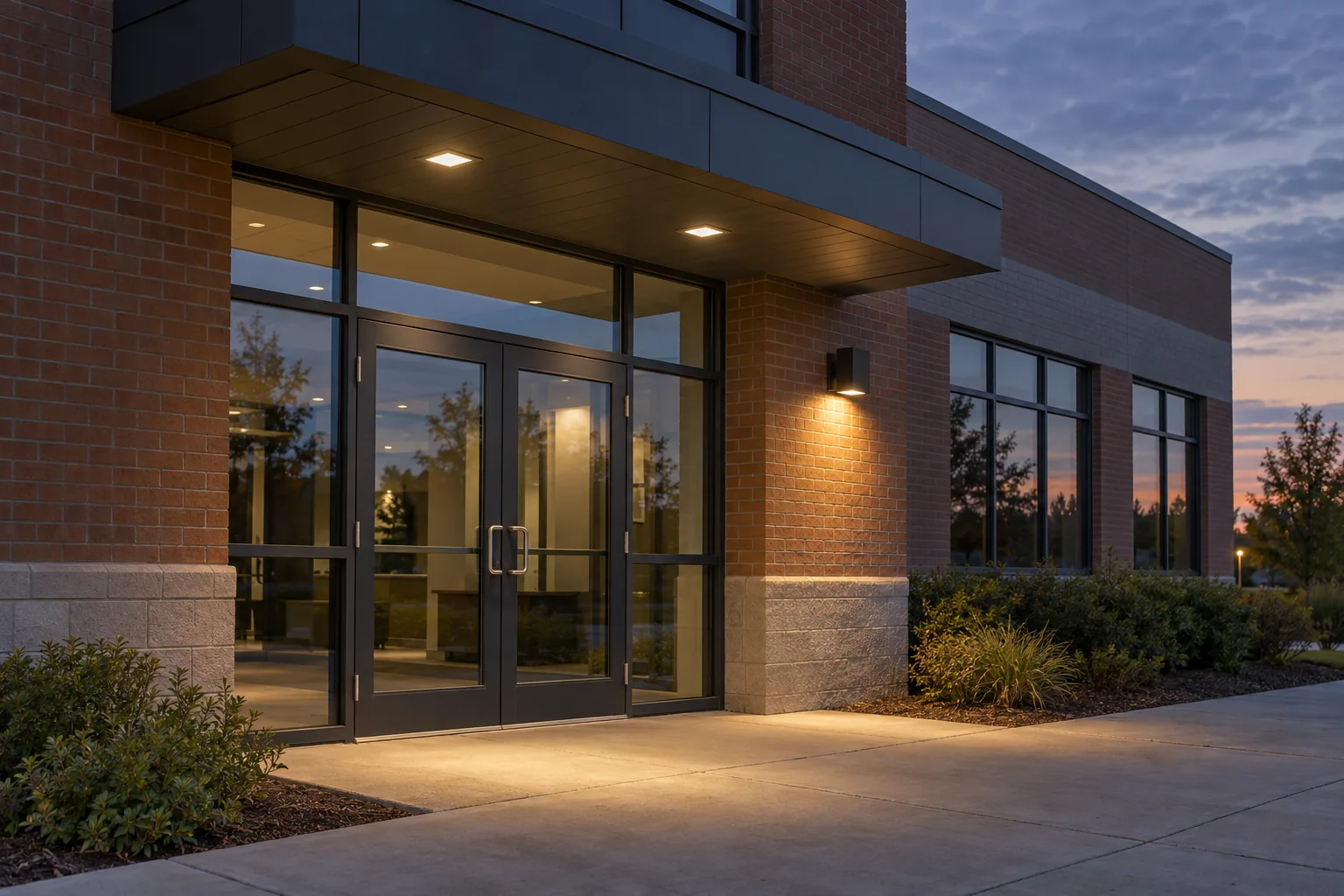
A building service list often begins indoors because that is where faults are reported most quickly. Entrances, covered walkways and parking-related fixtures can have a different reporting pattern. They may operate at other times, be controlled together or sit outside a tenant’s ordinary responsibility. Include those locations explicitly so that the maintenance discussion reflects the whole property you manage.
For shared areas, distinguish a fixture problem from a disagreement about who should authorize work. The property manager, landlord and tenant may each hold different records. Identifying the contact responsible for the affected area helps prevent a service request from being delayed while access or approval is clarified. It also helps preserve the history when management changes.
Consistency is worth considering where occupants see several fixtures together, but appearance is only one part of the decision. Condition, output, control behaviour and access still matter. A matched entrance scheme may be a future replacement priority while an isolated current fault is handled separately. Common-area planning should also identify any emergency or exit-lighting concerns as a distinct system matter requiring its own appropriate scope.
Four details worth retaining after service
The affected location
Retain the same location reference used in the request. Changing names between visits makes it harder to recognise a repeat problem. Include a clear room or area reference when a fixture is moved or replaced.
The work confirmed
Keep any supplied information about the fixture or component installed with the building records. Record uncertainties honestly so the next discussion starts from known work rather than assumptions.
The operating context
Note whether the area was in normal use when the fault was seen. Seasonal hours, tenant changes and altered occupancy can explain why an issue became apparent at a different time.
The outstanding decisions
Keep deferred repairs, unavailable parts and proposed replacement areas visible. A completed visit does not automatically mean every lighting issue identified during planning was included in that work.