
Industrial Task Lighting in Oakville
Industrial task lighting focuses on the work performed at a particular bench, station or inspection position. The important view may be a small component, a surface finish or the detail of an assembly. General overhead lighting remains part of the setting, but its height and direction may leave shadows where hands, parts and equipment meet. A local light should be considered in relation to that specific work and the wider room.
For an Oakville industrial unit or manufacturing facility, start with the task and the conditions in which it is carried out. Describe what is difficult to see, where the person normally stands or sits and which surfaces create reflections. A defined workstation project can then consider fixture position, adjustment, control and practical maintenance without assuming that every station needs the same light or that a brighter lamp alone resolves the concern.
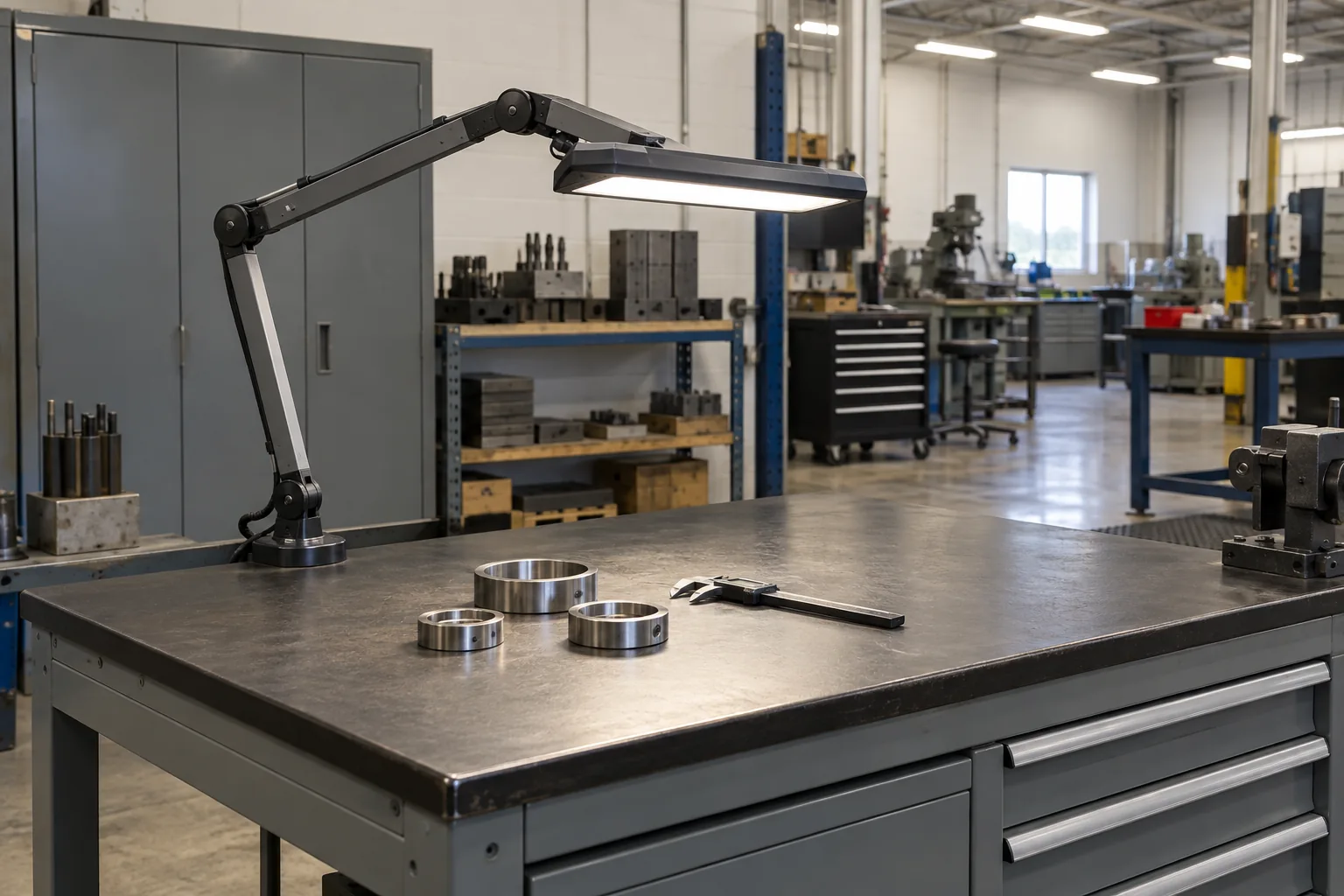
Discuss lighting for your industrial workstation
Tell us about the station, the activity performed there and the particular detail that is difficult to see. Include the property address, how many similar stations are involved and whether the concern changes with the operator’s position or the part being handled. Photographs of the normal arrangement can help show the work surface, surrounding fixtures and obstructions without moving equipment.
Mention existing local lights, any noticeable glare or flicker, operating hours and who can authorize changes. If the station belongs to a machine or specialist process, identify the person responsible for that equipment. Keep a present lighting fault visible in the request even when the longer-term objective is a different workstation arrangement.
- What surface or detail needs to be viewed?
- Where are shadows or reflections observed?
- Which stations can be made available for assessment or work?
Four workstation conditions worth describing
A task-lighting request becomes more useful when it explains the viewing problem instead of only naming a preferred fixture. The same bench can handle different materials or operations during the day, so identify the conditions that matter most to the proposed work.
| Workstation condition | Lighting consideration | Useful information |
|---|---|---|
| Fine assembly or component identification | Hands, tools and the part itself may interrupt light reaching the working surface. Direction and adjustment should be considered from the person’s usual position, with the surrounding light included. | Normal working distance, part size and where shadows are seen. |
| Inspection of reflective materials | A bright reflected source can obscure the surface being examined. The useful arrangement depends on the material and inspection task; a shiny part and a matte part may need different viewing conditions. | Material finish, inspection orientation and the detail being judged. |
| Several tasks at one bench | An arrangement suited to one position can become awkward when the task moves along the work surface. Review the usable area and whether adjustment can be retained without interfering with equipment or access. | Task sequence, frequently used areas and changes between operators. |
| A workstation in a larger operational area | Local lighting needs to fit with ambient illumination, nearby routes and shared controls. A well-lit bench should not make the surrounding area or adjacent station an afterthought in the planning discussion. | Nearby work, room lighting and the control arrangement already in use. |
Treat the bench and ambient lighting together
Local lighting adds attention to a defined working area. General room lighting helps describe the surroundings in which that task takes place. A workstation can therefore need both a review of its local fixture and an understanding of the overhead arrangement. CCOHS distinguishes task lighting from general lighting; that distinction is useful when defining what a workstation project should examine.
Begin from normal operating conditions. If the bench is assessed with nearby overhead lights switched off, empty work surfaces and a different part from the one usually handled, the scene may not represent the actual concern. Record which lights are normally on, where daylight reaches the station and whether the complaint occurs throughout the shift. The relationship between the local work surface and the surrounding area should remain visible when options are compared.
A targeted local light may be appropriate where one station needs additional attention while the rest of the room remains suitable. Conversely, widespread shadows or uneven general light can justify a broader industrial-lighting review. Keep those scopes separate enough to understand the purpose of each proposed change. A local fitting should not be presented as a substitute for every other lighting requirement in the room or for the facility’s emergency-lighting arrangements.
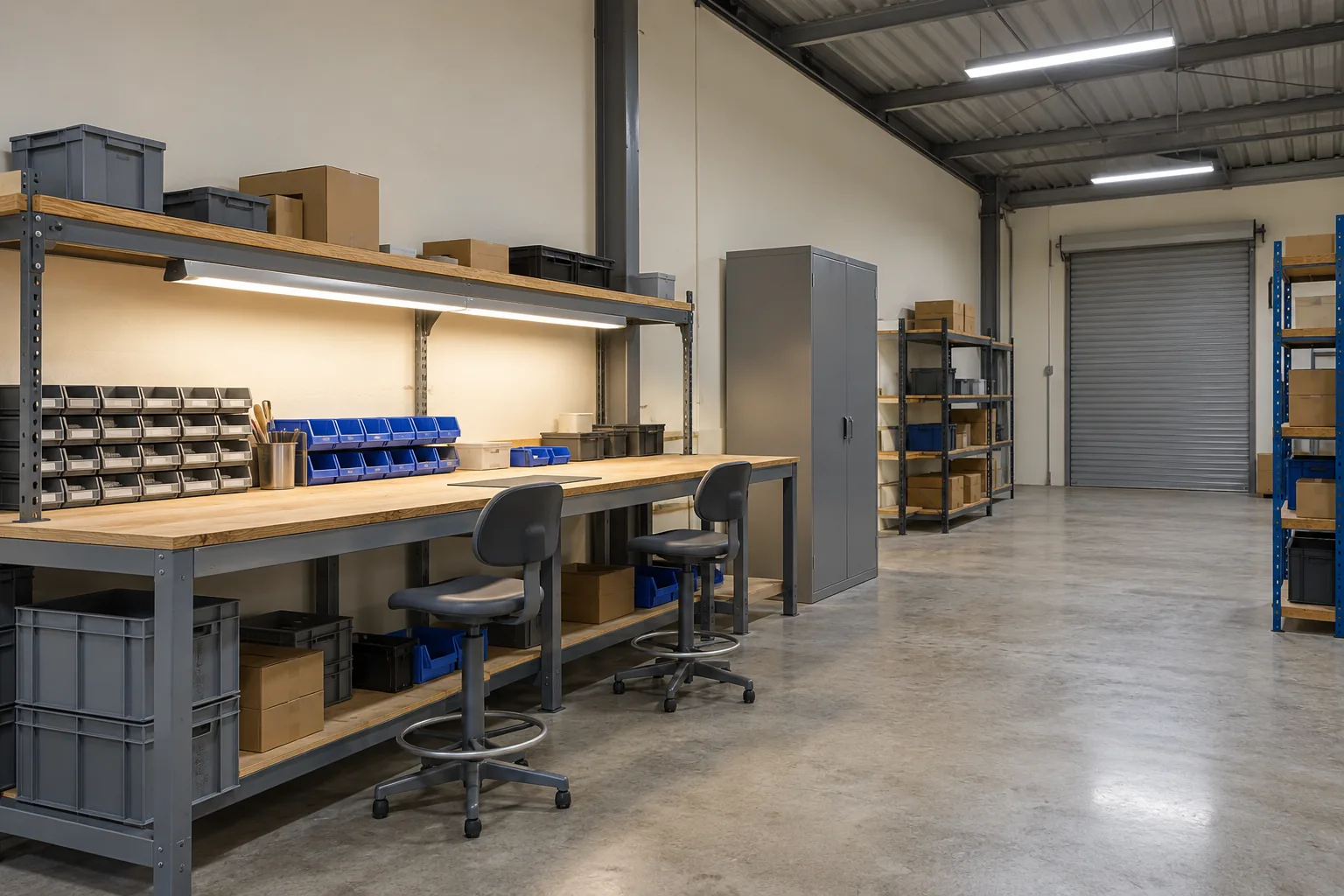
Repair, reposition or plan a new station
Repair an existing light
An existing fixture that has failed or flickers needs a service discussion about the fault, equipment and operating context. Record the behaviour without identifying an internal cause unless it has been confirmed. A repair can restore the previous arrangement while leaving the suitability of that arrangement as a separate question.
Review a current workstation
Where the light works but the task remains difficult to view, consider its position, direction and relationship to the work surface. Review shadows, reflected bright sources and physical interference. Any proposed repositioning or replacement should account for the workstation and equipment rather than assume an adjustable arm can be installed anywhere.
Design a defined new arrangement
A new bench or changed process allows lighting to be considered with the final layout. Bring the intended task, equipment footprint and operator positions into the discussion before mounting and wiring are decided. Identify what will remain adjustable and which parts of the installation need coordination with the equipment owner.
Choose a useful position, not simply a brighter source
The direction of light changes how a surface appears. A local source placed directly in a person’s line of sight can be distracting, while the same source may create a bright reflection on polished metal or a protective screen. The useful arrangement depends on what must be seen. Describe the viewing difficulty with the actual material in its normal position rather than treating every reflection as an identical problem.
Hands, a tool holder or a raised workpiece can cast a shadow onto the detail being viewed. An adjustable fitting can offer flexibility, but the available range and stable mounting should match the station. Consider whether the head or arm could occupy a place used for handling materials or moving equipment. The plan should preserve the intended workstation arrangement and be coordinated with the people responsible for it.
Where colour comparison is part of a defined task, discuss that need explicitly alongside the material and viewing conditions. A nominal colour temperature by itself does not establish that a fixture suits colour-sensitive work. Equipment information and suitable task-specific criteria can help evaluate options. The same applies to inspection: this page does not prescribe a universal illuminance level or claim that a particular lamp guarantees the detection of a defect.
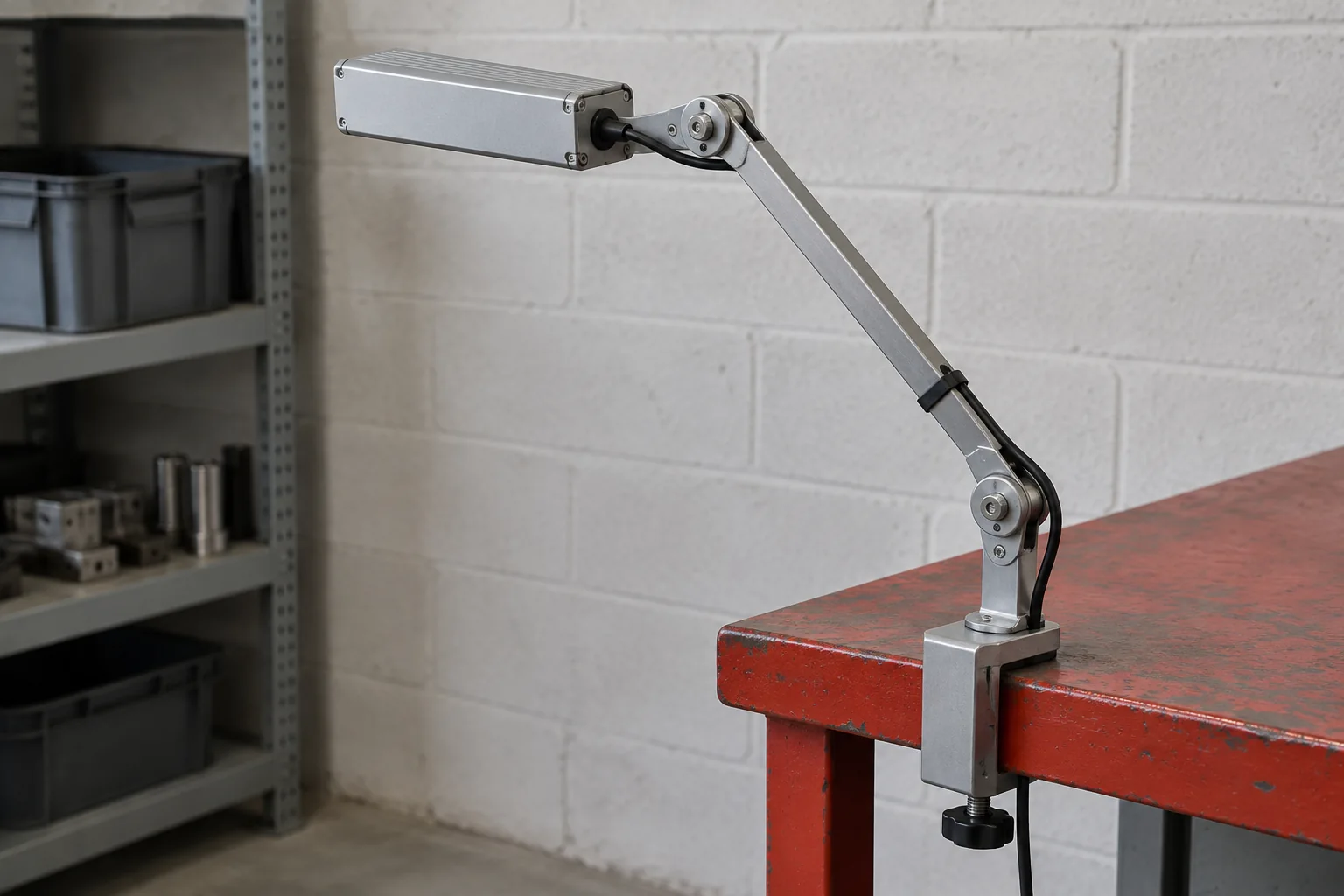
Four details that belong in the workstation scope
How the light is controlled
Identify whether the station has local switching, shared controls or a proposed dimming function. Confirm compatibility among the fixture, driver and control arrangement. A control should be reachable and usable in the station’s normal layout, with its purpose clear to the people using it.
What surrounds the fixture
Describe dust, moisture, temperature or other relevant conditions already known to the facility. The appropriate equipment and installation depend on the environment and task. A product’s industrial appearance does not demonstrate its suitability for a particular process or location.
Where cables and mounts belong
A local fitting still needs a practical installation plan. Discuss mounting, contained wiring and the relationship to benches, guards and equipment access. Where a machine is involved, coordinate with its responsible owner or specialist rather than treating lighting as permission to alter the machine.
How service will be managed
Retain supplied fixture and control details with the station reference. Define who reports faults and who authorizes work. Replacement selection should consider the original distribution and compatibility so a later repair does not unintentionally change the workstation arrangement.
Review the station with its normal materials in place
An empty assembly bench can conceal the shadowing that occurs when materials, bins and tools return to their usual positions. A useful review should reflect the working arrangement, with the relevant surfaces and obstructions identified. Different people may use the station from slightly different positions. Where that variation matters, describe it when discussing adjustment rather than selecting a fitting around a single posed photograph.
Separate an individual station from neighbouring stations when recording observations. A local light that looks comfortable to one person can be directly visible to another working across the bench. Reflective partitions, screens or nearby materials can also change the view. Evaluate proposed changes from the affected positions and keep the shared area in the scope discussion. The goal is a workable lighting arrangement, with no promised productivity or health outcome attached to a fixture choice.
For work near equipment, assessment and installation should be coordinated through the facility’s responsible personnel. No one needs to reach into a machine, remove guarding or expose electrical components to describe a lighting concern. Hired electrical work requires an Ontario Licensed Electrical Contractor; confirm applicable ESA notification requirements. Keep equipment responsibilities and electrical scope clear, especially when a light is being mounted to or supplied near a specialist workstation.
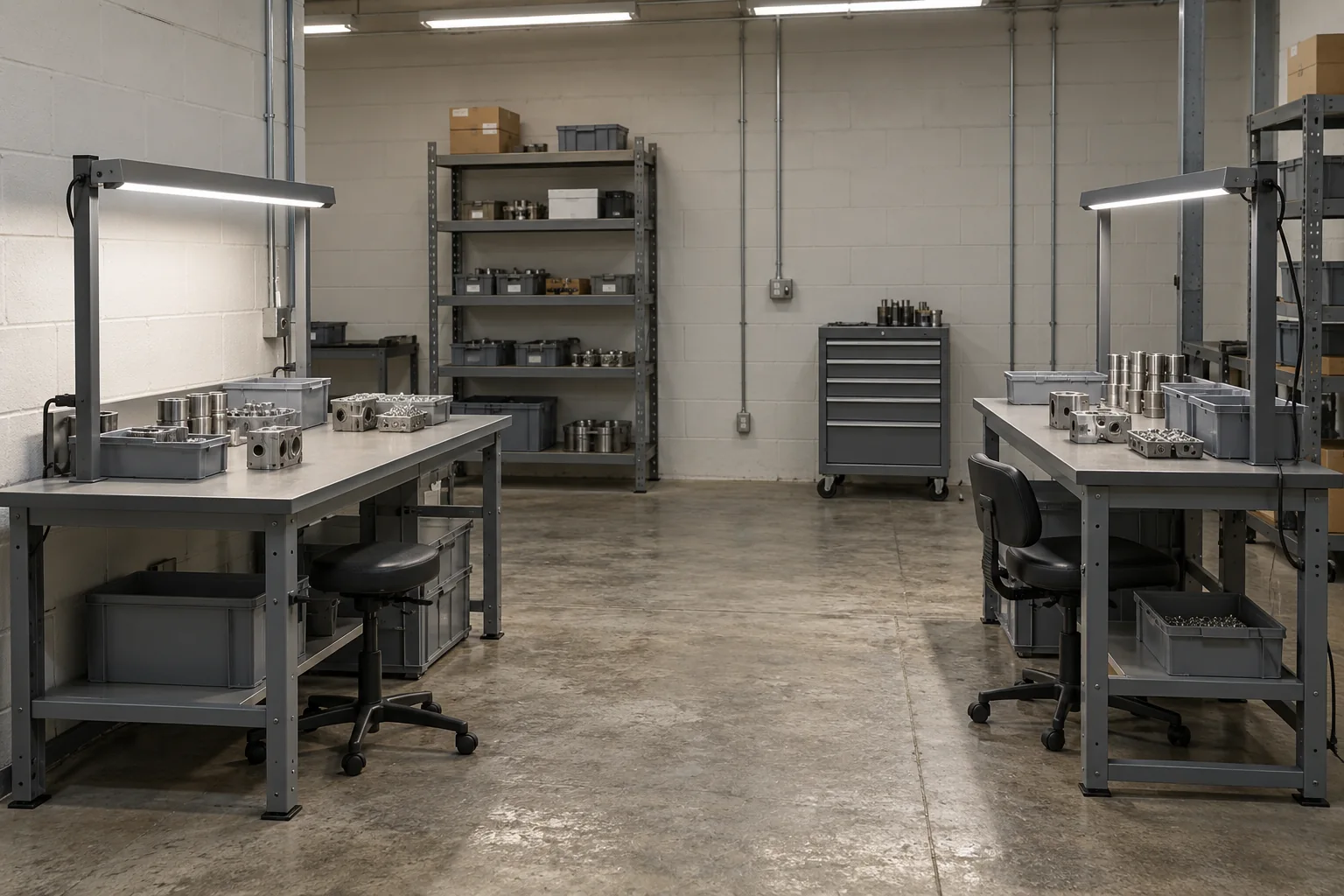
Plan a station update in four steps
-
Record the task
Describe the material, detail and usual viewing position. Identify when the difficulty occurs and whether it remains with all existing lights working. Record different tasks separately if they share a bench but have different viewing needs.
-
Review the existing arrangement
Bring together available lighting details, surrounding room conditions and equipment responsibilities. Ordinary photographs and existing workstation drawings can support the discussion. Unknown fixture specifications can remain unknown until they are appropriately reviewed.
-
Agree options and access
Compare the intended scope, control arrangement and installation constraints. State when the station can be made available and who coordinates that period. A bench-light change and a room-wide project should have clear boundaries when they are proposed together.
-
Check the completed arrangement
Review the agreed lighting behaviour in representative use conditions, including adjustment and local controls where provided. Keep supplied product information with the station reference. Record any task or equipment matters outside the completed lighting scope so they remain visible.
Bring the workstation and property context together
Oakville’s employment-area review includes industrial and business employment designations. For a task-lighting request within an occupied unit, identify the actual bench, inspection position or assembly station. Explain whether the workstation is permanent, shared between shifts or likely to move as the process changes. Those details matter more to local lighting placement than a general description of the building.
In leased premises, confirm the boundary between equipment used by the business and lighting that forms part of the building installation. Provide the appropriate owner or facilities contact where a proposed change affects the latter. Describe the surrounding room conditions and any shared access restrictions alongside the task itself. This keeps a small workstation project connected to the actual Oakville site and avoids agreeing a fixture arrangement before its mounting, operation and authorization are understood.