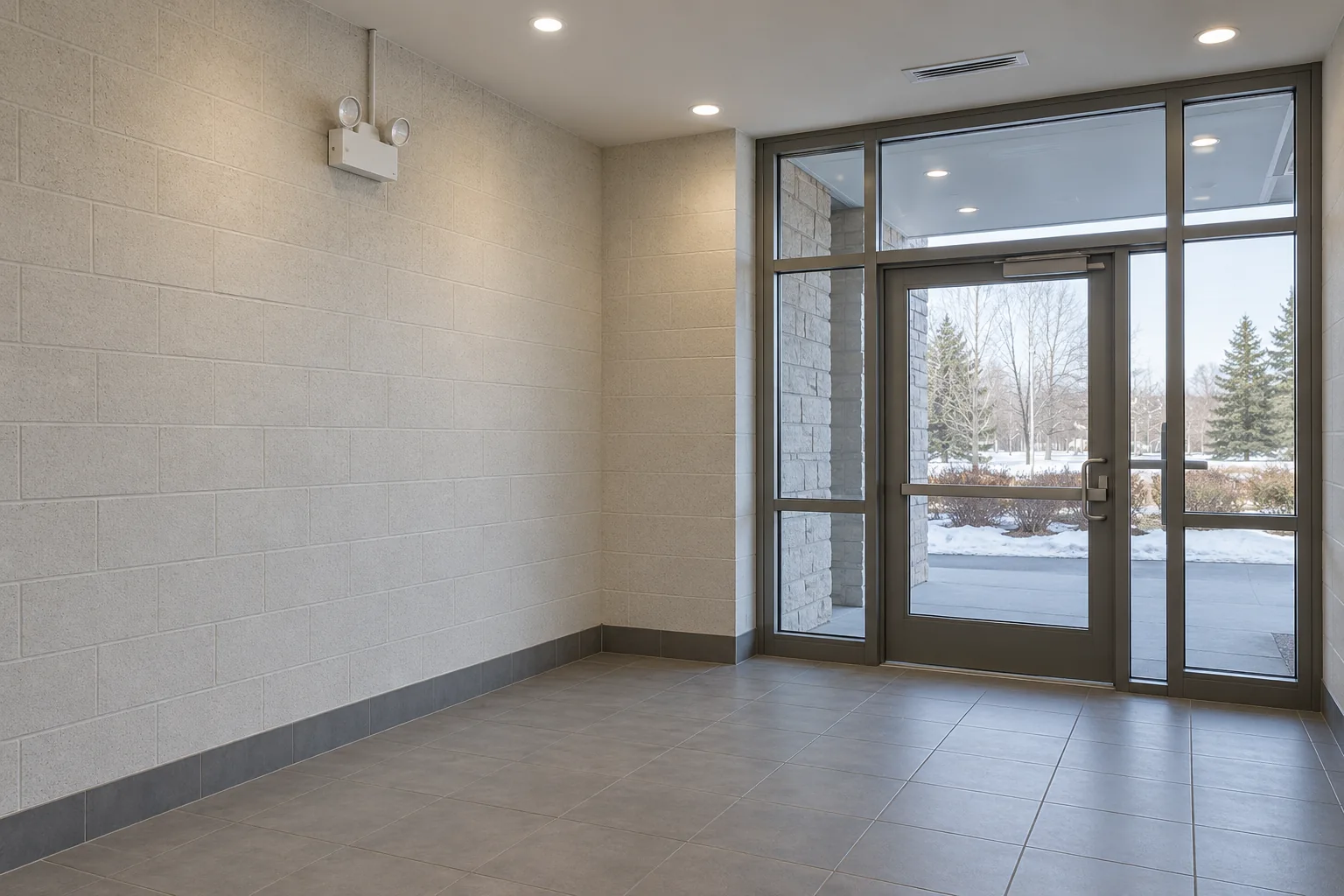
Emergency Lighting Repair in Oakville
A repair request starts with an existing emergency-lighting concern and a clear location. The useful information is what was observed, when it was reported and which equipment was involved. A visible housing or indicator cannot establish the cause of a fault on its own.
For an Oakville commercial property, preserve the report and earlier service information, then arrange an appropriate assessment of the affected equipment. Keep emergency illumination, exit signs and ordinary lighting distinguishable. The repair scope should address the observed concern, practical access and relevant follow-up without assuming a particular internal component needs replacement.
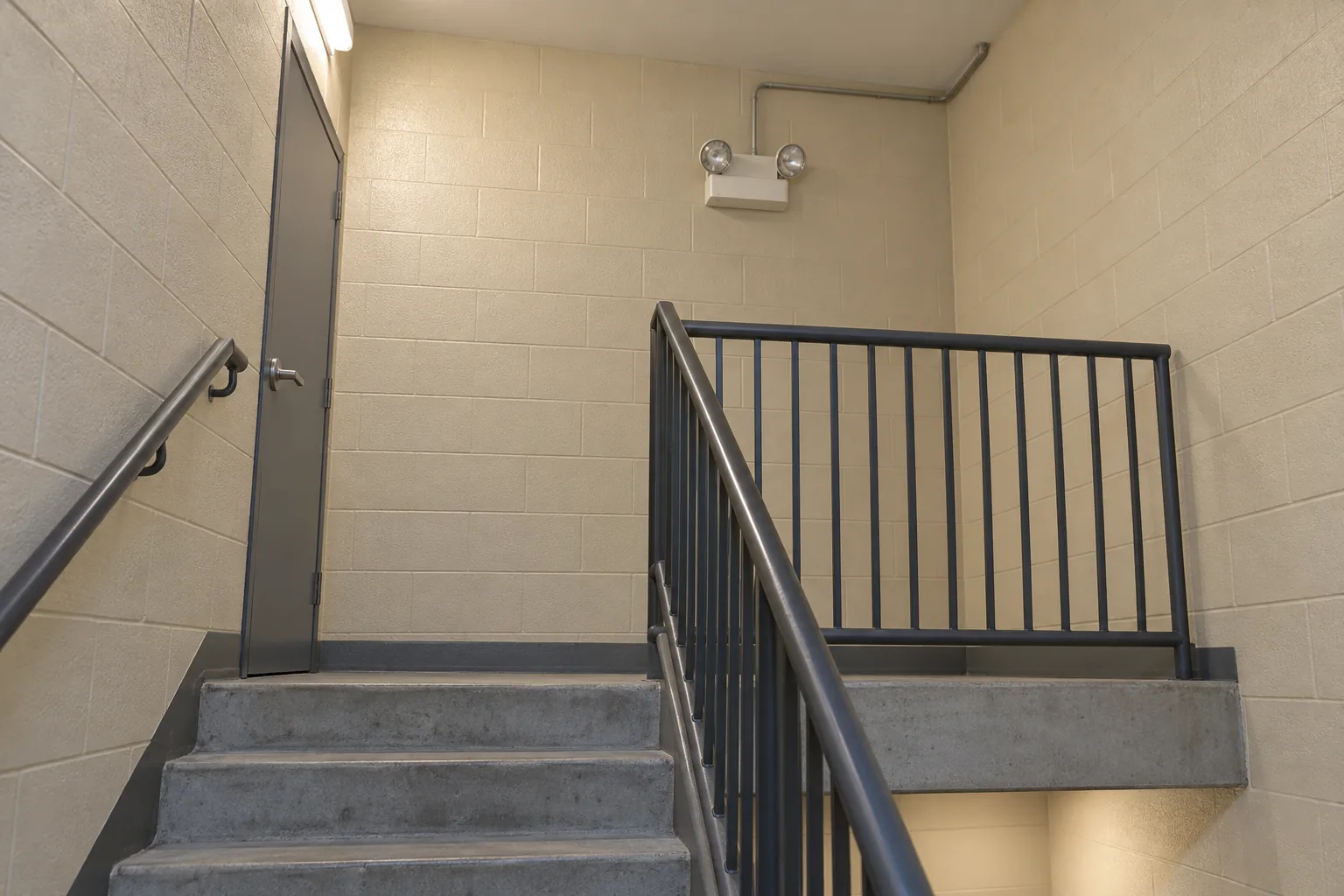
Request emergency-lighting service
Provide the property address and exact equipment location, along with the concern already reported. Include the observation date, available product references and earlier service details. If an authorised maintenance report exists, send the relevant finding with the request.
Identify the building contact and any restrictions on access to corridors, stairs or common areas. Photographs from safe normal positions can show the unit and its surroundings. Do not open equipment, disconnect supply or repeat a test to collect information; preserve the observations and records already available.
- Which existing unit or lighting location is affected?
- What was observed, and is there an authorised report?
- Who can manage access and the property’s follow-up arrangements?
Describe the concern without diagnosing it
Management’s location and history information can make a service request more precise. It should preserve the observed issue rather than prescribe electrical work.
| Reported concern | Useful description | Information to retain |
|---|---|---|
| An authorised report identifies a fault | Keep the original finding attached to the correct location. A summary should not remove qualifications or merge several different equipment concerns. | Provide the report date, unit reference and any follow-up already specified. |
| Visible damage to a unit | Describe the housing, lamp head or mounting condition from a normal safe position. Appearance alone does not establish the state of the internal equipment. | Record when the condition was noticed and any known incident affecting the area. |
| A reported change in operation | Preserve what was observed and under which existing circumstance, without recreating that circumstance as a customer investigation. | Identify the equipment involved and whether the observation concerns one location or several. |
| A concern returns after earlier work | Separate the current report from previous service. Similar-looking symptoms do not establish that the same cause has returned. | Provide previous dates, equipment references and the work recorded as completed. |
Make the equipment and history identifiable
A useful repair record connects a specific location to the equipment and observation. Use the property’s reference for a floor, corridor or stair so another person can identify the same unit. If the building has several similar housings, a close-up without location information can lead to the wrong fitting being included. Keep the surrounding route visible in the supporting information.
Previous work matters, but it should be described accurately. Provide the recorded repair or replacement rather than assuming that every earlier visit involved the same component. Dates, product references and the reason for the earlier work can help the professional assessment distinguish an isolated concern from a recurring pattern. Where information is missing, identify that gap instead of reconstructing a service history from memory.
The decision to repair part of an existing arrangement or replace equipment belongs within the assessed scope. Availability, compatibility, condition and the relevant requirements may affect that decision. A replacement should remain traceable to the fault or project reason it addresses. Ordering a presumed replacement component before the equipment and concern are understood can leave the underlying issue unresolved.
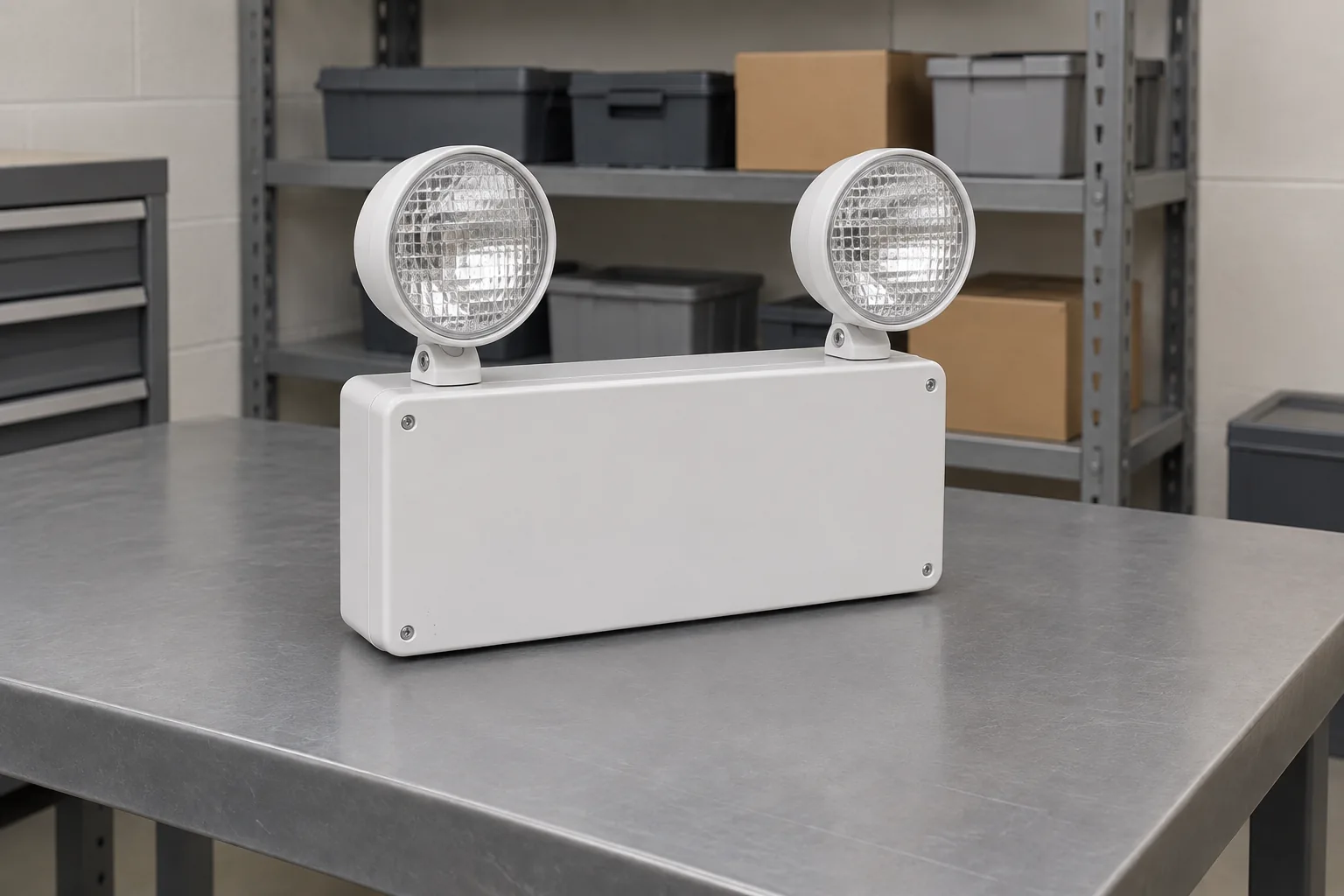
Address the fault or plan a wider renewal
A service request can lead to a discussion of wider equipment work, but the current concern needs a clear record and response within the agreed scope.
Service the reported equipment
Define the affected unit or area and provide the existing observation. The appropriate investigation should establish the work needed, rather than a symptom being treated as proof of one failed part. Include practical access and any relevant instructions already issued for the property.
Keep the outcome tied to the location and agreed work. Management should be able to see which concern was addressed and which matters remain for separate review, without treating a single fixture service as an assessment of every emergency-lighting location in the building.
Consider coordinated replacement
A wider renewal may be worth discussing when equipment records, condition or repeated service raise broader questions. Define the proposed group of units separately from the current fault. Include location consistency, access, retained equipment and any relevant building changes.
A coordinated project should have its own scope and review arrangements. Do not describe it as automatically required because one fixture has an issue, or assume that replacement alone resolves every recurring condition. The actual equipment and property information should guide the decision.
Keep the fault attached to the right system
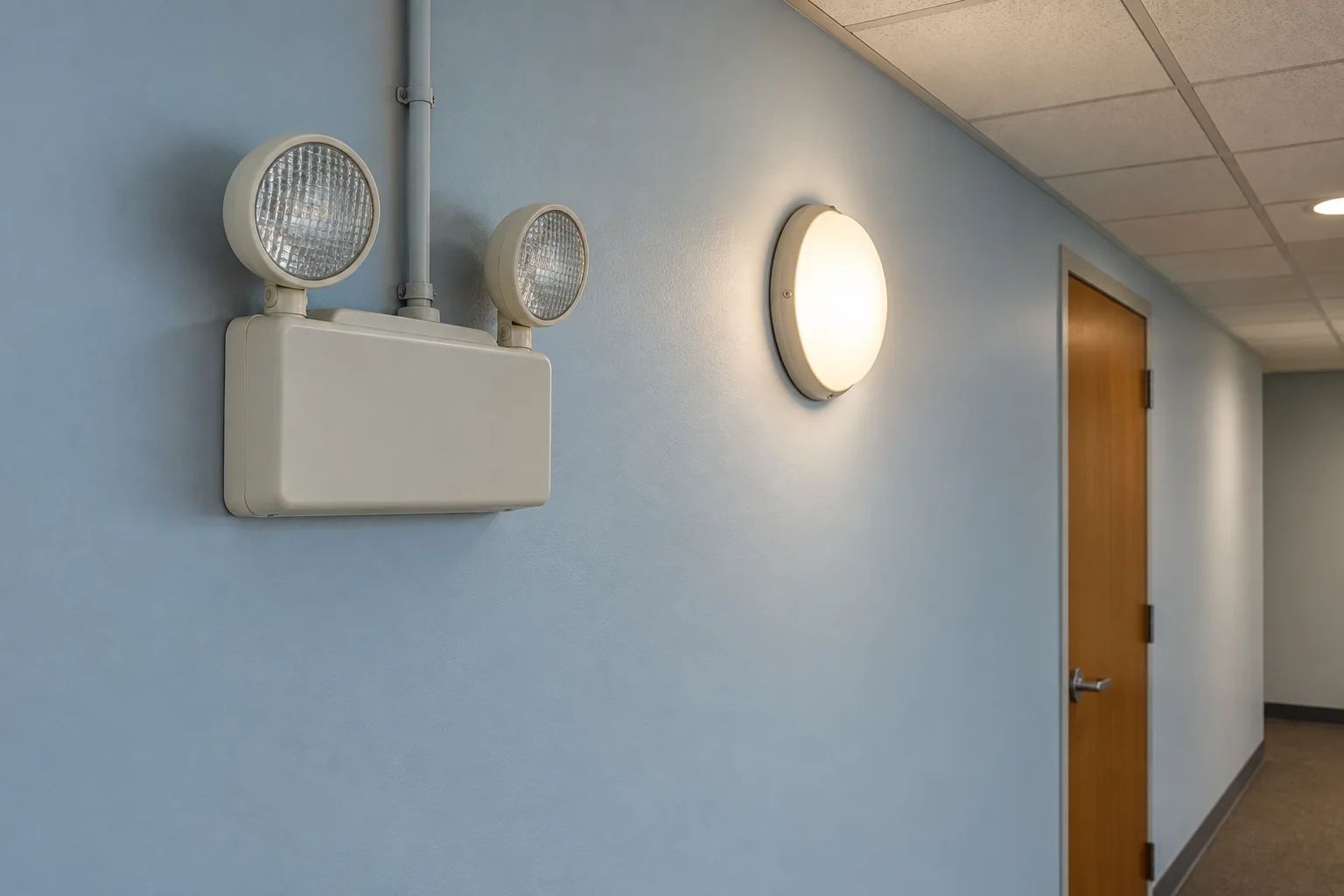
A corridor can contain ordinary ambient lights, emergency equipment and exit signs close together. Identify which equipment is the subject of the report. An ordinary ceiling light that is dark and a concern with an emergency unit should not be combined into one vague statement that the corridor lights are not working. The service scope and records need to retain that distinction.
Normal-use appearance is also limited evidence. A lamp head that is not illuminated in an ordinary photograph does not, by itself, establish a failure. Equipment arrangements and operating states differ. Preserve any authorised finding and the circumstance already observed, rather than asking staff to interrupt the building supply or operate equipment to produce a more convincing photograph.
Where a refurbishment has changed general lights or controls nearby, include that project history without assuming it caused the emergency-equipment concern. Document the relevant dates and included systems. Any interface or compatibility issue should be assessed through the actual arrangement, not diagnosed from the fact that two projects occurred around the same time.
Preserve the issue through the work sequence
The request, assessment and resulting record should refer to the same equipment and observed concern.
-
Identify the report
Record the affected location and preserve the original observation or authorised finding. Send known history without attempting further customer investigation.
-
Arrange the assessment
Define the equipment included and provide available records. Clarify access and any property instructions the appropriate professional needs to consider.
-
Agree the service boundary
Establish the proposed work and distinguish it from wider renewal or building changes. Confirm the relevant review and follow-up arrangements for that scope.
-
Retain the outcome
Keep the location, work record and relevant follow-up together. Link future reports to this history while preserving any differences in the new observation.
Coordinate service in occupied common areas
Access to emergency equipment often involves a route that remains in everyday use. A stair landing, entrance or narrow corridor needs a planned working position and coordination with the property team. Provide the times the area can be managed and any restrictions on equipment movement. A cleared photograph does not establish that the same space is available during the building’s busiest period.
Keep the people responsible for property operations informed of a known concern through the site’s established procedures. Agree how access and any necessary temporary arrangements will be managed by the appropriate parties. The request should identify the affected route and existing instructions without making an unsupported assumption about the building’s operating status.
Current Fire Code maintenance obligations should inform the repair scope and follow-up arrangements for existing equipment. Confirm applicable requirements for the property rather than transferring a generic testing schedule into the service request. Where a concern relates to an authority’s finding, preserve that finding and its stated follow-up.
Contact Oakville Fire Prevention or Building Services for the review questions relevant to the property or a notice already received. Confirm applicable electrical notification and review arrangements with ESA for the repair. Keep the agreed work, relevant records and any separate outstanding matters clear so management can organise continuing maintenance.