Flickering Commercial Lights in Oakville
Flickering commercial lights can be difficult to describe when the pattern changes before another person sees it. Begin with the occasions already noticed: the room, affected fittings, visible change and activity underway. Distinguish a single inconsistent light from several fittings changing together, and a brief fluctuation from a recurring pattern.
In an Oakville workplace, that account should follow the actual tenant area and the people who manage the lighting. Existing fixture history, approved operating records and ordinary-use control observations can support a qualified service discussion. Leave the cause unresolved and do not try to reproduce the behaviour to make the report more convincing.

Send the timing, group and room activity
Identify the property, suite and affected room using names the building team recognises. Explain whether occupants saw pulsing, brief changes or inconsistent output, and whether the behaviour affected one fitting or a wider group. Give the observation period without inventing an exact starting date.
Include existing replacement records and the person responsible for normal room settings. State how the concern affects meetings, desk work, customer activity or a shared route. If the condition presents an immediate concern, follow the facility’s appropriate response process instead of waiting for an online enquiry.
- The visible change and the occasions already noticed
- Affected fittings and ordinary room activity
- Existing equipment history and the settings contact
Separate the visible change from the explanation
A person may use flickering to describe rapid visible variation, a momentary dip, a delayed change or one fitting that looks different from its neighbours. Use the observer’s account in plain language. If the pattern is uncertain, say so rather than converting several different descriptions into one assumed equipment problem.
Record whether the concern was seen directly in the room or noticed only in an existing photograph or recording. Those are different observations to bring to the service contact. A recording can help communicate an occasion, but it should be accompanied by the room context and the description from the person who experienced it.
Keep a simple chronology of reports already received. A meeting-room complaint on one morning and a workstation complaint later in the week may involve different groups. Use separate entries until the relationship is understood. Where several people describe the same room, preserve the conditions they mention rather than selecting the most dramatic account.
A useful description remains worthwhile even if the lights appear steady at another time. The qualified review needs the uncertainty and the history, not proof produced by repeated switching, changes to equipment or an attempt to provoke the pattern.
Connect the report with confirmed product records
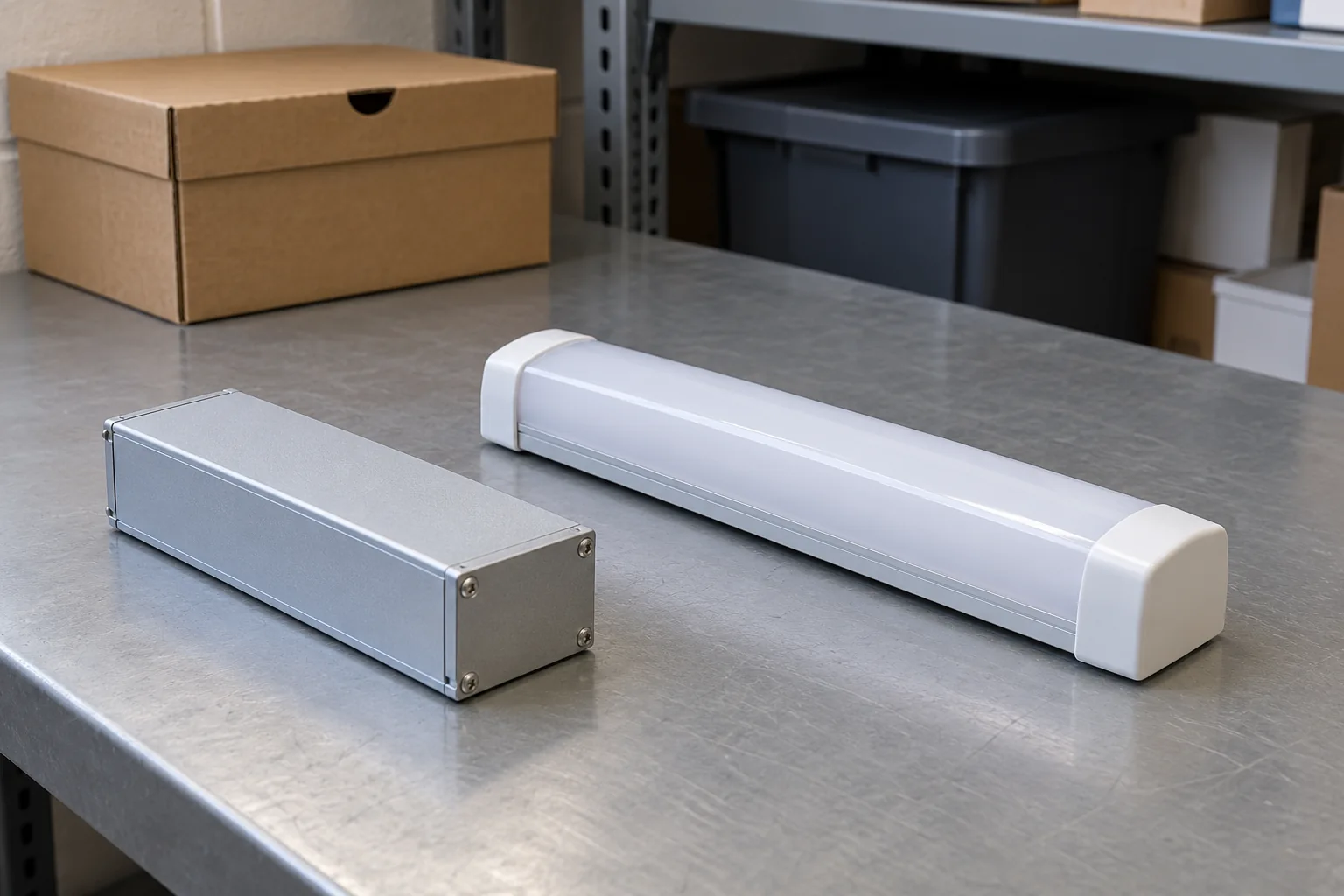
A closed driver or fixture on a service bench illustrates only the equipment’s external form. It cannot identify the cause of a reported flicker in your building. The useful preparation is to locate product and service information already held by the property team and associate it with the correct room.
Show which fittings were installed together and which were later replacements, where that history is documented. Separate a confirmed model from an approximate description. If a record refers to a previous product rather than the one now installed, keep that distinction visible so the review does not begin from a misleading inventory.
Known changes can help establish the sequence of events: a replacement fitting, altered room use or an approved control change may have preceded the report. Timing is context, not evidence that the change caused the behaviour. Ask the service contact how the retained fixture, driver and controls should be reviewed together before any particular part is proposed.
Four details make intermittent behaviour easier to discuss
| Record field | What to describe | What remains open |
|---|---|---|
| Time and duration | Give the approximate period and whether the visible change was brief or continued during the activity. Use observations already made during normal occupation. | The starting date, frequency and cause may remain uncertain when no reliable history exists. |
| Affected group | Name individual fittings, a recognisable row or the rooms involved. Note neighbouring lights that appeared steady at the same occasion. | A visual group does not confirm its electrical or control relationship. |
| Ordinary activity | Describe desk work, a meeting, restocking or movement through the room. Include any normal lighting choice already selected by the users. | The qualified review determines whether the observed relationship is relevant to the equipment scope. |
| Known change | Attach an existing replacement or authorised change record where available. Keep its date separate from the first date the behaviour was reported. | A sequence of events should not become an unsupported diagnosis or an instruction to reverse a change. |
A dimming report should name the room choice
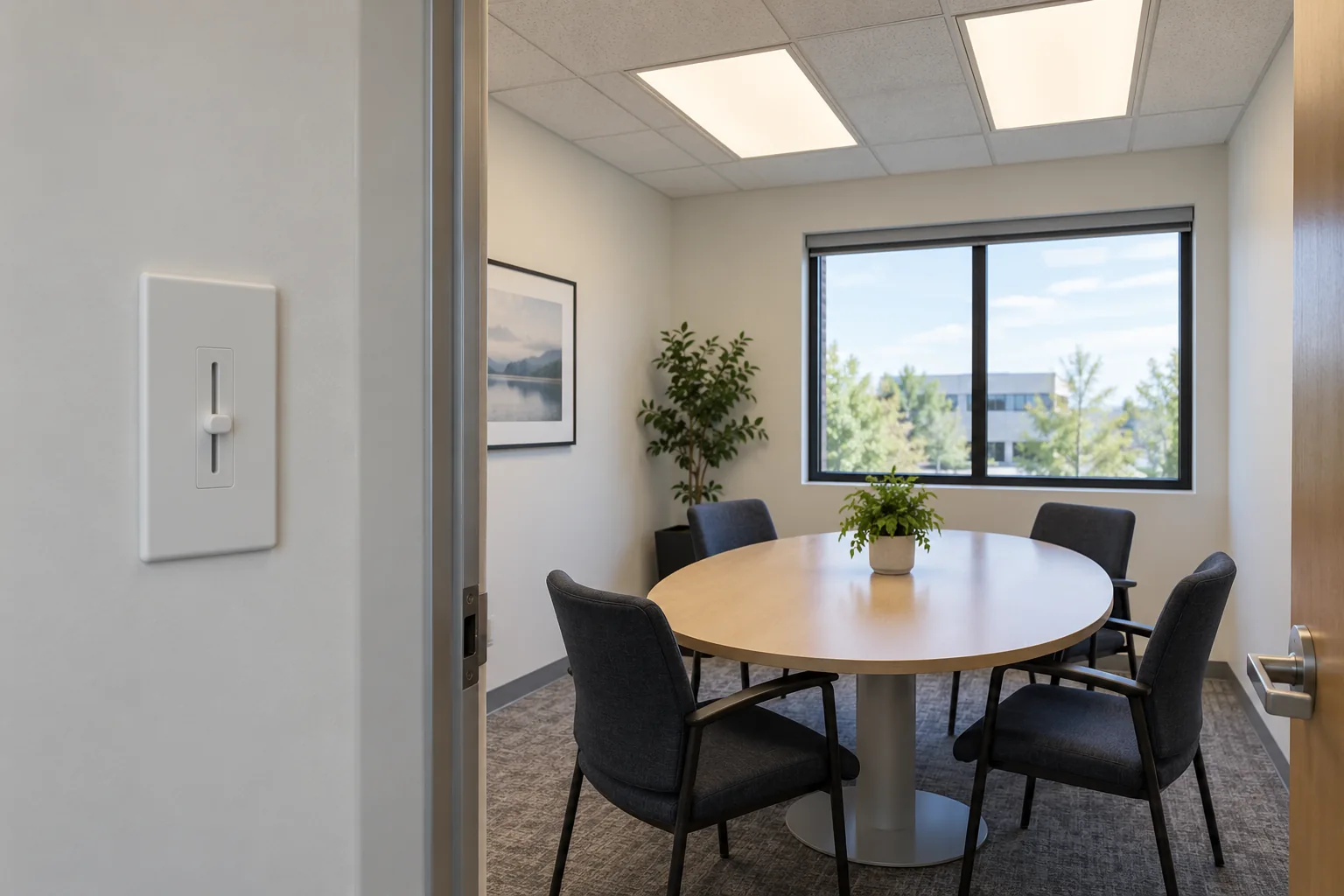
If the behaviour was noticed while users selected an ordinary meeting-room choice, describe that occasion. State the activity, the setting already in use and whether all visible fittings behaved alike. Use a recognisable scene name or a plain description if the room has no documented labels.
Keep the intended room use separate from the reported fault. A presentation arrangement, discussion setting and cleaning routine can involve different user expectations. The service account should identify which one was underway, while a later redesign question can ask whether those choices still serve the room.
Provide current instructions or equipment records if the authorised room contact holds them. Do not experiment with repeated selections or adjust concealed equipment to strengthen the account. The specific product combination and intended behaviour belong in qualified assessment; a control plate in a photograph does not establish compatibility or the remedy.
A fault report and a new operating brief can coexist
An intermittent concern
Keep the visible pattern, affected group and operational impact in a defined service request. Ask what assessment will consider the known fixture history and ordinary operating context. The first decision concerns understanding the reported behaviour, rather than selecting a replacement from a catalogue.
Unsuitable room choices
A room may also need clearer lighting choices for its activities. Describe that proposed improvement separately from the flicker account. The controls or dimming discussion can then address the intended use without implying that a new setting will resolve an existing equipment concern.
A future replacement
A wider LED change can be considered against maintenance history and the room’s future purpose. State which equipment is retained and which areas are under discussion. The immediate pattern should remain visible while replacement options, access and approval are considered.
Turn the observations into a service brief
-
Describe the occasion
Record the room, normal activity and visible behaviour reported. Include who noticed it and the approximate period. If reports differ, preserve the differences and identify what is uncertain rather than asking someone to reproduce the event.
-
Identify the group
Use an existing plan or familiar room references to locate the affected fittings. Separate neighbouring rows and tenant/common-area locations where their relationship is unconfirmed. Keep steady and inconsistent appearances associated with the same observed occasion.
-
Attach the known history
Bring existing product information, earlier confirmed work and authorised operating records. Name the contact who can clarify their scope. Label missing information openly; the enquiry can progress without occupants opening equipment or conducting electrical checks.
-
Agree the next decision
Ask which assessment, access and later authorisation steps are proposed. Identify whether the current concern, a controls change or a broader replacement is being discussed. Keep a record of the agreed question and any information still needed before work is approved.
Mixed corridor fixtures need separate location histories
Oakville’s employment-area review includes office uses.
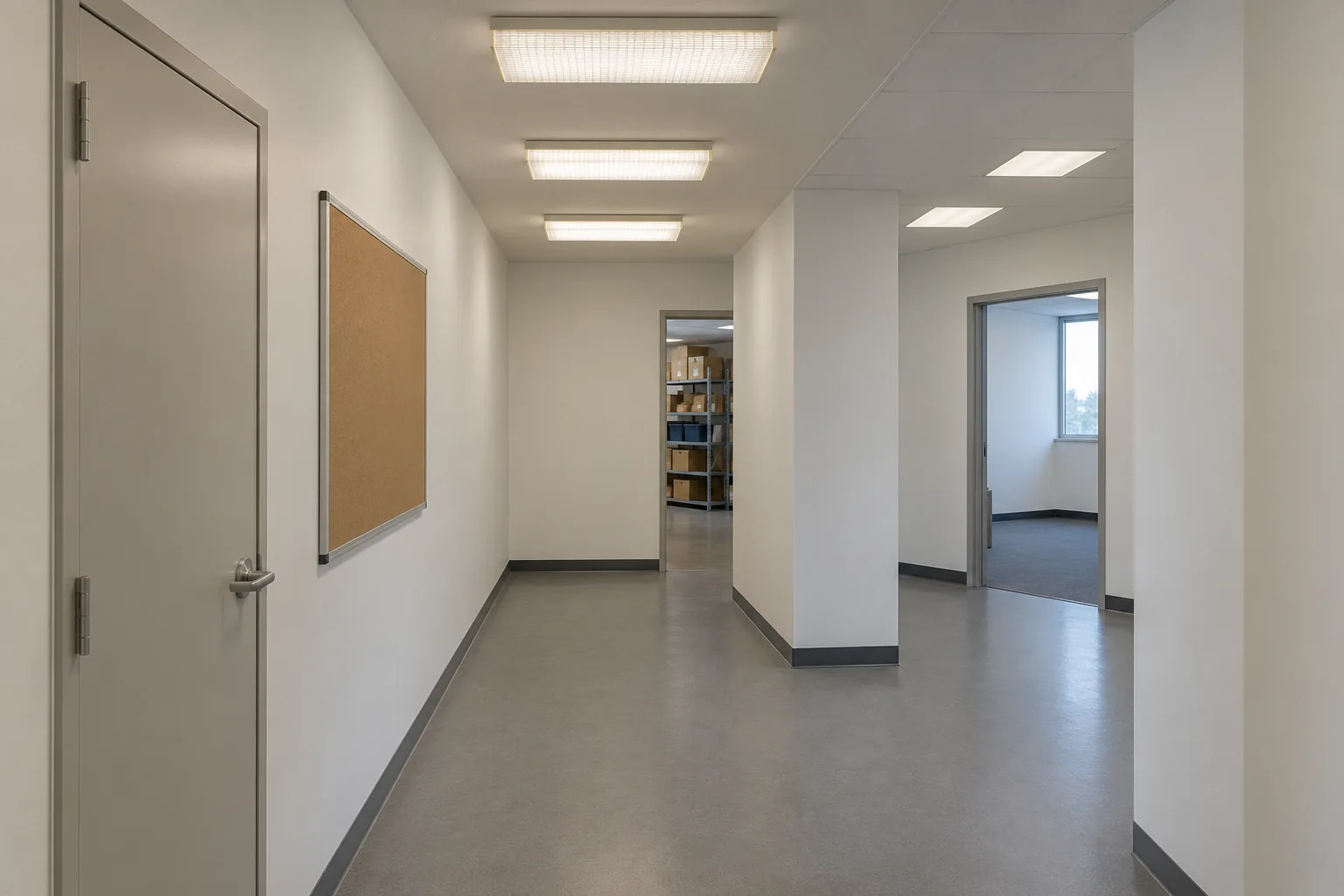
For an Oakville office tenancy, a report can cross from a meeting room into a common corridor without crossing the same management boundary. Identify where the behaviour was noticed and who manages the room and shared route. Describe any mixed fixture appearances by location rather than assuming they form one installation history.
A corridor may contain a newer entrance fitting, older linear products and individual replacements. Existing records should indicate which areas they cover. If the property team is considering a consistency project, keep that future objective distinct from the particular flicker reports already received.
Arrange the access discussion around occupied rooms and the route people need to use. A quiet period for one tenant can coincide with cleaning or activity elsewhere in the building. Explain those routines through the property contact so the assessment scope follows the actual premises instead of an assumed empty corridor.