
Use an item record and a separate visit record
An item record follows one recognisable location or defined group. Give it the property, area reference, date reported and the behaviour observed. A visit record follows the attendance and the items considered during it. Keep the two connected, but do not let a completed visit automatically close every item on the original list. Some work may have been excluded, deferred or left pending information. Those outcomes deserve their own recorded status.
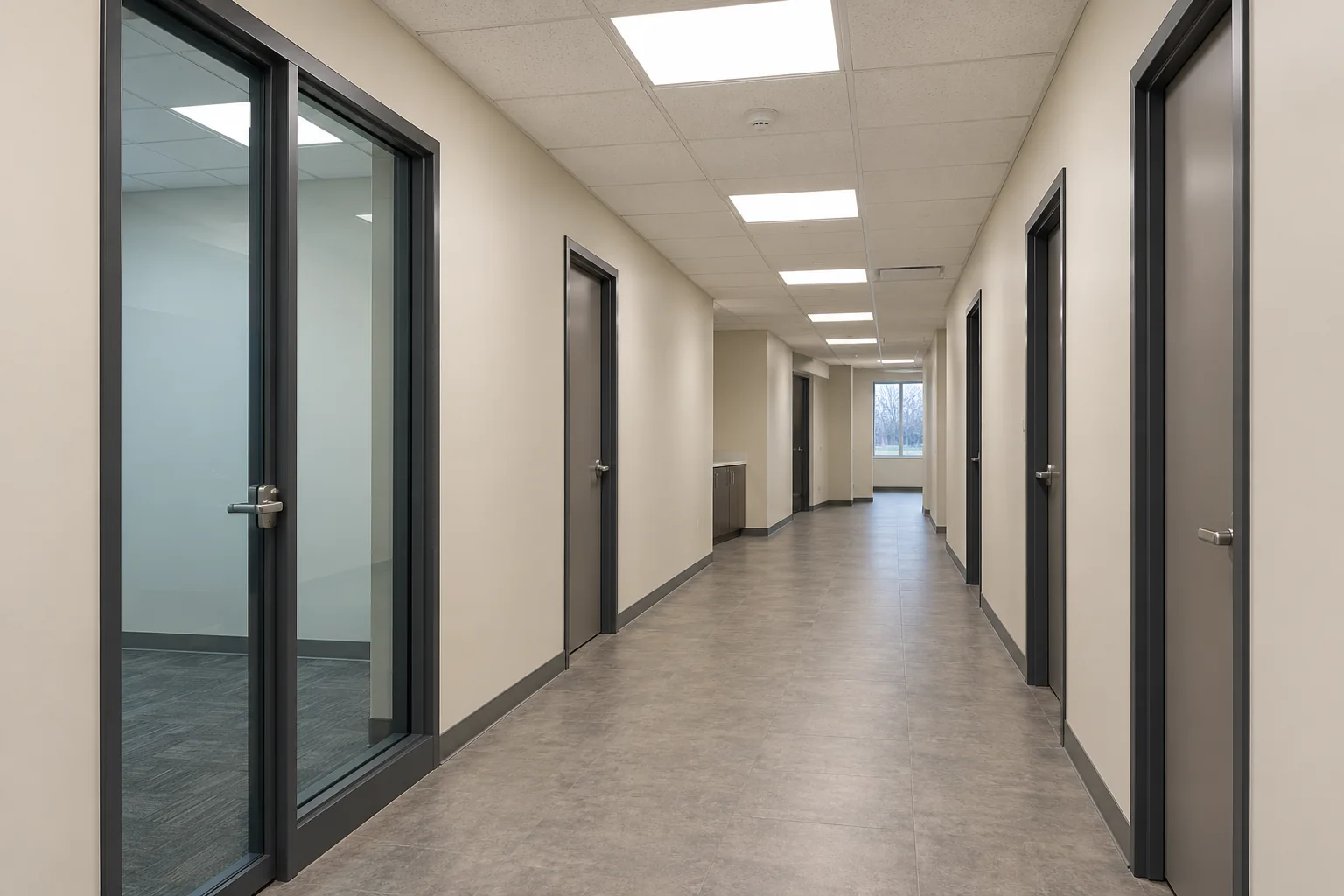
For example, a common corridor list might contain an unlit fitting beside the west tenant door, a separate intermittent report near the service entrance and a request to review mixed replacement appearances. Even if all three can be discussed during one visit, they are not the same issue. Retain the distinct report and decision for each. If only the first item is included in authorised work, say so in the record before the visit is treated as a corridor-wide instruction.
Existing paperwork can be attached without converting it into a diagnosis. A previous invoice may confirm a replacement at one location but leave the original symptom unclear. Record the confirmed work, the date and the gap in the history. If a spare fixture is mentioned, link it to its stored reference and ask the provider to confirm suitability before procurement. The management record should keep reliable information available while leaving technical conclusions to the appropriate assessment.
Four states separate a report from a completed decision
| Item state | What the record says | Next management question |
|---|---|---|
| Reported | A named location has an observed concern and a report date. The cause, included work and suitable remedy may still be unknown. | Who can clarify the ordinary effect on use and arrange the appropriate next review? |
| Proposed | An option or scope has been discussed, with included areas and assumptions visible. This is distinct from permission to proceed. | Which approval, product confirmation or access decision remains open before authorisation? |
| Authorised | The agreed work, responsible approval contact and defined locations are recorded. Changes need the project’s agreed decision route. | Have the access period, tenant communication and any dependencies been confirmed for those items? |
| Recorded outcome | The supplied work information identifies what changed and what remains outstanding. Completion can apply to selected items rather than the whole visit list. | Which records need updating, and which deferred concerns require a named next decision? |
Shared walkway work needs the users and the boundaries recorded
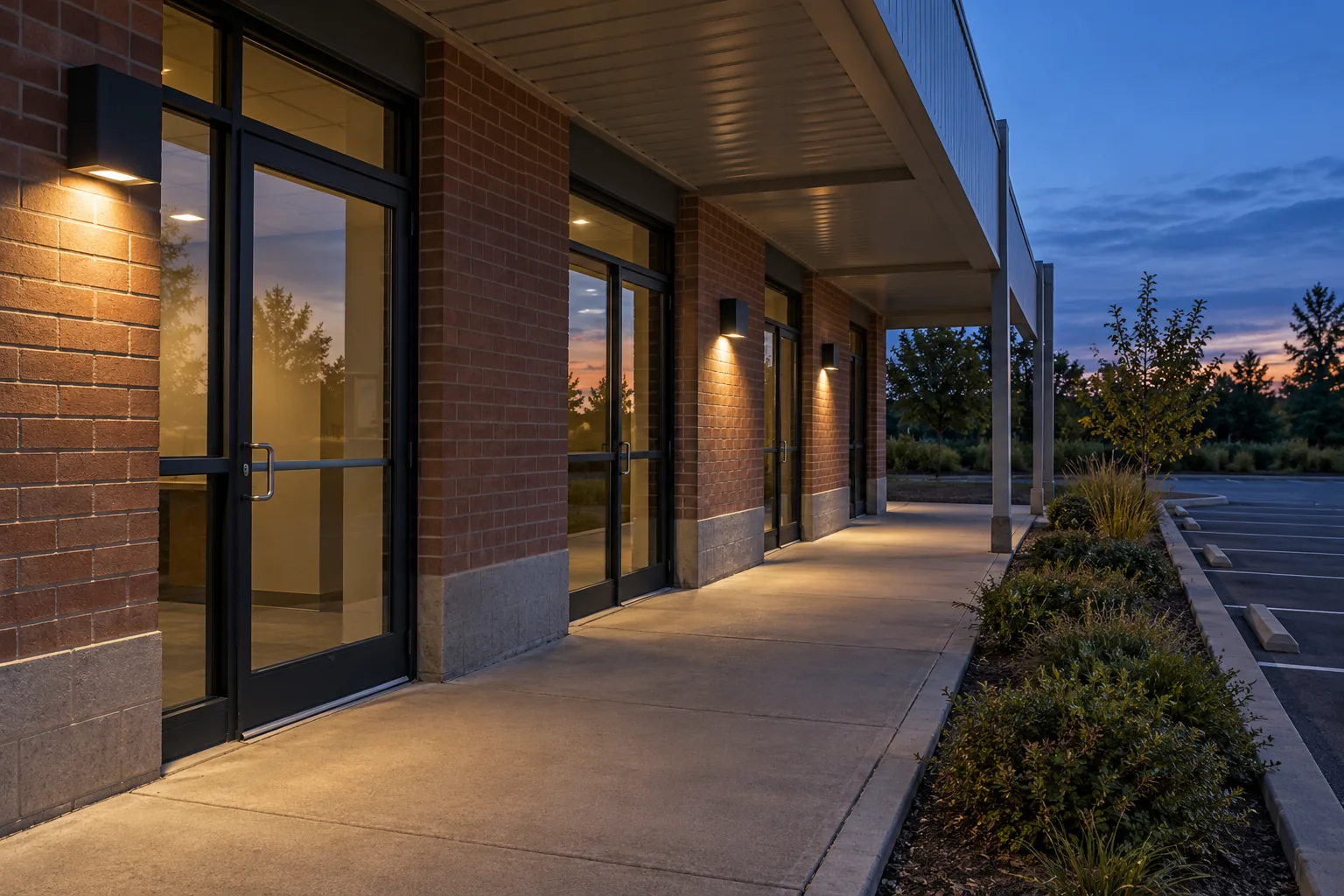
A shared commercial walkway can serve tenants with different hours. An early appointment, a delivery and a later closing period may overlap with a proposed access window. Ask each affected contact to identify the ordinary use that matters to the work area. Keep the communication list attached to that area, rather than sending a broad property notice that leaves tenants unsure which door or frontage is involved.
Record the boundary of each item on the exterior list. A fitting above a shared entrance and a fitting associated with a particular unit can sit close together while having different approval contacts. Do not turn proximity into an assumption about responsibility. Where the parties have an unresolved property arrangement, give that question an owner. The maintenance record can show the agreed practical scope without interpreting a lease or promising work outside the approved area.
Grouping should also preserve differences in the purpose of the work. One walkway fitting may be a present service concern while neighbouring equipment is being considered for a future coordinated replacement. Ask which items can share access and which need separate review. If a tenant’s upcoming frontage work will alter the proposal, record that dependency before a product order. Keep exterior distribution and control choices with the appropriate scope rather than treating visual matching as the whole decision.
Compare repair, a replacement standard and a capital phase separately
A defined repair decision
Begin with the present item and the assessment needed to identify its work. Ask the proposal to distinguish restoring that location from changing a broader area. Retain supplied information about the confirmed outcome and any new recommendation. An active report should remain visible while a future property scheme is discussed; it should not disappear into a capital list whose dates and approvals are still open.
A replacement standard
A manager may want a clearer purchasing approach for comparable corridor or entrance locations. Define the application, retained arrangement and characteristics the provider needs to confirm. Ask how acceptable alternatives will be approved. A standard can guide later decisions without authorising every replacement immediately. Keep exceptions attached to their location and reason, especially when a different task or mounting condition makes an apparent visual match unhelpful.
A bounded capital phase
A phase needs included areas, exclusions, dependencies and the decision required before it proceeds. Use recurring item history and upcoming property changes to frame the priorities. Record which present faults are handled separately and which assumptions need review nearer the work period. Compare each phase against current occupancy and access. A prior proposal is useful background, but its old fixture count and tenant arrangement should not silently become the current approval basis.
Carry each item through four management decisions
-
Locate and describe
Use the property’s familiar references and record the ordinary observation, date and reporting contact. Distinguish current faults from appearance preferences and planned changes. Attach available photographs or earlier service information without adding an assumed internal cause. Give uncertain details their own note so the initial list is useful without pretending that every product and system relationship has been verified.
-
Choose the approval route
Identify the person who authorises the defined area and the people able to explain its use. Ask whether the next step is a repair review, grouped maintenance discussion or replacement proposal. Keep unresolved responsibility questions with the relevant parties. Record which items are actually approved, and who can decide if the proposed work changes when further information becomes available.
-
Confirm the access bundle
List the locations sharing an access period, the route for equipment and the contacts handling notices and area release. Compare the bundle with tenant activity, parking and other property work. Confirm the appropriate work arrangements through the provider. A grouped list is an organisational tool; it does not establish that every item has the same cause, product requirement or feasible completion window.
-
Record outcomes and open items
Connect the supplied work information to each location. Update product references and the authorised scope where changes were accepted. Mark deferred items with their reason, responsible contact and next decision. Keep the visit record alongside the item histories. The following enquiry should be able to identify what was completed without depending on a former manager’s memory of one broad maintenance request.
A garage phase needs more than a list of available bays
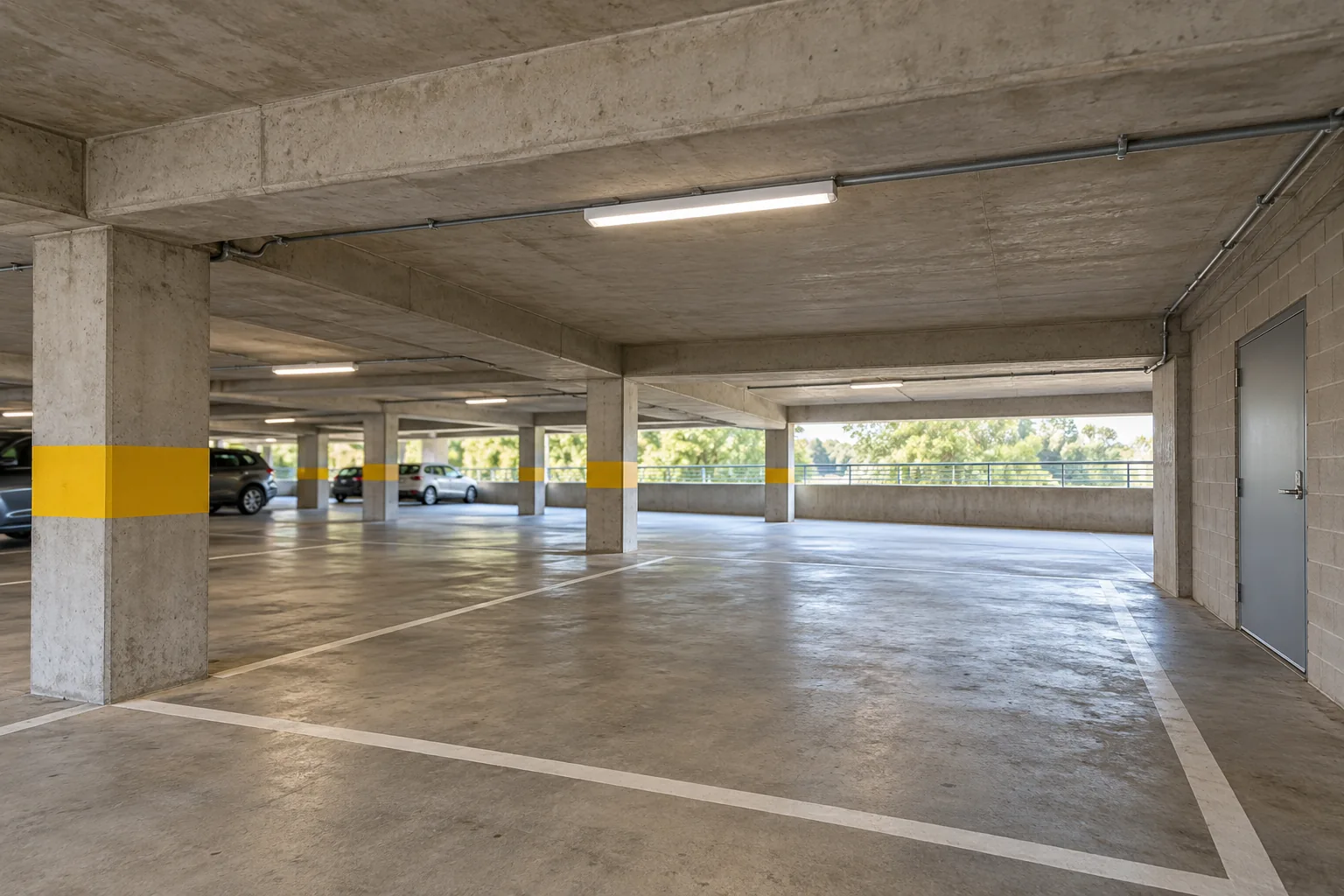
Garage work can depend on a specific area being released, a route for equipment and the neighbouring movement that continues. Record the level and bay references the property uses, then ask the provider to confirm the work-area needs for the intended scope. An available parking space beneath a fixture is one detail, not a complete access plan. Include turns, entrances and other arrangements that management must coordinate for that phase.
Keep confirmations separate from requests. A notice asking users to release bays and a confirmation that the agreed area is available describe different stages. Name the person who checks the property arrangements and the contact who can resolve a conflict. Where access depends on another tenant or property activity, record the dependency with the phase. If that activity moves, review the release assumptions before treating the original date as settled.
After a phase, update the location record before planning the next one. Identify retained fixtures, supplied replacement references and control groups described within the completed scope. Keep any separately managed emergency or exit equipment outside assumptions about ordinary lighting work. If the following level has different parking or pedestrian use, make that difference visible in the new brief. A repeated purchasing approach can coexist with a separate access decision for each location.
Keep the verification and project contacts with the approved scope
ESA advises asking for the contractor’s ECRA/ESA licence number and verifying it through its Find a Contractor tool.
Retain the actual business and project contact associated with the approved work. Confirm project-specific review and documentation responsibilities through the relevant participants. Do not infer credentials from a spare fixture, a referral or the appearance of a service vehicle.
Identify the property before grouping the Oakville work
For an Oakville manager coordinating more than one commercial address, attach the civic address and unit or common-area reference to every work bundle. Similar corridor names can belong to different properties, while one address can have several tenant approval contacts. Include the agreed entry point and the person arranging local release. A centrally approved list should reach the site contact with its own area references and outstanding decisions, so the access discussion does not depend on recognising a photograph or a previous manager’s shorthand.