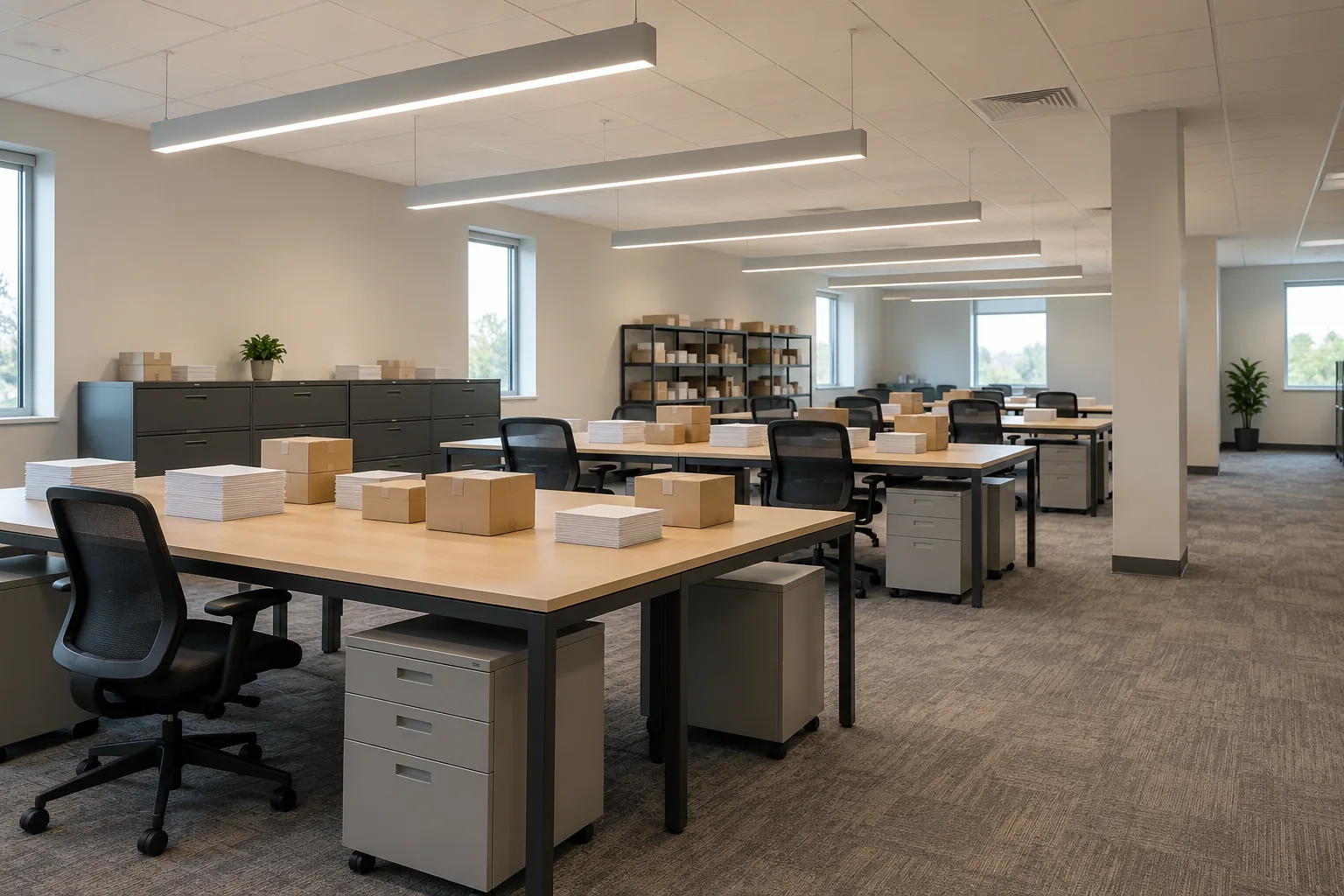
Separate renewal from a changed-use problem
A property may be considering replacement because maintenance has become inconvenient, because the appearance is inconsistent or because staff no longer find the arrangement useful. These are different reasons to begin a comparison. Name the actual concern before deciding which equipment should change.
A functioning fluorescent group does not establish that the layout still suits the work. Equally, an isolated failure does not establish that every fitting needs replacement. Keep the current service issue, the desired improvement and the boundary of any wider project visible. That gives each proposed route a purpose to explain.
Compare the installed system with the proposed result
| Comparison question | Information that matters | Decision to clarify |
|---|---|---|
| What is retained? | Identify whether the option keeps a housing, fixture position, ceiling opening or other installed equipment. Use the confirmed product and condition information available to the project team. | Ask which retained details still need verification before the route is selected. |
| Where is useful light needed? | Describe work surfaces, room boundaries and the normal views of staff or customers. Include areas that changed after the original arrangement was installed. | Decide whether the comparison is equipment renewal, distribution improvement or both. |
| What controls are involved? | State the present operating choices and the proposed fixture, driver and control combination. Include groups that will remain outside the replacement boundary. | Compatibility and intended behaviour need confirmation for the actual products. |
| How will later service be organised? | Ask what installed-product information the property can retain and how the proposed arrangement will be identified when a replacement is needed. | Consider the responsible contact and access conditions alongside the product schedule. |
| What leaves the property? | Define the removed equipment included in the work and the established arrangements for its handling through the property or authorised provider. | Keep end-of-life responsibility explicit rather than assuming it follows from the product price. |
Condition determines what can be compared
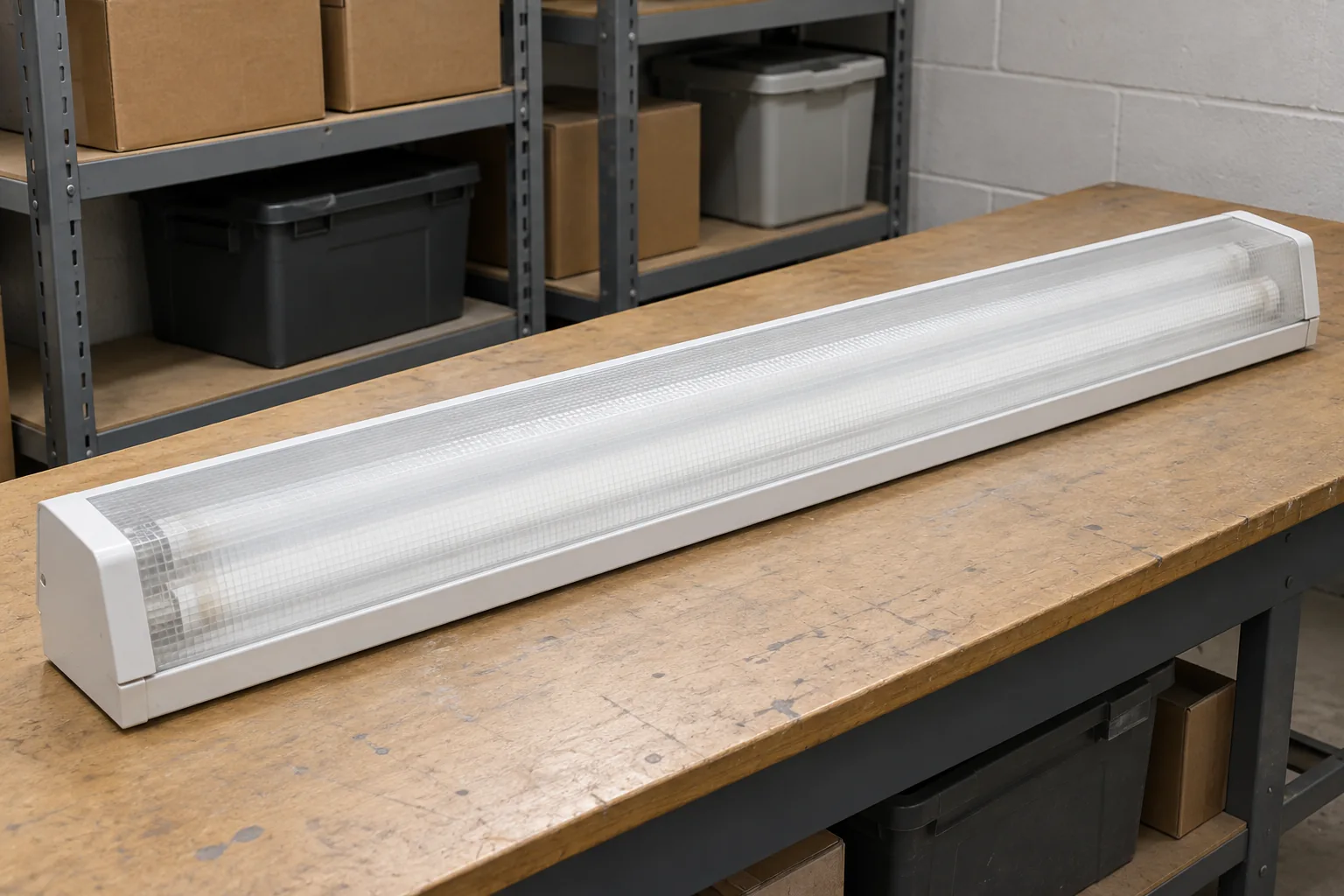
A closed fixture on a bench can illustrate a product family, but it cannot establish the condition of every similar fitting in a building. The property may contain several replacement histories behind a uniform ceiling appearance. Ask the project team which areas and equipment information support the proposed approach.
Compare a route that retains suitable equipment with one that replaces a complete luminaire. Retention may be proposed to work with an established ceiling arrangement; a complete replacement may be proposed to change the distribution, appearance or equipment family. Each route should explain its conditions and its intended result. Neither can be confirmed by matching the visible length or shape alone.
Keep uncertain existing details out of the final purchase assumption. A service record can be useful even when it covers only part of the property, provided that limit is stated. Have the people assessing the electrical scope establish what the proposed product can be used with, rather than expecting facility occupants to open fittings or identify concealed components.
Consider what a changed ceiling or room use does to the decision. Retaining a housing may have less value if the surrounding construction is also being altered. Replacing a complete fitting may still leave a poorly located point serving an obsolete layout. The comparison should recognise both the equipment and the place it will continue to serve.
Choose the boundary that answers the problem
If an Oakville commercial premise combines office rooms with storage or dispatch, compare the replacement decision by activity. Similar-looking fittings above desks and receiving work do not make those spaces one requirement. Identify which equipment renewal questions are shared and which distribution or access decisions differ. A coordinated purchasing discussion can retain those distinctions instead of selecting one option solely because the ceiling appearances match.
A defined repair requirement
A specific outage or irregular behaviour belongs in a service discussion about the affected equipment. Provide its location, timing and known history. Keep the symptom distinct from a longer-term preference for a different ceiling appearance.
Ask what information is needed to define the immediate work. A repair decision can sit beside future renewal planning without becoming evidence that all similar fixtures should be replaced at once.
Renewal of an established inventory
An existing group may still occupy useful positions while the property wants to reconsider its equipment. Compare replacement options against those rooms and their operating needs. Identify which areas are included and which will remain.
The resulting boundary should explain retained components, product families and related control work. A product substitution should not obscure missing assumptions about compatibility, access or removed equipment.
An arrangement for changed activities
New partitions, desks, counters or storage can make the previous distribution less useful. The discussion may include new positions or zones as well as equipment renewal. Describe the activities that now need service.
Do not constrain that comparison to the old fixture count solely because a fluorescent-to-LED change prompted the enquiry. Keep the wider layout decision explicit so its associated work is understood.
Ask how the proposed fixture serves the room
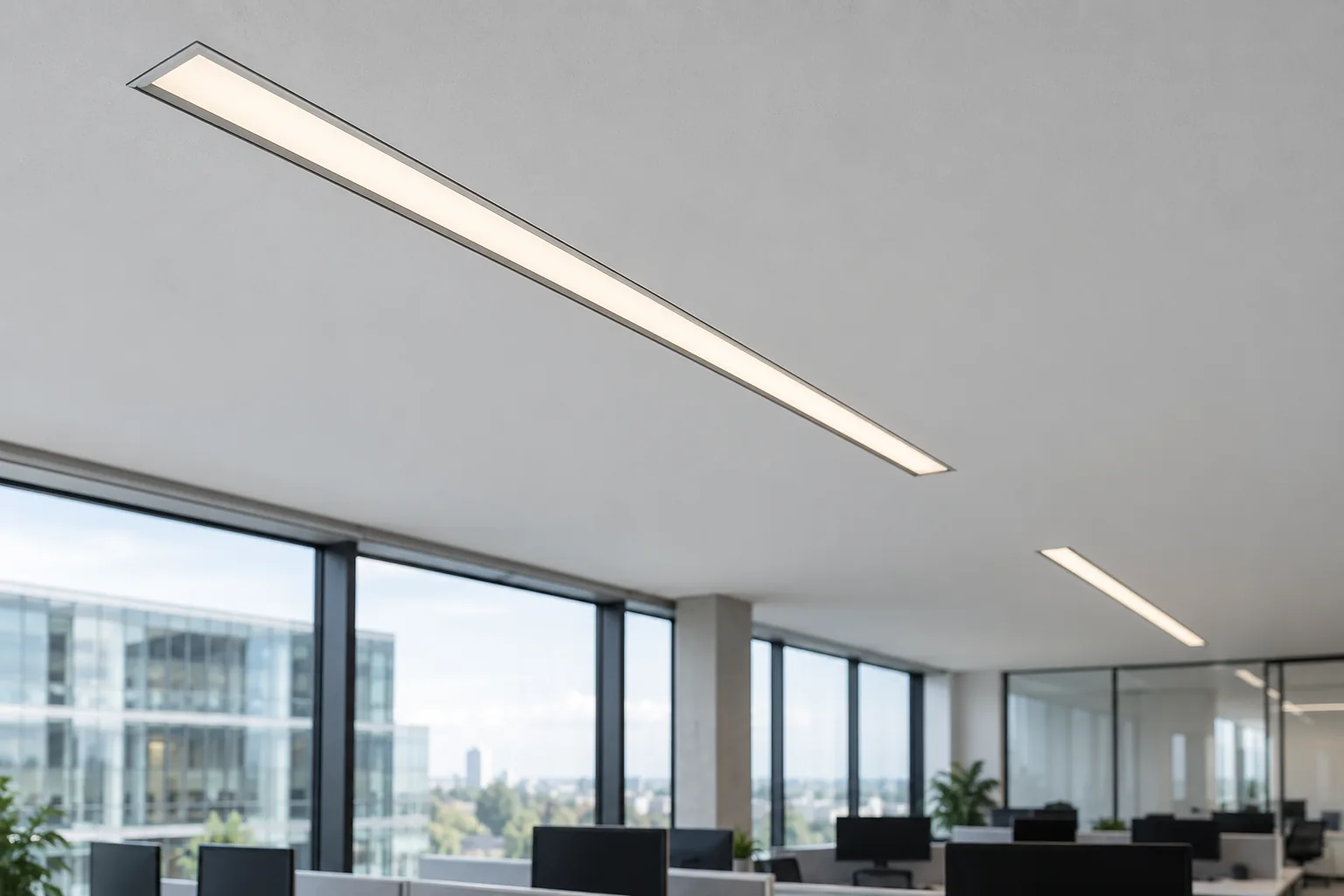
Compare the proposed fixture as an installed choice rather than treating LED as a complete specification. Ask how its distribution relates to the tasks, how it appears from normal occupied positions and what information supports the selected control relationship. A concise product schedule should identify the actual choice, not leave those questions hidden beneath a broad technology label.
The US Department of Energy (DOE) separates source efficiency from complete-fixture efficiency; fixture design and power supply also affect consumption.
If energy evaluation is part of the decision, ask what equipment and operating assumptions are used. Separate product information from estimates about the property’s hours and future behaviour. The comparison should make its scope and uncertainty visible; there is no reason to turn an early equipment choice into an assured result for the building.
Appearance and task use deserve their own consideration. An office screen, a corridor transition and a work surface can prompt different questions about the same proposed fixture. A sample arrangement, where agreed, should be considered from the relevant occupied views and documented with the conditions used. It should not stand for every room by default.
Include the retained groups in that discussion. A locally attractive replacement can look or operate differently beside unchanged fixtures. Decide which differences are acceptable, which need coordination and which belong to a later phase. A deliberate mixture is easier to maintain than one created by purchases made without the wider plan.
Turn the comparison into a usable decision record
-
State the reason for reviewing
Identify maintenance concerns, appearance preferences and changed activities separately. Mark the affected areas and useful existing conditions. Decide which question the initial comparison needs to answer before broadening the replacement boundary.
-
Confirm the proposed route
Ask what the option retains, the specific products involved and the existing information it relies on. Have the appropriate project personnel address compatibility and electrical scope. Keep unverified details visible before equipment is ordered.
-
Coordinate the occupied work
Describe room release, access and material movement with the property and users. Identify connections between phases and the retained system. Clarify who arranges removed equipment handling through the established provider or property process.
-
Retain the approved information
Keep the selected product schedule, project boundary and agreed operating description together. Record the decisions deferred to later phases. Make the information accessible to the facility contact who will organise maintenance and future changes.
Plan maintenance and end-of-life responsibilities
The replacement decision should include how the property will identify and organise future service. Ask which product information is available at handover, where it will be kept and who uses it when a fitting needs attention. The purpose is a practical record for the actual arrangement, not an assumption that a technology label removes maintenance responsibilities.
Consider the access environment after furniture, shelving or equipment returns. A coherent fixture family is useful to the facility team, while the location and route for future access still need discussion. If different rooms require different products, record why each group was selected so later purchasing does not erase the distinction.
Environment and Climate Change Canada’s voluntary mercury-lamp code describes separate collection from general waste and environmentally sound management. Confirm the property’s authorised end-of-life arrangements with its waste provider.
Agree the responsibility for removed lamps and fixtures before the work window. Ask the property contact or authorised waste provider which established stream applies to the equipment involved and how it is included in the project. Keep that planning question separate from instructions for occupants to dismantle, break or process anything.
Phased replacement can leave old and new equipment present together. Maintain a recognisable area record and confirm how later phases will be considered. If priorities or room activities change, the remaining plan can be revisited without losing the information that made the first decision useful.