Commercial Lights Not Working in Oakville
When commercial lights are not working, start with a description that another person can locate and understand. Identify the unlit fitting or area, what nearby lights are doing and which ordinary activity is affected. A storage-room outage, a dark high bay and a group of unlit corridor fittings create different requests, even when each is described as lights being out.
For an Oakville premises, connect that report with the building and unit, available service history and the person coordinating entry. Keep unknown equipment details open for qualified assessment; a useful request does not depend on finding the cause.

Send the outage pattern and the access context
Give the full property and unit reference, the room or aisle name and the first occasion on which the outage was noticed. Describe one fitting, a whole row or several rooms separately. State how the issue affects staff, customers, stock movement or a shared route.
Include records already held by the facility and the contact who can discuss access. An incomplete inventory is acceptable background when its gaps are clear. Flag emergency or exit-system concerns separately and use the facility’s appropriate response process where the condition needs immediate attention.
- Recognisable locations and the extent of the outage
- Ordinary timing and the activity affected
- Available records and the building or tenant contact
Make the location more precise than a fixture count
A report saying that several lights are out can leave the receiving contact unsure whether those lights share a room, a tenant boundary or even a building. Use the same location names as the operating team: the rear stock room, the receiving lane beside a named door, or the corridor between reception and a particular suite. If the property has several similar areas, add a reference already used on its plan.
Oakville’s employment areas include land around Royal Windsor Drive.
For a unit in that area, give both the premises and the affected internal zone. A high-ceiling storage area can sit behind customer-facing offices, while the entrance route belongs to common property. Explain which area your team occupies and who manages any shared doors or corridors. The geographic reference helps identify the premises; the work boundary and access authority still need their own description.
Separate the date reported from the date the fault began when that distinction is unknown. A room may have been unused before someone noticed an unlit fixture. Say what is established and what is only an estimate. This gives the service contact a usable starting record without a false timeline.
A high-bay outage needs the aisle context
A high bay can be identified through the area beneath it without approaching the fitting. Describe the rack aisle, packing position or open storage zone from ordinary accessible locations. Include whether one unit is dark or a recognisable group is affected, and whether the observation was made during the usual shift or another occupied period.
Explain what happens in that part of the warehouse. An outage above a travel route may affect a different activity from one above label reading or a fixed bench. Include nearby lighting that remains operating as context, while leaving the question of whether the area can continue in normal use with the responsible facility team.
The space below matters to arranging assessment. Racks, stored pallets, permanent equipment and delivery movements should be described, together with any height information already in building records. Identify the person who can discuss releasing the area. The service team needs to agree the actual access method and work boundary; a clear aisle in a photograph is not a confirmed access arrangement.

Keep four outage patterns distinct
| Observed pattern | Useful information | Question for service |
|---|---|---|
| One fitting remains dark | Name its location and the surrounding lights visible during normal use. Note whether it has been reported before and retain the corresponding service reference where one exists. | What assessment and repair scope is appropriate for that particular fitting and its retained arrangement? |
| A row or room is unlit | Identify the physical extent and the ordinary operating period. State whether the group was normally expected to be lit at the time of observation. | Which equipment and operating relationships need review before the group is treated as one confirmed fault? |
| Several separate locations are out | List each location independently, including the date reported and its operational effect. Similar appearance does not make their histories identical. | Can assessment be coordinated around common access while preserving a separate record for each concern? |
| The outage comes and goes | Retain the occasions already noticed and the activities underway. Avoid describing a later working period as proof that the earlier report was mistaken. | Does the intermittent account belong with the flickering guide or a defined service review of changing operation? |
Priority follows the affected use
A working position
Describe the desk, counter, bench or picking position affected and the activity people were trying to perform. State whether the area has been restricted by the facility team. The report should convey the actual interruption instead of using a dramatic label without context.
A shared route
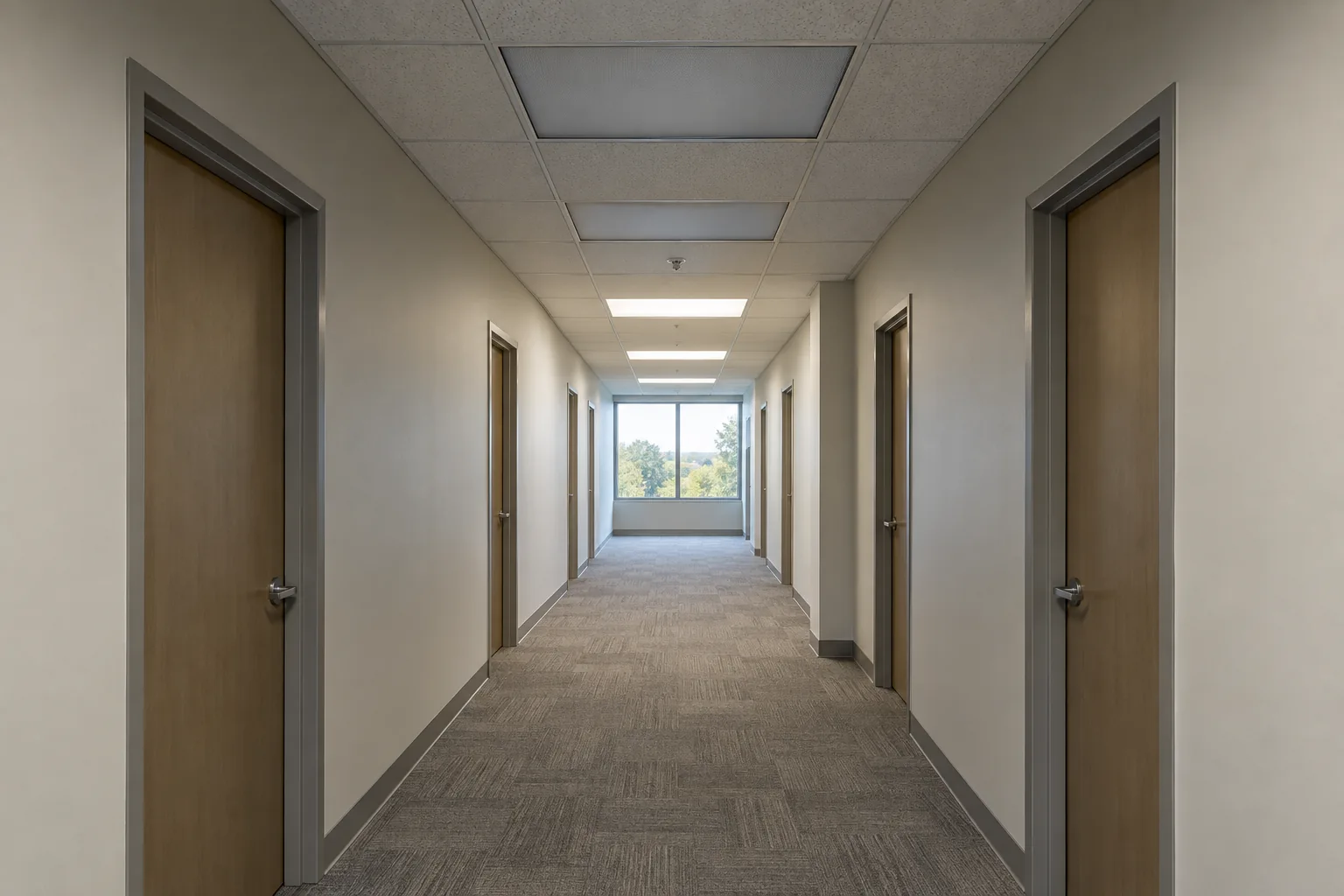
Identify the doors and destinations connected by the route. Include the property contact and any established arrangement for managing the concern. Where normal movement or a building safety function is affected, bring that fact to the responsible on-site team promptly.
A seldom-used area
Record the location even if its present impact appears limited. Explain when staff next expect to use it and whether other planned work is already being discussed. A future access preference can inform coordination without turning a current fault into an assumed appointment.
External appearance helps identify equipment
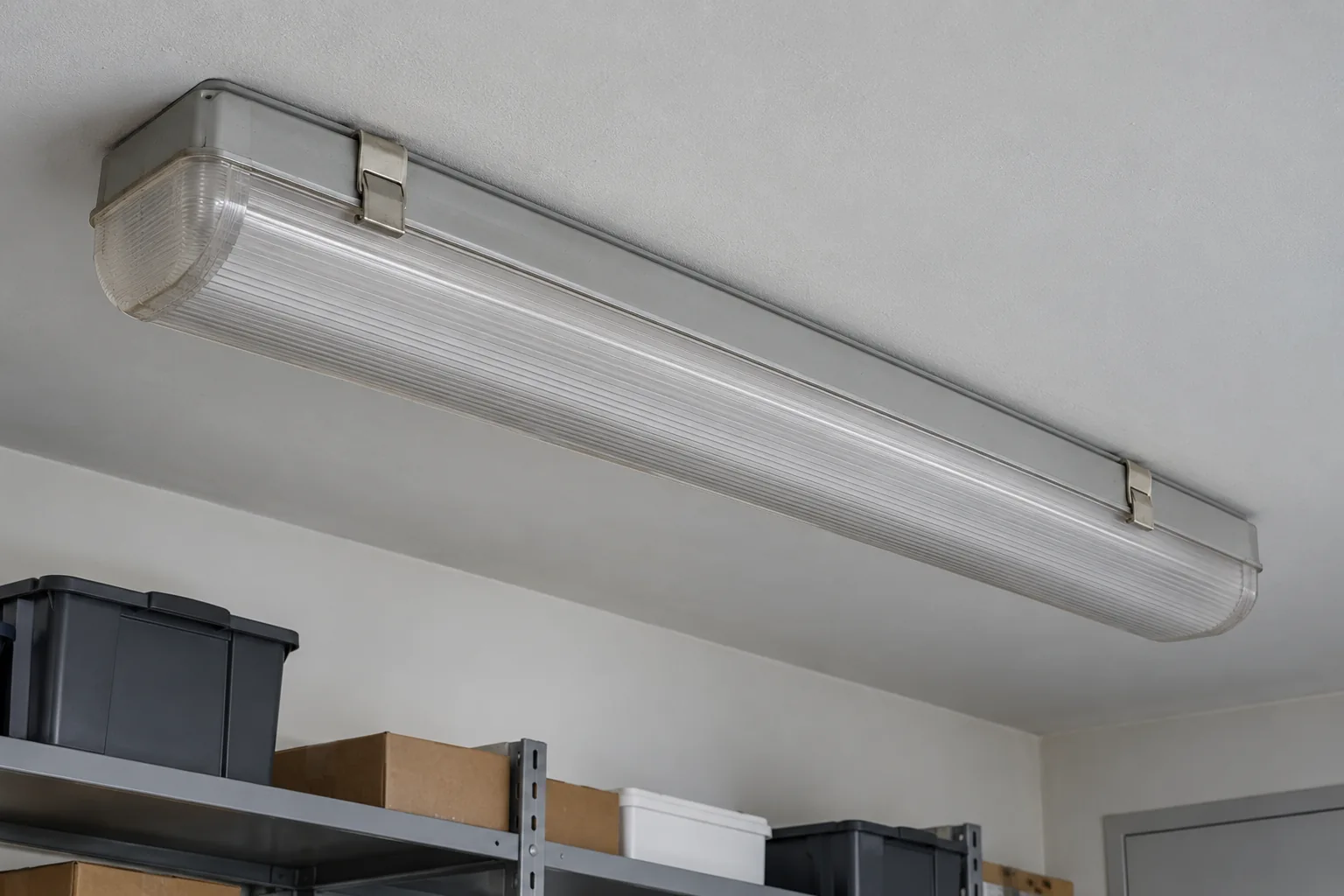
An ordinary view can distinguish a recessed panel, an enclosed linear fitting or a suspended fixture. It can also show an obviously damaged cover or a different housing among neighbouring products. Report that visible condition accurately, while keeping the interior condition and reason for the outage unresolved.
Existing product schedules and previous invoices may add model information. Associate those records with the correct location and state if they cover an earlier replacement rather than the current fitting. A document for one room should not silently become the specification for the entire building.
Photographs supplement the account when they are already available or can be taken from an ordinary accessible position. They need not reveal hidden equipment. Leave covers, wiring and electrical assessment to the people responsible for the work; an identification photograph is useful without customer intervention.
Prepare the account in four parts
-
Locate
Use the property, unit and familiar room or aisle reference. Distinguish neighbouring fixtures where needed with an existing plan or an ordinary-view photograph. Include the areas that remain lit so the report has a clear physical boundary.
-
Describe
Record what was noticed, when it was noticed and the normal activity involved. Mark unknown starting dates and uncertain quantities honestly. Keep a constant dark fixture separate from a fitting that changes during use, without trying to recreate either condition.
-
Connect
Attach relevant existing records and the person who holds them. Explain tenant and common-area responsibilities, present restrictions and access questions. Bring a previous confirmed repair into the history without assuming the same explanation applies to the current outage.
-
Clarify
Ask what initial assessment is included, which information still needs confirmation and how any later repair decision will be authorised. Keep the present concern identifiable if a broader replacement is also proposed. Agree scope and timing through the project contact.
Keep common-corridor outages with the property contact
Several corridor fittings can appear to change together, but their visible grouping does not establish a shared electrical cause. Describe the start and end of the affected corridor, the tenant entrances it serves and the periods when people normally use it. A suite-only report may omit the manager responsible for the shared route.
Ask the property contact which existing plans, service history and access arrangements can be provided. A tenant may hold photographs while the manager holds the earlier work record. Combine those references under one corridor name so information is not lost between separate requests.
A present outage and a wish for a more consistent corridor appearance can be discussed together with separate objectives. Restoring a defined concern, matching a replacement and planning a future corridor upgrade need clear boundaries. Agree which decision comes first rather than assuming every visible difference belongs in the initial repair.