
Exterior Lighting Control Problems in Oakville
Exterior lights operating through a bright afternoon, remaining dark during evening use or changing unexpectedly need a clear behaviour report. Identify which areas are involved and what they are meant to do. Similar symptoms do not establish that the same photocell, timer or sensor problem exists at every property.
For an Oakville facility, keep the observed pattern separate from the owner’s requested operation. Bring ordinary-use observations, available schedules, known recent changes and the contact who manages shared settings. The enquiry can then consider existing equipment and the intended hours together, without occupants opening controls, covering sensors or attempting to reproduce a fault.
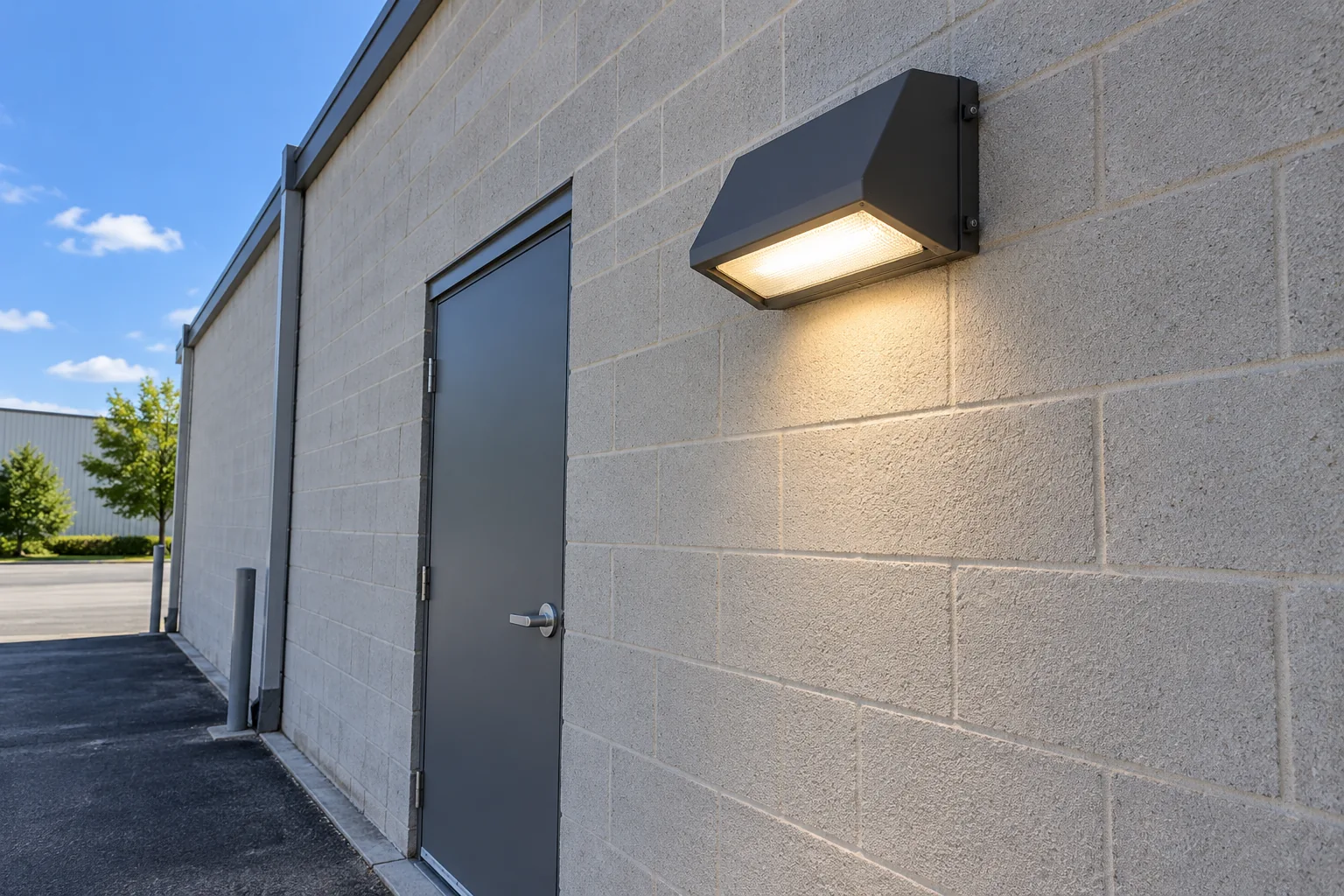
Tell us when the exterior lighting behaves unexpectedly
Name the building side, entrance or parking group and the times already noticed. Say whether the behaviour is consistent, intermittent or known only from one report. Include daylight conditions and ordinary site activity where those details are available.
Add the hours the area should serve, current control records and who approves changes. A schedule copied from an old tenancy should be identified as such. Where the control type is unknown, use the visible location and existing records to introduce the concern without naming an assumed failed component.
Four behaviour reports need four clear accounts
| Observed pattern | What to record | Question for assessment |
|---|---|---|
| Lights on during daytime | State the actual period and daylight conditions rather than using day as a single condition. Identify the lights involved and any known intentional operation or recent work. | Does the reported behaviour match the documented intention, and which equipment or interfaces need review? |
| Lights dark during evening use | List the affected area and whether surrounding lights appear to operate. Give the occupied period, existing timetable if known and the date the concern was noticed. | Is the request to restore established behaviour or to support a newly requested evening period? |
| Lights change repeatedly | Describe the approximate sequence already observed, including whether the same locations respond together. Retain time and nearby operating-light context without staging a test. | What documented control relationships and installation conditions can be assessed against the reported sequence? |
| Different zones disagree | Name each building side or parking group, its intended users and the behaviour noticed. Keep unverified assumptions about shared controls separate from actual location records. | Which differences are intended, and which locations need a defined fault or operating-strategy review? |
Bring the sensor's surroundings into the account
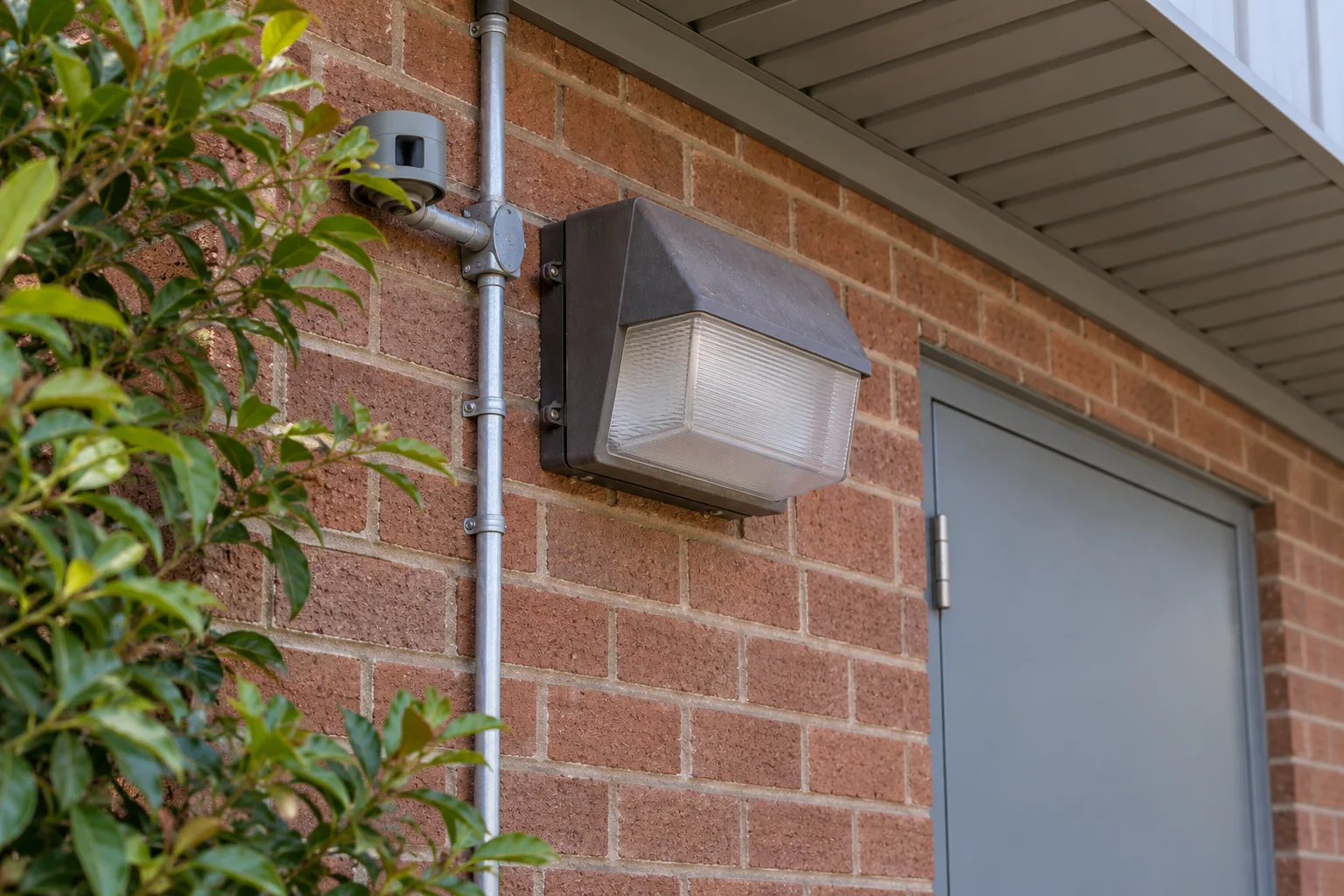
An existing photograph or ordinary ground-level view may show an overhang, planting or equipment near a sensor-shaped device. Describe those surroundings and any known facade changes. Do not reach the device, remove an obstruction or cover its window to explore the response. Its identity, arrangement and suitable location need review against the actual installation and product information.
Intermatic’s photocontrol support guidance identifies nearby artificial light, including the controlled source, as a possible nighttime cycling factor. This is assessment context, not a diagnosis. Record the observed sequence and surroundings; leave installation review and corrective work to qualified personnel.
Preserve the difference between a known change and a possible explanation. If new fixtures were installed recently, provide the work record; if a branch is now visible near a device, describe it as a visible condition. Neither statement proves cause. A timeline that labels those facts correctly gives the assessor a better starting point than an account already committed to replacing a particular control.
Clarify whether the intended operation has changed
Restore a known operating pattern
Describe the previous behaviour actually known, the current difference and the affected locations. Attach a current schedule or service record where available. Assessment can consider that account against the equipment. Do not turn a recollection into a guaranteed setting or assume that a single replacement device will restore every exterior group.
Support a different occupied period
State the new hours and users, including late cleaning, staff departures or deliveries. The existing arrangement may need a different scope from fault repair. Confirm what the installed and proposed controls can support, with common-property approval clear. Keep the requested strategy separate from an unexplained change already occurring.
Use available control records to define the review boundary
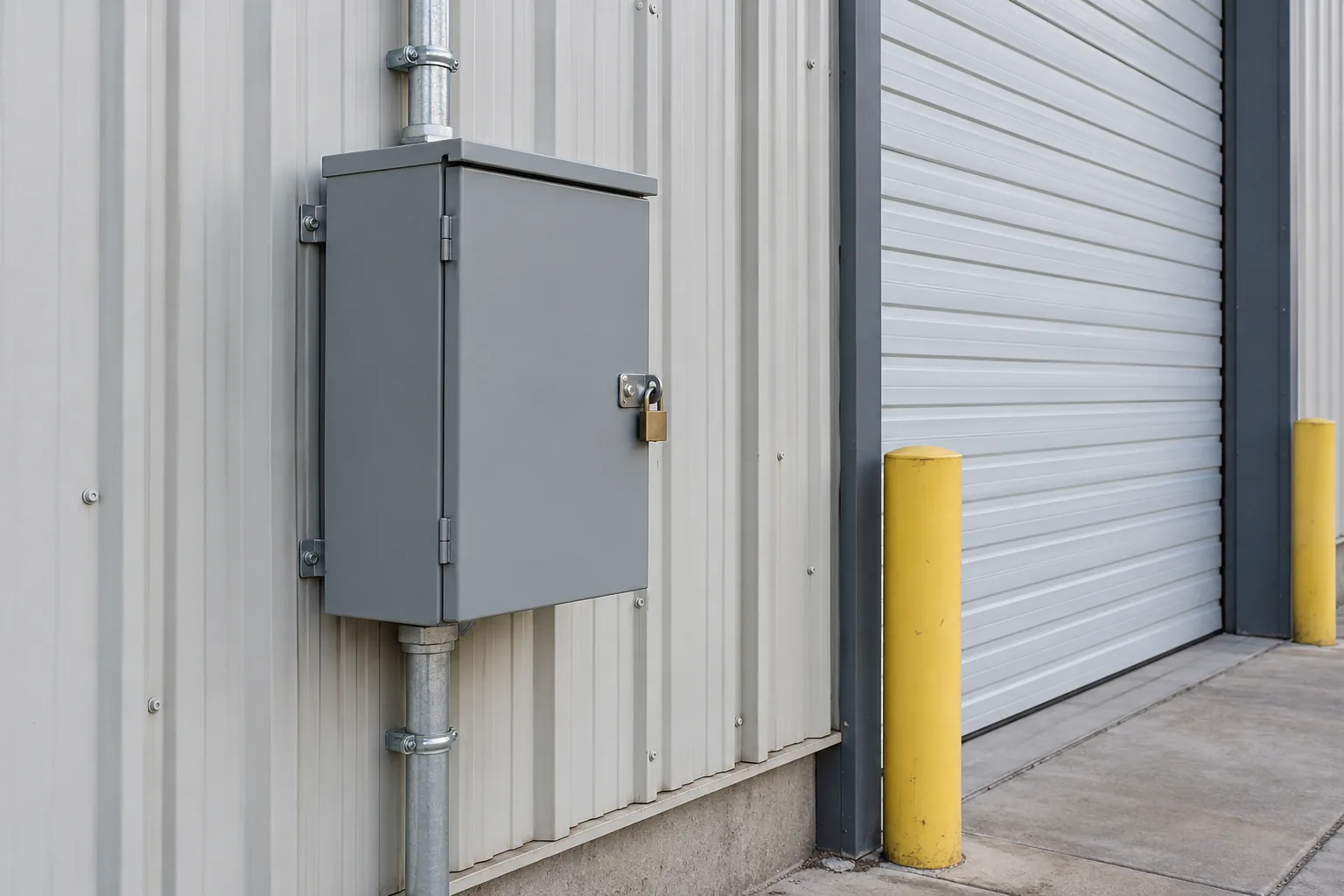
The outside of an enclosure cannot establish its settings, functions or connected group. Look for information already held by the manager: a product reference, an installation record, a current timetable or ordinary operating instructions. Identify the version and any later known change. An old document can still be useful if its status is clear, but it should not be silently treated as the current arrangement.
Where records show more than one control element, describe their documented roles without assuming the sequence is understood. A weekly operating request and a daylight-related request should each be expressed in plain terms. Ask the assessment to establish the actual relationships and supported behaviour. A list containing timer, photocell and sensor names is not, on its own, a description of how the property should operate.
State the areas excluded from ordinary operating changes. Emergency lighting, exit functions and other distinct equipment need their own appropriate review where relevant. A broad request to stop unused exterior lights should not silently include every light near the facade. Mark the uncertain boundaries and have them clarified before a general operating preference is translated into work.
Keep shared-property and neighbour decisions visible
Oakville’s Property Standards By-law addresses sensor lighting triggered by off-property activity, subject to section 18 exemptions. Confirm applicability and relevant approval conditions with the Town for the particular installation.
For shared lighting, identify who receives tenant reports and who approves a change affecting common areas. One occupier’s closing time may leave another person’s arrival unrepresented. Bring any written neighbour concern and the related viewing period into the same account, while keeping third-party equipment outside the assumed scope.
Before hiring for electrical work, verify the contractor’s ECRA/ESA licence through ESA and confirm scope-specific obligations.
Describe the evening arrival and the requested exceptions
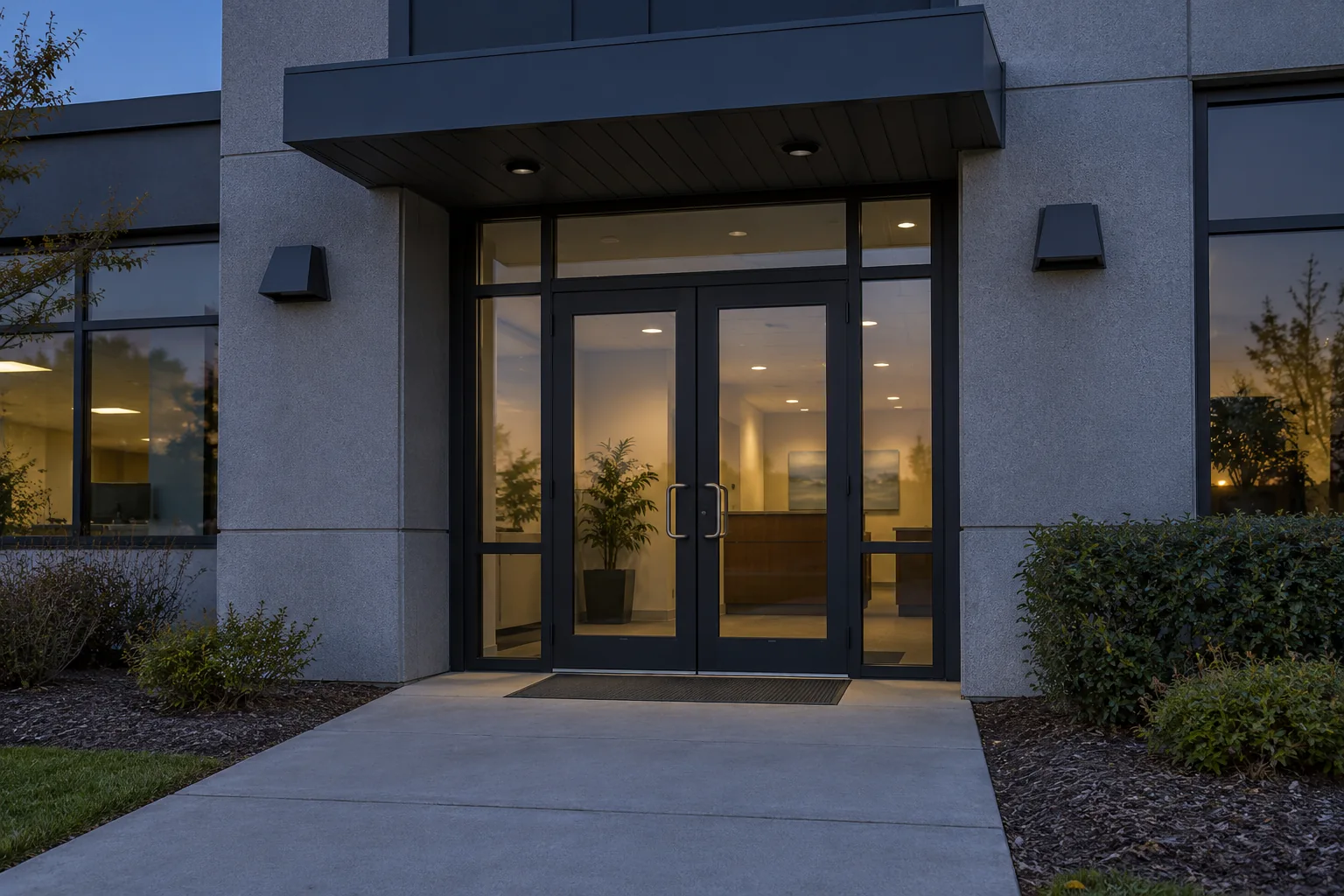
A late visitor, cleaner and delivery contact may use different doors after the main business closes. List the route and period for each regular use. Keep exceptional events separate from the ordinary week, including who approves them. This gives a timing assessment a usable property objective instead of a request to leave every light on indefinitely.
If the report concerns a start or stop that appears shifted, retain the actual time noticed and the timetable believed to apply. Include known clock changes or interruptions as context where documented, without assuming how a particular device handles them. Product capabilities vary; the review should establish the equipment’s supported functions rather than presenting automatic correction, backup or remote access as standard.
Agree how later changes will be managed. A new tenant or cleaning contract can alter the requested hours after the immediate concern has been addressed. Keep the approved operating record, affected groups and responsible contact together. A later report can then distinguish a fresh request from unexpected behaviour in the established arrangement, without occupants improvising access to enclosed equipment.
Bring the behaviour, intention and records together
-
Name the affected groups
Use existing location references for each facade, entrance or parking zone. Describe which lights appear to respond together and mark any documented group separately from that observation.
-
Retain the observed timing
Give dates, approximate periods and daylight or site conditions already known. Do not recreate the behaviour, cover devices or alter equipment to obtain a more complete report.
-
State the required operation
List normal occupied hours, exceptions and excluded functions. Identify the common-property decision-maker and who can clarify the timetable, manufacturer records and known recent work.
-
Agree review and handover
Confirm the assessed locations, supported behaviour and information to be retained. Record any deferred group or unresolved boundary, then identify who keeps approved operating revisions current.