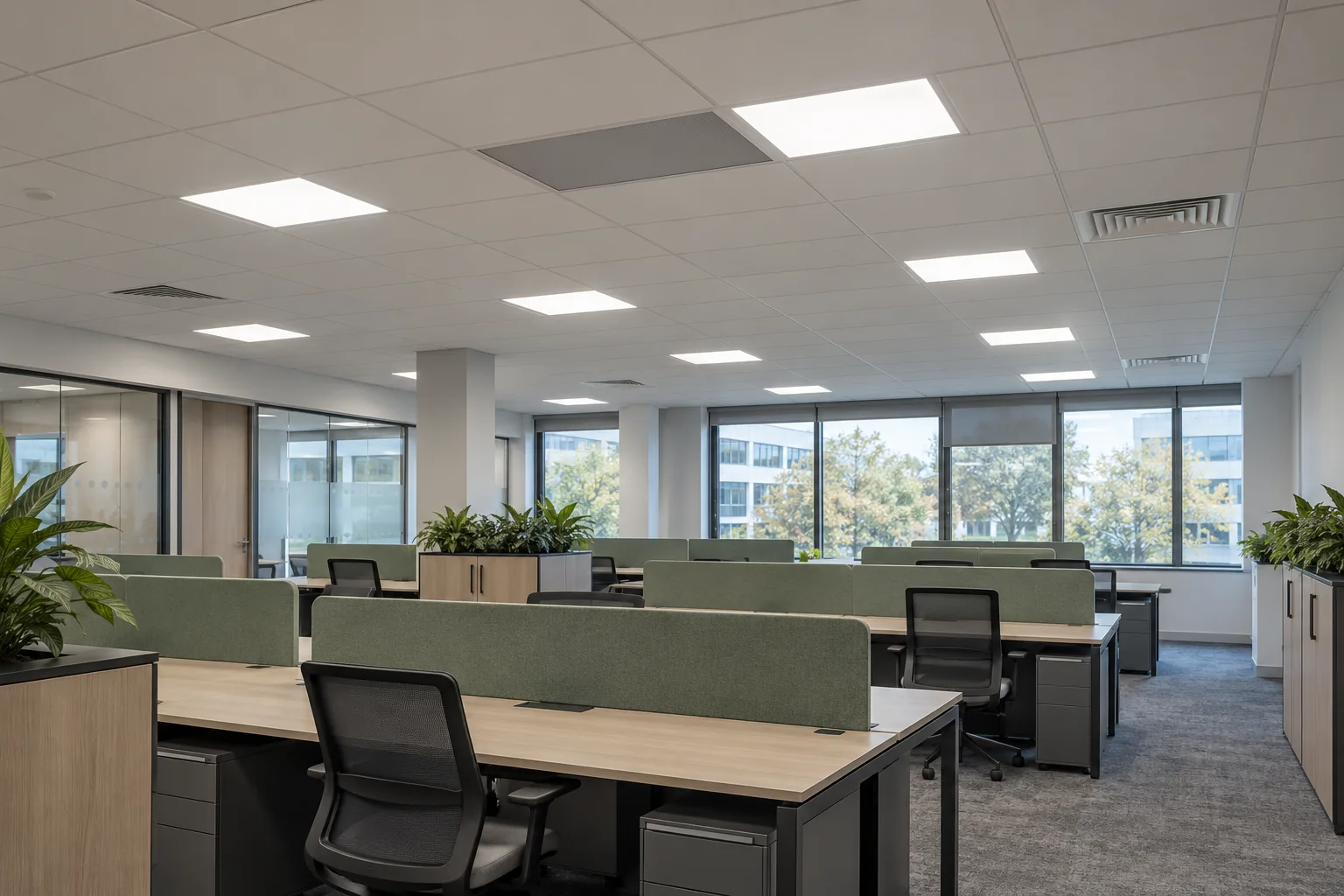
Commercial Lighting Repair in Oakville
An existing lighting fault needs a different starting point from a planned upgrade. The important questions are what has stopped working, where the problem occurs and how it affects the facility. A single failed office panel, an intermittent high bay and several exterior fixtures that switch incorrectly should not be treated as the same service request.
Commercial lighting repair in Oakville begins with those observations and the system already installed. Drivers, ballasts, fittings and controls may be involved, but the visible symptom alone does not establish the cause. Provide the information you can observe during ordinary use, together with access and operating constraints. Electrical diagnosis and the choice of repair belong within the confirmed service scope.
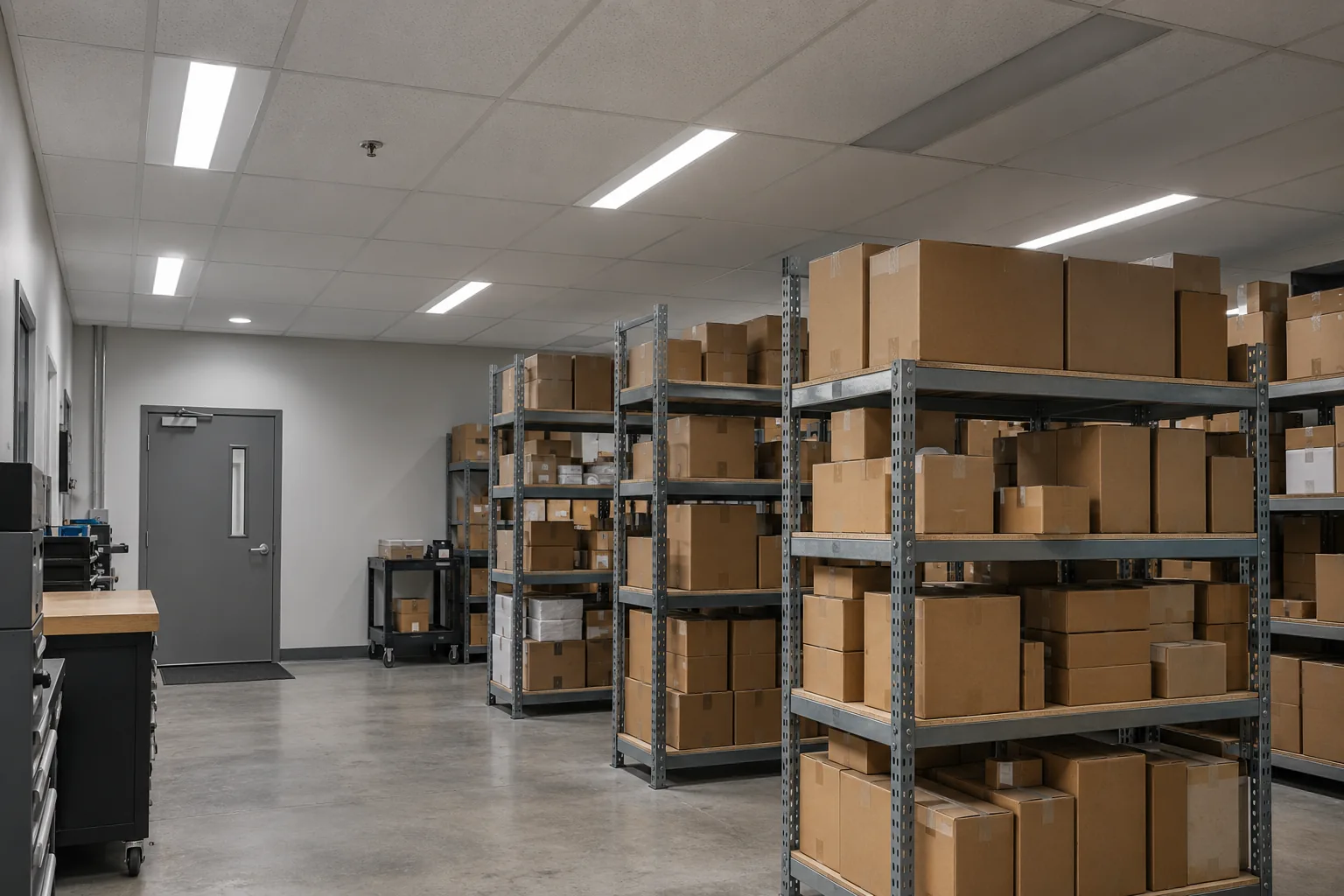
Request service for existing lighting
Tell us the property address, affected area and whether the issue involves one fixture or a group. Describe when it was first noticed, whether it is constant or intermittent and any recent change to the space or operating schedule. Include an ordinary photograph if it helps locate the problem.
Mention the approximate height, what is beneath the lights and who can authorize work or arrange entry. If the issue affects normal use of the area, make that clear in your request. A service enquiry does not require you to identify the failed component or attempt an electrical test.
- Out, dim, flickering or operating at the wrong time?
- One fixture, a repeated location or a whole controlled group?
- What access restrictions and operating activities affect attendance?
Describe the pattern without guessing the failed part
A precise symptom can save confusion even when the underlying fault is unknown. Record what happens during normal building use. Keep a constant outage separate from a fixture that sometimes starts correctly, and distinguish a single fitting from a group that behaves together.
| What you see | What it may change in planning | Useful information |
|---|---|---|
| One fixture is completely out | The service discussion can begin with that location and the surrounding lighting. A dark fitting does not by itself identify a lamp, driver, ballast or supply problem. | Provide its exact area and whether nearby fixtures remain operating. |
| A fixture flickers or changes output | Intermittent behaviour may not be present at the time of attendance. A clear account of the pattern is useful without trying to reproduce it. | Note when it occurs, how often it has been noticed and whether other lights behave similarly. |
| Several lights behave together | A group pattern makes the shared operating arrangement relevant. Controls or other system conditions may be involved, but the cause still needs assessment. | Identify the affected rooms, entrances or rows and the times when the group changes. |
| Exterior lights run at the wrong time | Describe whether the fixtures stay on, fail to switch on or change unexpectedly. The apparent fault may involve more than the visible light fitting. | Record the normal expected schedule and whether all fixtures in the area follow the same pattern. |
A lighting outage has to be understood in its working area
A count of failed fixtures is useful, but it does not describe the full effect on the building. One fitting above a seldom-used storage corner has a different operational impact from one above a busy receiving position. Explain what people normally do in the affected area and whether the remaining fixtures still provide usable lighting for that activity.
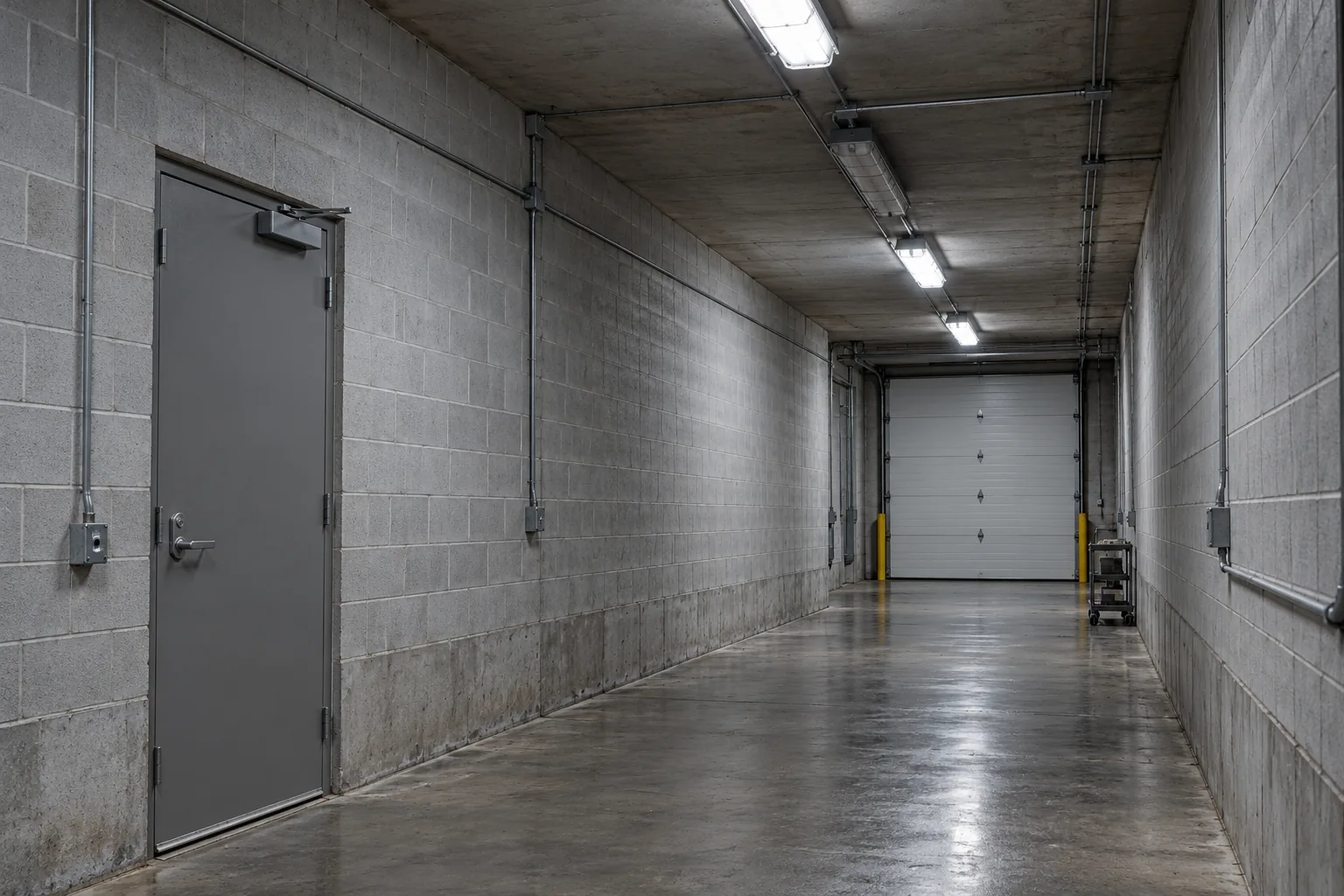
For a corridor or loading area, locate the issue using a recognisable entrance, door, aisle or room reference. Describe changes noticed while the space is in ordinary use, such as a previously lit section appearing noticeably darker. Photographs can help show the layout, but camera exposure can make a dim area look brighter or darker than it appears in person. Written context remains important.
If a fault affects an escape route, emergency fitting or another building safety system, identify that separately in the request and follow the facility’s established safety procedure. A general lighting repair enquiry should not be treated as confirmation that the area can continue operating normally. Where the condition creates an immediate hazard, use the appropriate on-site or emergency response process rather than relying on a web enquiry.
The repair option depends on the fitting, not just the symptom
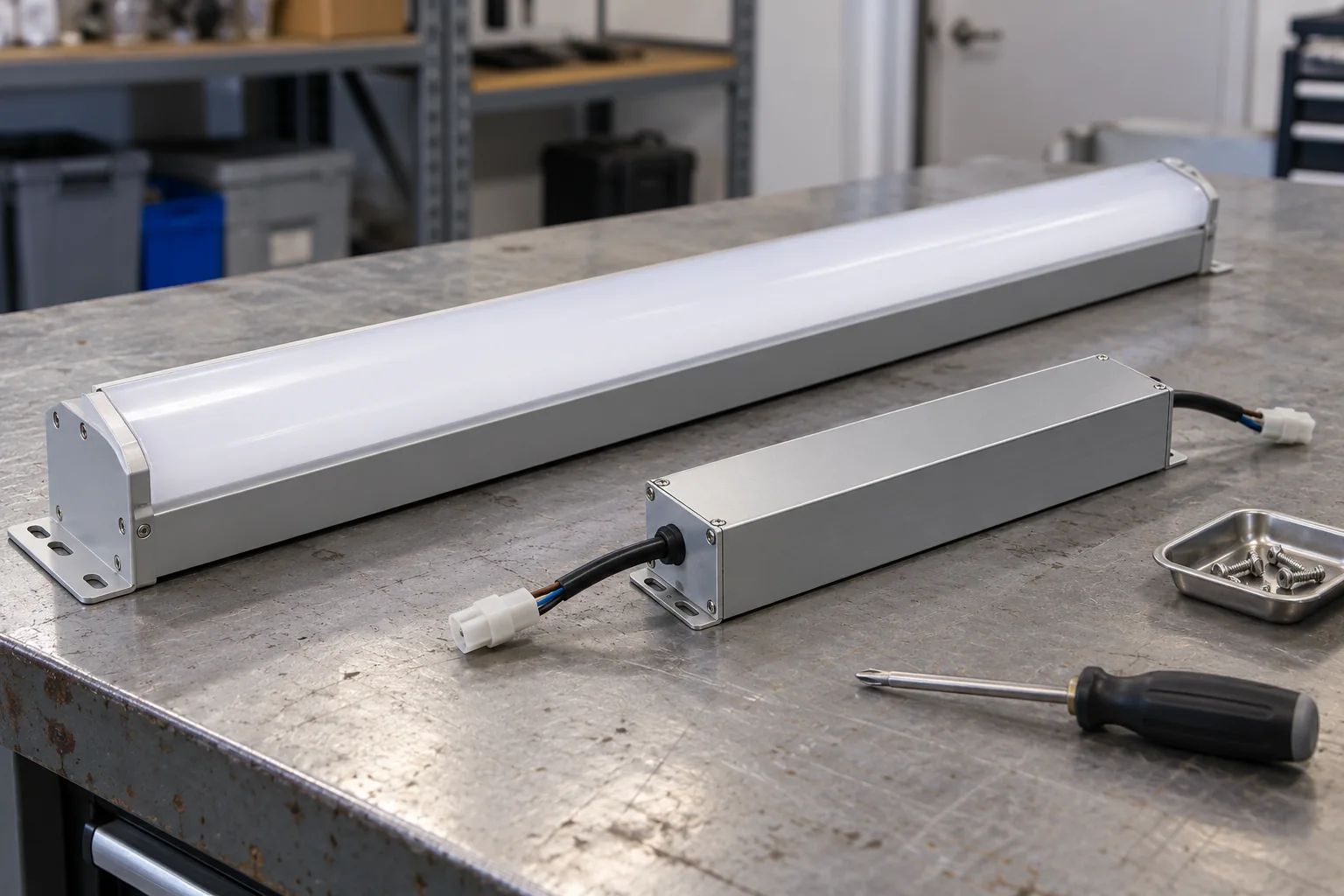
Commercial buildings can contain several generations of lighting. A fluorescent fitting with a ballast, an LED luminaire with a driver and a replaceable lamp in another fixture have different component arrangements. Even two LED fittings with similar external dimensions may use different drivers or controls. Describe the fixture type if it is already known, but leave uncertain technical details for the service discussion.
A component replacement may be possible when a suitable part is available and the rest of the fixture is in appropriate condition. A complete fitting may be considered if compatible components cannot be sourced, the housing is damaged or the equipment no longer offers a practical repair route. The choice should account for the existing installation, not assume that any driver or lamp with a similar appearance will work.
Keep earlier confirmed repairs visible where the same fitting has failed again. The date, part information and length of time it operated afterward can be relevant. A repeat failure does not automatically establish that the replacement part was at fault. The surrounding conditions and system compatibility may also need consideration. The useful starting point is an accurate history, with the cause established through the work rather than inferred from the enquiry.
A targeted repair and a wider upgrade serve different needs
Restore a defined location
A targeted repair addresses an existing fault within the equipment already in place. Clarify the affected fitting or group, any investigation included and the limitations known before work begins. This may be suitable where the remaining system still supports the area.
Replace an unsuitable fitting
A complete replacement can be considered where the existing fitting is damaged, parts are unavailable or a compatible repair is impractical. Distribution, controls and appearance still matter. A replacement decision should account for adjoining equipment rather than rely only on nominal wattage.
Plan a wider change
Repeated outages or lighting that no longer suits the facility may lead to a separate upgrade or retrofit discussion. Keep the current fault visible while that project is considered. A broader review does not mean every fixture must be changed before the immediate service issue can be addressed.
High fixtures make the site arrangements part of the repair
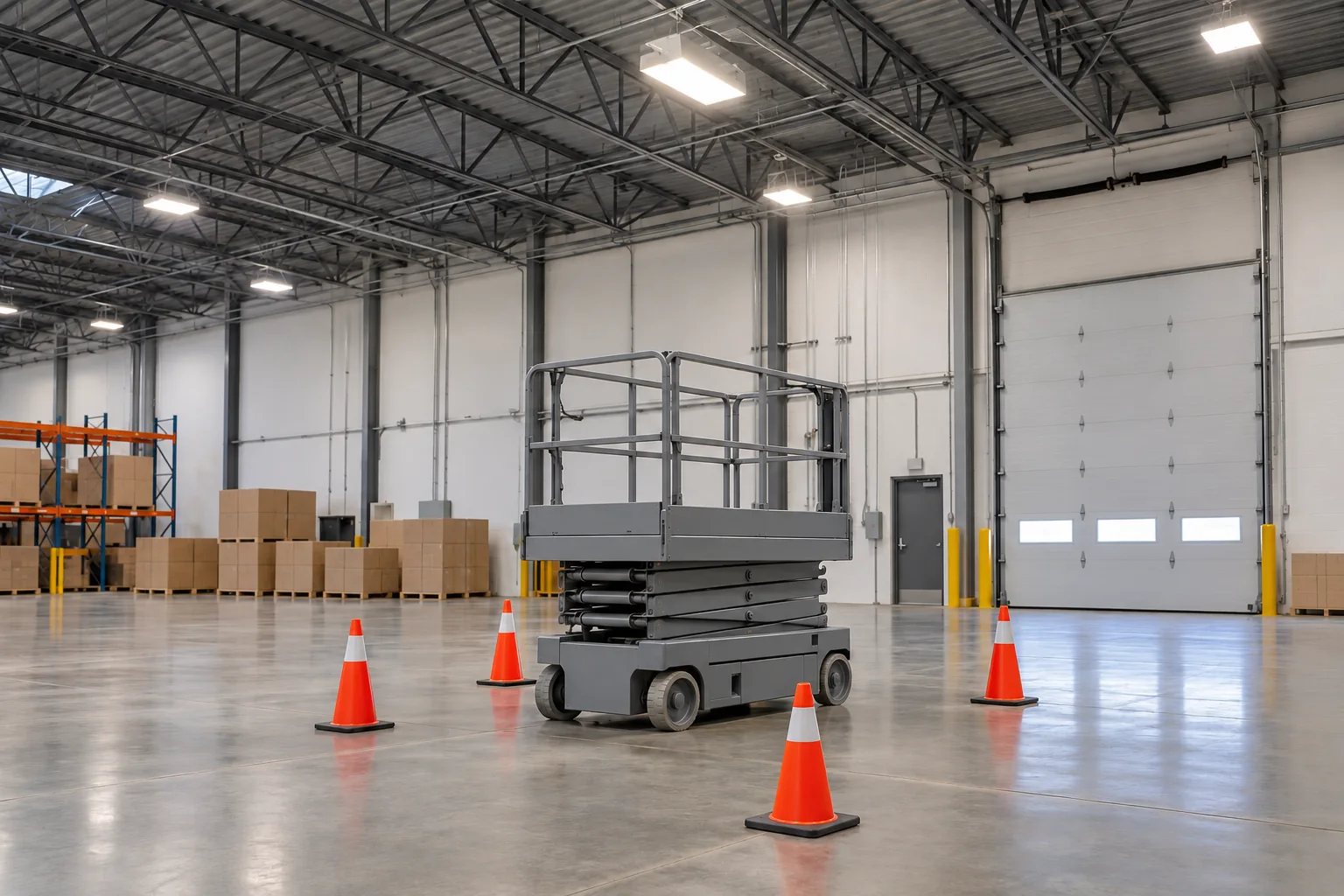
Warehouse and industrial lighting repair often involves access conditions that are not apparent from a photograph of the fixture. Racking, stored goods, production equipment and vehicle movement can restrict the approach below it. Provide an approximate mounting height if already known, and describe what occupies the floor or aisle. Do not climb or measure a high fitting to complete an enquiry.
Explain whether the affected area could be made available independently of the rest of the facility. One warehouse aisle may be isolated during a quieter period, while a fitting above fixed equipment may need a different access arrangement. The proposed method, attendance and operational coordination should be discussed against those conditions. Equipment ownership or immediate availability should never be assumed from the type of repair requested.
Electrical work should be assigned to an appropriately licensed Ontario electrical contractor, with applicable requirements confirmed. Facility staff can help coordinate access, relevant records and the people who need notice. They should not be asked to open fittings, handle exposed wiring or test circuits before attendance. A safe, clearly described location is more useful than an attempted customer diagnosis.
Keep the repair conversation focused on known conditions
-
Identify the problem area
Describe the location, symptom and effect on ordinary operations. State whether the issue is a current outage, an intermittent pattern or a recurring location with previous work. Separate any emergency or exit-system concern from general lighting.
-
Review what is already known
Bring existing fixture details, earlier service information and normal control schedules where available. Unknowns can remain unknown. A useful enquiry does not depend on a complete technical inventory or on testing performed by building occupants.
-
Agree access and investigation
Clarify entry, authorization, equipment access and the extent of the proposed service. Identify constraints that may affect attendance or the ability to inspect particular fittings. Investigation and final repair may involve different decisions depending on what is found.
-
Discuss the confirmed options
Once the relevant conditions are understood, compare the available repair or replacement route. Ask what is included, what parts or further information are needed and which issues remain outstanding. Keep any proposed wider upgrade distinct from the present fault.
An exterior fault may follow a time pattern rather than a fixture pattern
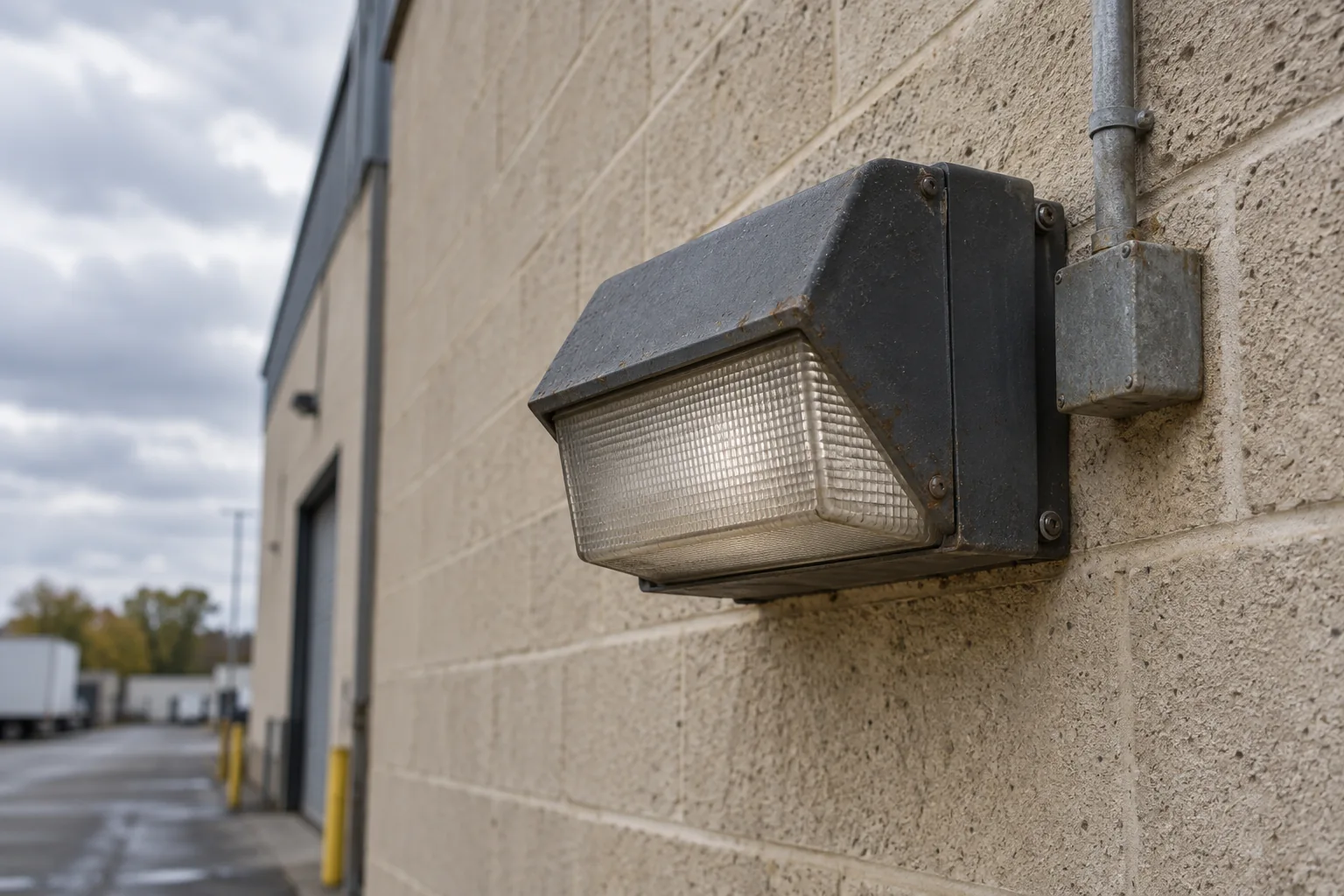
A wall pack that stays on in daylight or a parking-area group that does not operate after dark may involve the fixture, its control arrangement or another condition in the system. Describe the actual behaviour and how widely it occurs. A whole group acting together is important context, but it still does not confirm a particular failed photocell, timer or other component.
Provide the normal schedule if the property has one, together with any recent change to hours or control settings made through an established building-management process. Ordinary observations at different times can be useful. Do not cover a sensor, bypass a control or repeatedly operate electrical equipment in an attempt to prove the cause. The service scope should determine the appropriate investigation.
Access also differs outdoors. Identify parking restrictions, loading activity, pedestrian routes and any obstacles below pole or wall-mounted fixtures. Visible damage or a weathered housing should be mentioned without assuming the interior condition. If a replacement changes the way light reaches adjoining areas, that becomes a planning consideration alongside the repair. Restoring operation and altering the exterior lighting arrangement are related decisions, but they are not interchangeable.
Describe the office fault and the room that has to keep working
An office lighting fault can affect a workstation, meeting room or shared circulation area differently. Identify whether one panel is out, several fittings flicker or the output appears inconsistent across the room. Include the normal activity and any occupancy constraints. A room that can be made available briefly between meetings may offer a different service window from a continuously used reception area.
Distinguish an equipment fault from a broader concern about comfort or distribution. A panel that no longer operates is a repair issue. Reflections on screens, uneven light following a furniture change or inconsistent colour across replaced fittings may also justify an upgrade discussion. Both matters can be raised together, with their different objectives kept clear.
Let the service request explain who manages the ceiling area and who can approve work within the tenancy. If recent tenant changes or other work coincided with the problem, provide that history without assigning blame or a technical cause. Where matching a replacement to nearby panels matters, say so early. Appearance, mounting and control compatibility are useful scope questions as well as the immediate need to restore the affected light.