
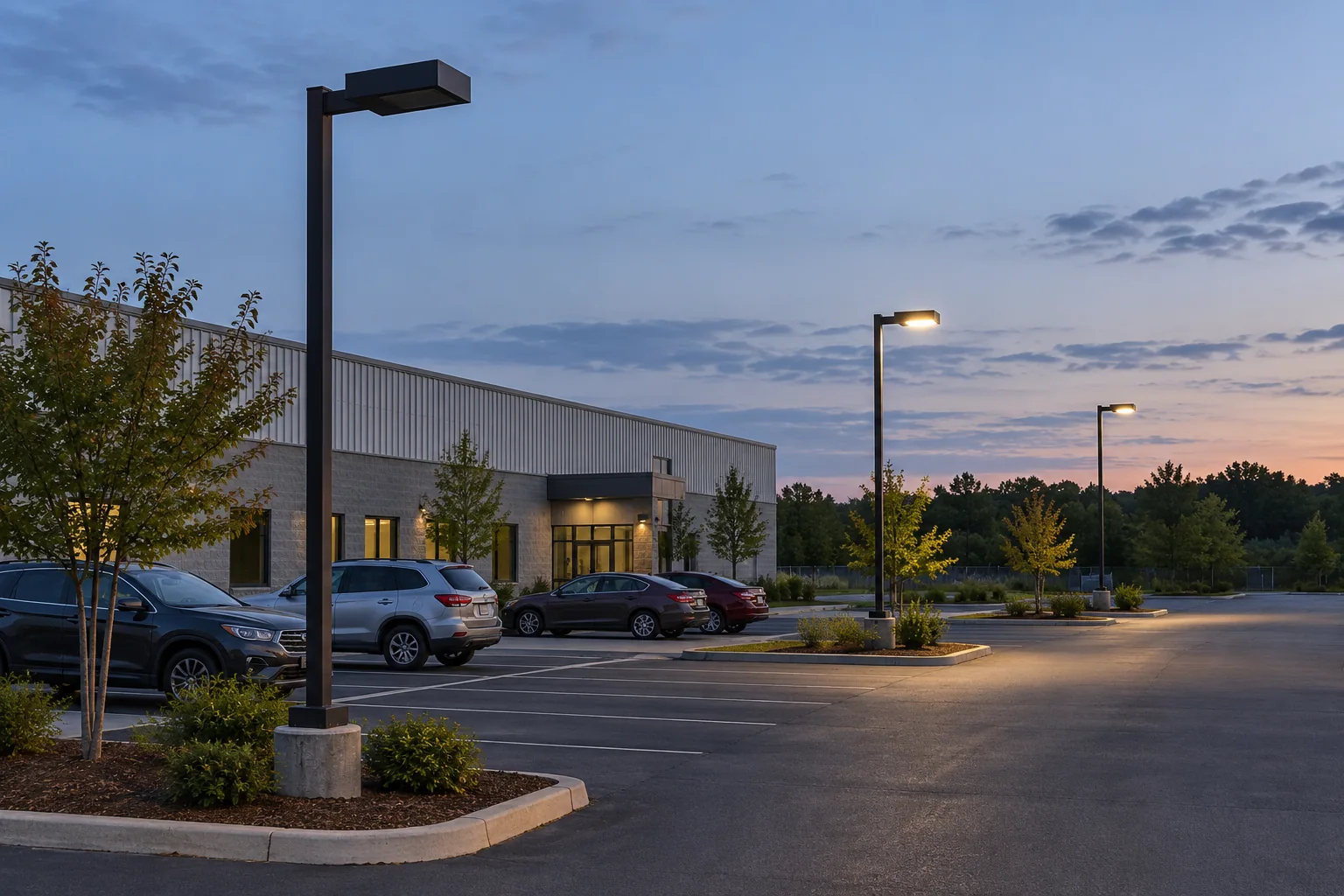
Ask what failed and what the owner wants to change
The immediate question concerns an observed change in operation: a pole remains dark, a group drops out or lights operate at unexpected times. Keep the cause open until the relevant equipment is assessed. Record the part of the lot affected and the activity disrupted. If an area remains in use, its operating needs belong in the access discussion; a planned future upgrade should not leave the current concern undefined.
The investment question concerns the inventory and the property objective. Perhaps the owner wants fewer different product families to manage, better coordination with a revised entrance or a programme for selected ageing locations. State that objective in plain language. A proposal should explain what will change and why, rather than treating the words LED replacement as a complete project brief.
These questions can lead to different authorised phases. The owner may request diagnosis at an affected location while reviewing the inventory for later work. Alternatively, an assessment may identify a wider scope that should be considered before an isolated change is committed. Keep the reasons, retained equipment and decision authority recorded so urgency does not silently determine the whole replacement strategy.
Use condition and service history without diagnosing from appearance
Oakville’s Employment Areas Review describes offices and warehouses among the town’s employment uses.
For an Oakville premises combining office parking and warehouse dispatch, compare the visitor or staff-departure row with the delivery side before proposing one replacement scope. The office concern may centre on the walk to the lobby, while dispatch needs its own vehicle and access account. Define which areas the proposed poles serve, which remain outside the phase and who coordinates both uses.
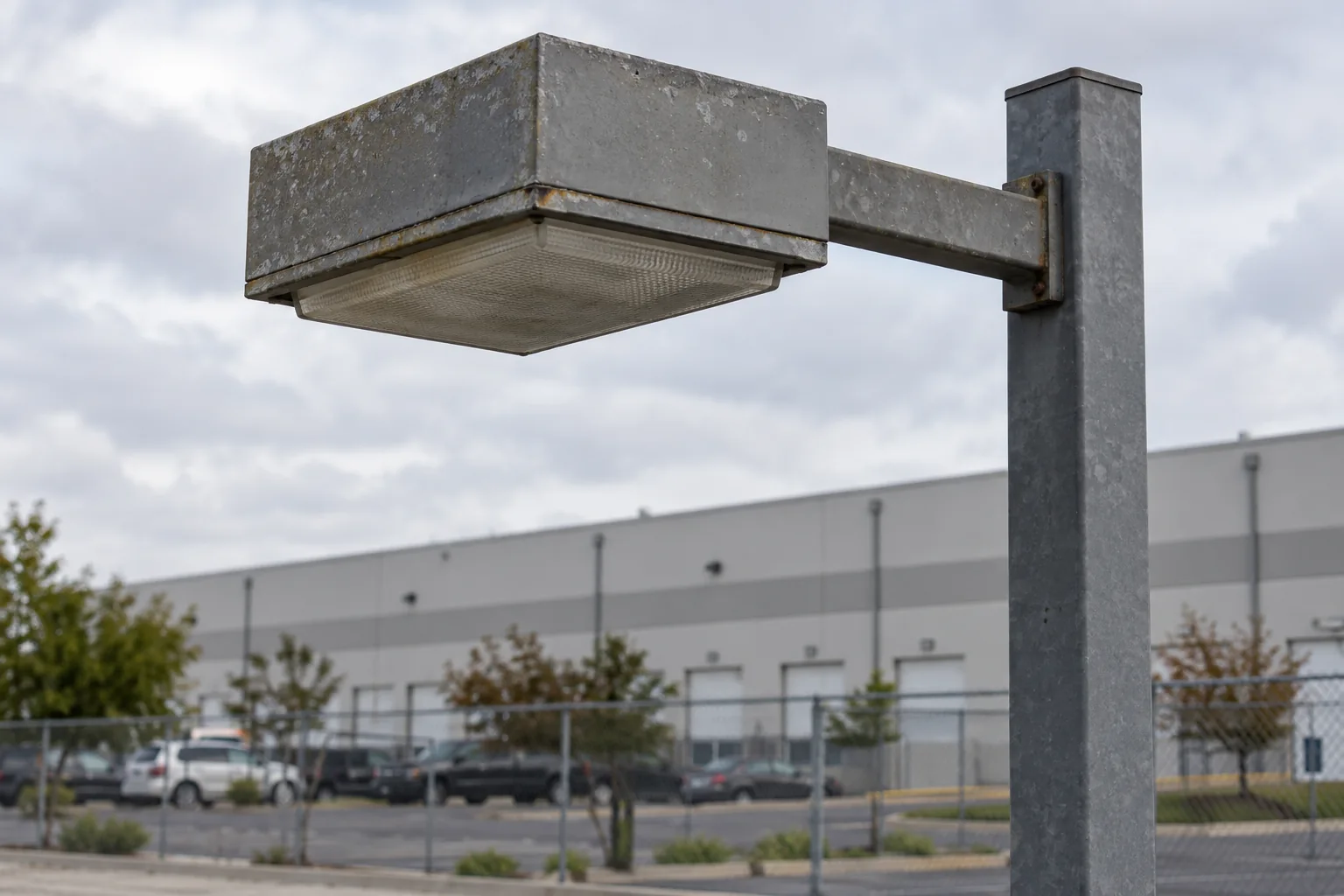
A weathered housing can introduce a condition question, but the ground-level view cannot establish everything concealed within the fitting or its connections. Record visible damage through ordinary accessible observation and bring earlier work records. Product identification, service findings and the particular installation need review before the owner decides which components or locations should be retained.
Make the history specific enough to distinguish different visits. A note saying ‘pole three repaired again’ may combine several unrelated events or follow-up work on one unresolved concern. List the date, location, reported behaviour and documented scope for each visit. Where the earlier explanation is unavailable, say so. The comparison should use the available record, not a guessed failure rate.
For mixed inventories, identify the separate equipment groups rather than averaging them into one age. A recently changed entrance row and older boundary fittings may have different records and different reasons for review. The owner can then ask whether a consistent approach is useful across the lot or whether selective retention is better aligned with the current objective.
Ask how a repair finding would affect the wider proposal. If the original issue is outside the luminaire, changing its housing alone should not be presented as an established remedy. If replacement is recommended, request the reason for that recommendation and the associated work. An understandable decision record is more useful to the property manager than a product list without the assessment context.
Four evidence groups make the repair and replacement discussion clearer
| Evidence group | What it explains | Question for the proposal |
|---|---|---|
| Current outage account | Locations, first reported occurrence, grouping and observed timing describe the present concern. Keep these observations separate from an assumed lamp, driver, control or supply diagnosis. | Which equipment is included in the assessment, and what decision follows from the findings? |
| Inventory and visit records | Product records, earlier work scopes and location-specific condition information describe the retained installation. Missing records should remain visible rather than being filled with estimates presented as facts. | What is retained, what is replaced and what evidence supports each recommendation? |
| Parking and entrance arrangement | Current stalls, islands, arrival routes and neighbouring uses show what the lighting is meant to serve. Proposed property changes can make an old distribution a separate issue from the fault. | Does the proposal preserve the current task or address a changed layout, and where does its scope end? |
| Controls and access | Known operating groups, agreed hours and access restrictions describe the interfaces around the fitting. Tenant activity, deliveries and spaces beside the poles influence how work can be coordinated. | Which retained controls and associated work are included, and who confirms the access sequence? |
A new luminaire needs a reason to suit the existing position
Keeping a pole does not establish that any replacement fixture will suit the location. Ask the assessment to consider the retained pole and arm arrangement, mounting interface, equipment condition and the intended area. Available drawings and product records help define those interfaces, while the actual installation still needs review. Separate the luminaire decision from any work needed elsewhere in the assembly.
Describe the task around each retained position. One pole may serve rows on both sides, another an end stall and another the route towards a staff entrance. The proposal should explain its intended distribution in that layout. Matching an old housing outline or selecting a wattage is not a substitute for the property-specific discussion about where light should go.
Include control retention explicitly. If a proposal changes only selected luminaires, ask how the retained switching arrangement and product interfaces are being considered. If a control change is included, identify the affected group and the intended operation. Avoid letting a general replacement description imply that every exterior zone will gain independent hours or a new control capability.
Keep associated work readable. Arm changes, building connections, site access and records may differ between two proposals even when they name similar luminaires. Ask for a location list and clear boundaries, including what is expected to remain. That allows an owner to compare an installed scope rather than comparing two catalogue selections.
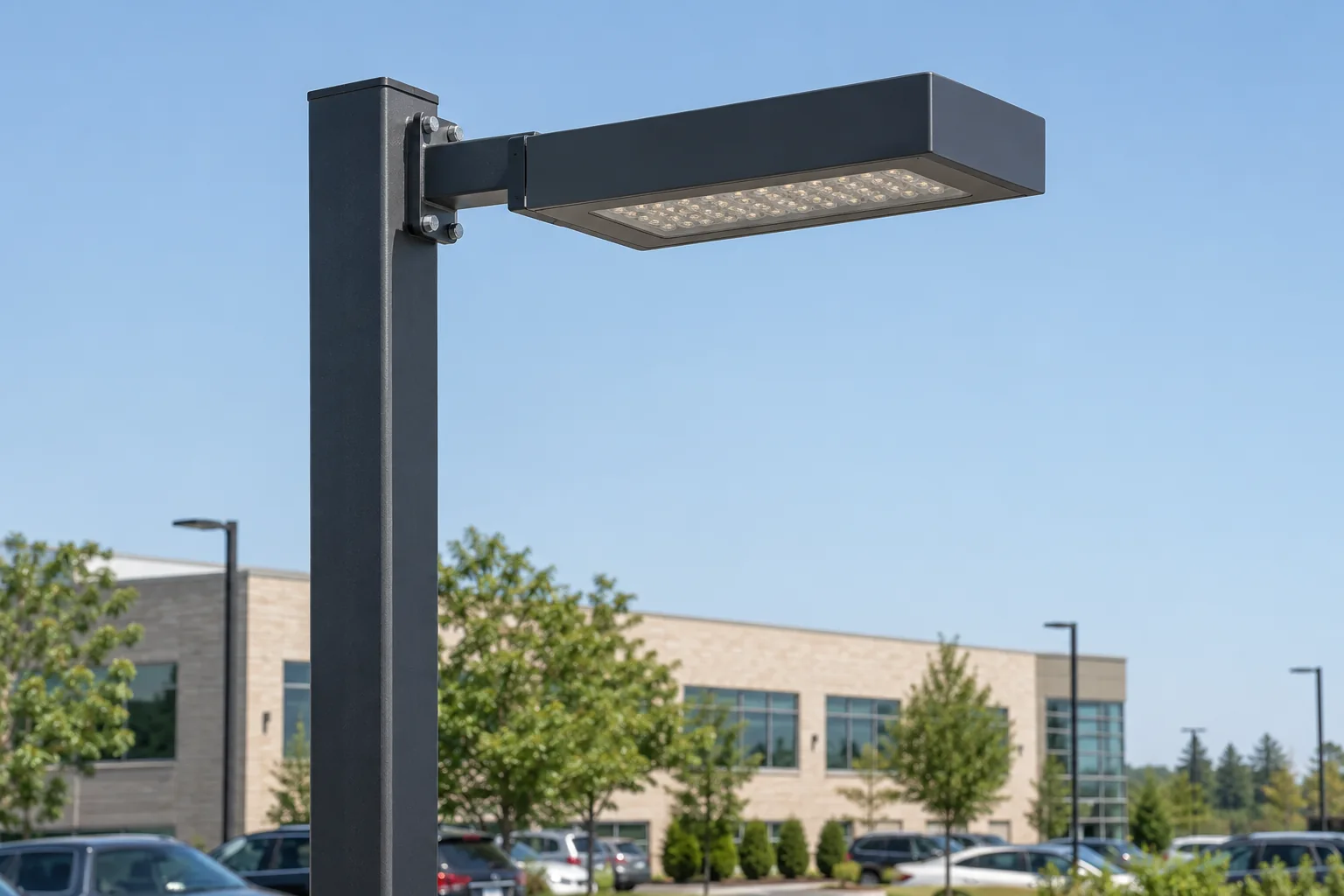
Repair, selective replacement and a wider programme serve different aims
Defined fault assessment and repair
Use this route when the first decision is how to address an observed outage or changed behaviour. Establish the affected equipment and reporting location, then ask for the appropriate assessment scope. Keep any wider improvement separately identified. The owner should know what finding or limitation would trigger another decision rather than assuming the initial request includes every possible remedial task.
Selected fixture replacement
Use this comparison where certain locations have a documented replacement reason while others may remain. Review the interfaces between the selected products and the retained installation. Include controls, appearance, distribution and future records in the discussion. A selective scope should identify its own limits so a completed row is not mistaken for an entire lot upgrade.
A planned lot-wide inventory change
Start with the reason for the programme and the areas it should serve. Bring current layout and operating records, identify retained poles and define connected control work. The proposal should address the intended arrangement and associated interfaces across the lot. Do not assume a particular saving, payback, incentive or performance outcome without the verified information and scope required to support it.
A phased property programme
Use phases to separate decisions and access windows, with the state of the retained installation clear after each stage. List unresolved faults and deferred locations. Where a shared group crosses phases, ask how its intended operation will be considered. Phasing should preserve a coherent future brief rather than creating a series of disconnected product purchases.
Replacement is an opportunity to ask whether the layout still fits
A functioning installation can still prompt a planning review if the property has changed. An entrance may move, a former storage edge may become parking or a tenant may introduce late activity. Show those changes separately from the outage record. That distinction lets the proposal explain whether it is restoring an existing arrangement or developing a different one.
At the edge, identify adjoining uses and reported views. A proposed replacement should consider the intended stalls and routes together with any neighbour-facing concern. Bring the receiving position and approximate operating period into the brief. The owner needs a defined response, with the relevant property documents considered, rather than a general assurance that a new fitting will solve every boundary issue.
Compare access visits as actual tasks. Different options may need different equipment arrangements, occupied-row releases or coordination with a tenant. Ask what the proposed work window includes, who controls the temporary area and whether other planned property work affects it. Repeated access is a practical planning consideration, but its cost should not be invented or assumed to make replacement automatically preferable.
Set the acceptance discussion around agreed areas and behaviour. Identify the review positions, relevant occupied period and information expected at handover. Product references and a location record help future managers understand what changed. Keep remaining locations and any separate control concerns explicit, so the next report can be connected to the appropriate phase.
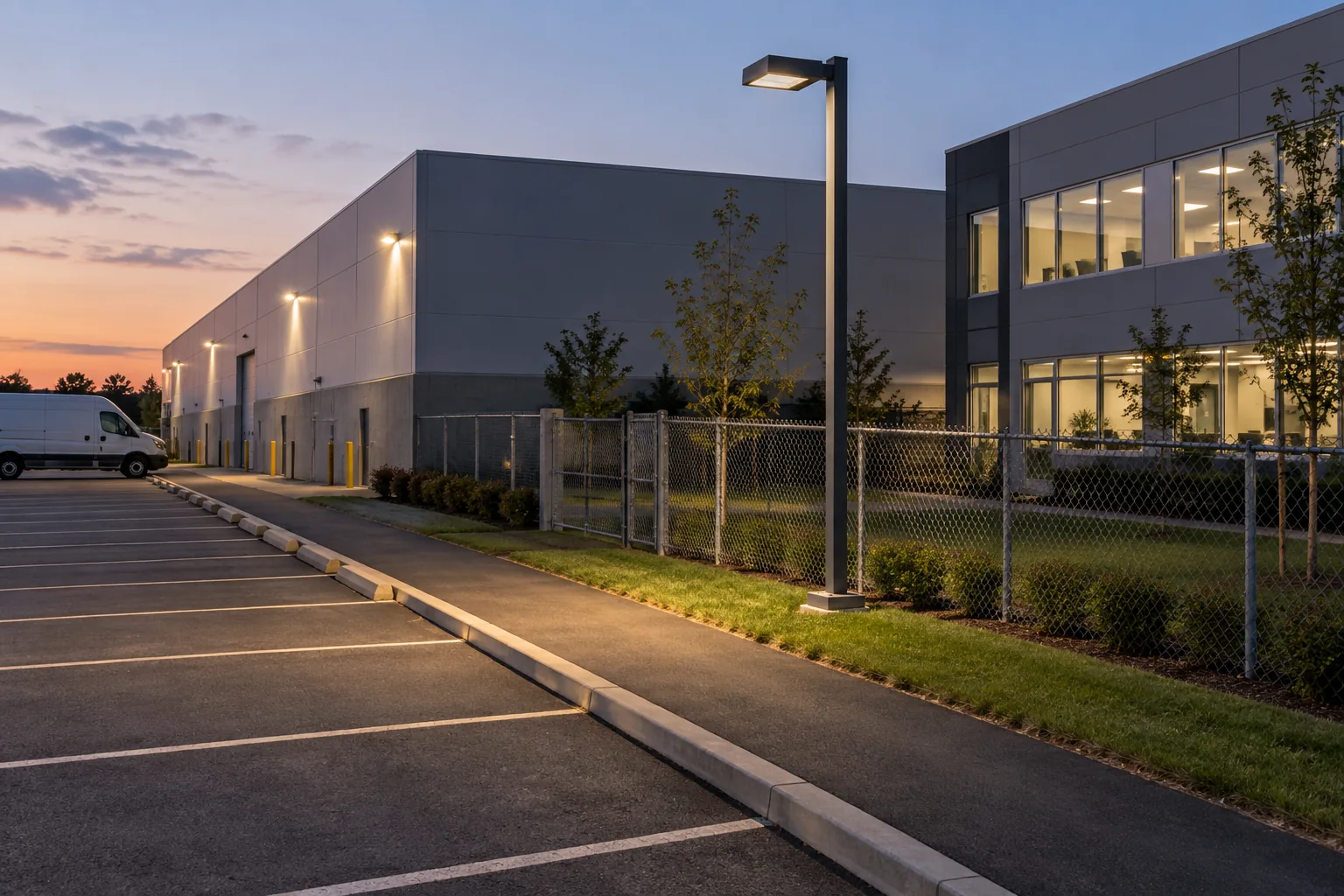
Give competing options the same evidence and boundaries
-
State the current concern
Name affected locations and observed behaviour using the outage record. Identify the immediate operating question and the person who can authorise assessment. Keep any proposed investment objective in a separate sentence.
-
List retention decisions
Provide available fixture, pole and control records. Mark retained, changed and uncertain locations. Ask each proposal to explain the basis for replacement and the interfaces included around the new equipment.
-
Compare distribution and access
Use the same current parking plan and intended hours. Include entrances, boundaries and ordinary obstructions. Confirm the work area, tenant coordination and responsibility for associated tasks so different scopes are visible.
-
Record the chosen phase
Agree the locations, review conditions, exclusions and handover information. Confirm who answers electrical and property-specific questions. Keep immediate repairs, completed replacement areas and later decisions distinguishable in the final record.